—— UAE Cuts All Economic Ties With Tehran; Moderna and Merck Shares Soar After Personalized Cancer Vaccine Succeeds in Late-Stage Trial; US Treasury Unexpectedly Ramps Up Long-Dated Debt Buybacks; Two Sigma Co-Founder Says Founder Feud Led to Loss of Major Investor; University of California System Sells $1 Billion of Private Equity Stakes; China Recovers Rocket Booster on Land for First Time; US Retailer Target Posts Higher Q2 Profit and Boost From Tariff Refunds
1. UAE Cuts All Economic Ties With Tehran
The United Arab Emirates has cut all economic ties with Tehran after accusing Iran of firing ballistic missiles at its territory, ramping up regional tensions.
The Persian Gulf nation, one of Iran’s main commercial partners, said it halted trade and financial transactions until further notice in light of “escalations that undermine regional and international peace and security.” Iran denied responsibility for the attack, which would be the first on UAE territory since May. Flights between the two countries continued Wednesday. The UAE’s distancing will compound pressure on Iran at a time when negotiations with the US to permanently end the war are deadlocked and Washington is readying new measures to further squeeze the Islamic Republic’s economy. Iran has withstood decades of sanctions, but almost six months of fighting has damaged its industrial capacity, curtailed crude exports and driven up inflation.
“There are no talks or conversations going on, or scheduled, with the Islamic Republic of Iran,” US President Donald Trump posted on his social media platform on Tuesday. US Secretary of State Marco Rubio spoke Tuesday with the UAE’s national security adviser, Sheikh Tahnoon bin Zayed Al Nahyan, about regional security and freedom of navigation in the Strait of Hormuz. The two also discussed “continued US-UAE coordination to hold Iran and its terrorist proxies accountable for ongoing attacks,” Rubio’s deputy spokesperson, Tommy Pigott, said in a statement.
Brent crude rose for a fourth straight day on Wednesday, trading at around $92 a barrel. The global benchmark has surged as prospects dimmed for a swift reopening of Hormuz, through which a fifth of the world’s oil and liquefied natural gas transited before the war erupted on Feb. 28.

Bloomberg – UAE Cuts Economic Ties With Iran After Missiles Target Territory
______
2. Moderna and Merck Shares Soar After Personalized Cancer Vaccine Succeeds in Late-Stage Trial
Moderna Inc. and Merck & Co. shares soared after their personalized cancer vaccine helped cut the recurrence of melanoma in a large, late-stage trial, an important milestone for the embattled mRNA-based technology.
The trial met its main goal of showing that the vaccine, combined with Merck’s immune drug Keytruda, reduced melanoma recurrences more than the immunotherapy alone. The study also met a key secondary goal of slowing the cancer’s spread to new areas of the body, the companies said in a statement Wednesday.
The study, the first positive final-stage trial for any mRNA-based cancer therapy, is a welcome respite for both companies. It provides the strongest evidence yet that the technology that made Moderna a household name during the pandemic will have a successful second act. For Merck, facing a patent loss for its best-selling drug Keytruda, it offers a key new market for future growth. Moderna shares more than doubled in pre-market trading in New York, while Merck rose almost 9%. Details on how much the shot improved recurrence-free survival — the amount of time a patient lives without their cancer coming back — weren’t released. The trial remains ongoing to assess whether patients who get the vaccine live longer.
Melanoma is the most serious form of skin cancer. In the US, roughly 112,000 people are diagnosed with it each year and about 8,500 people die from it, according to the American Cancer Society.
Bloomberg – Moderna, Merck Shares Surge After Melanoma Vaccine Success
______
3. US Treasury Unexpectedly Ramps Up Long-Dated Debt Buybacks
The US Treasury unexpectedly announced it’s ramping up buybacks of long-dated government debt, taking the action in the wake of yields on such securities hitting the highest levels in years.
Just two weeks after releasing its planned schedule for buybacks this quarter, the Treasury Department on Wednesday said it’s “increasing, by at least double, the size of liquidity support buyback operations” for securities dated from the 10-year to the 30-year sector. Yields on the longest bond dropped nearly 10 basis points to 5.185%, pulling back from their highest level since 2007. Treasury Secretary Scott Bessent invoked the buyback program last year as part of the department’s “big toolkit we can roll out” if needed to address dislocation in the Treasuries market. He’s also repeatedly said, since taking office, that his key financial-market benchmark is 10-year yields. Last November, he said, “my job is to be the nation’s top bond salesman. And Treasury yields are a strong barometer for measuring success in this endeavor.” “This administration needs a win and maybe that comes in the form of artificially trying to keep long Treasury rates contained,” said Jack McIntyre, a portfolio manager at Brandywine Global Investment Management. “They have to try something. Sentiment around the long-end globally is about as bearish as I have seen in a very long time.”
Officials made the announcement as long-dated government bond yields around the globe rose to significant levels this week — with the US 30-year trading at its highest since 2007. Traders are also preparing for a $16 billion auction of new 20-year bonds.
A 10-year auction last week drew the highest financing cost at that tenor since 2007, while a 30-year sale a day later was at the greatest yield since 2001.
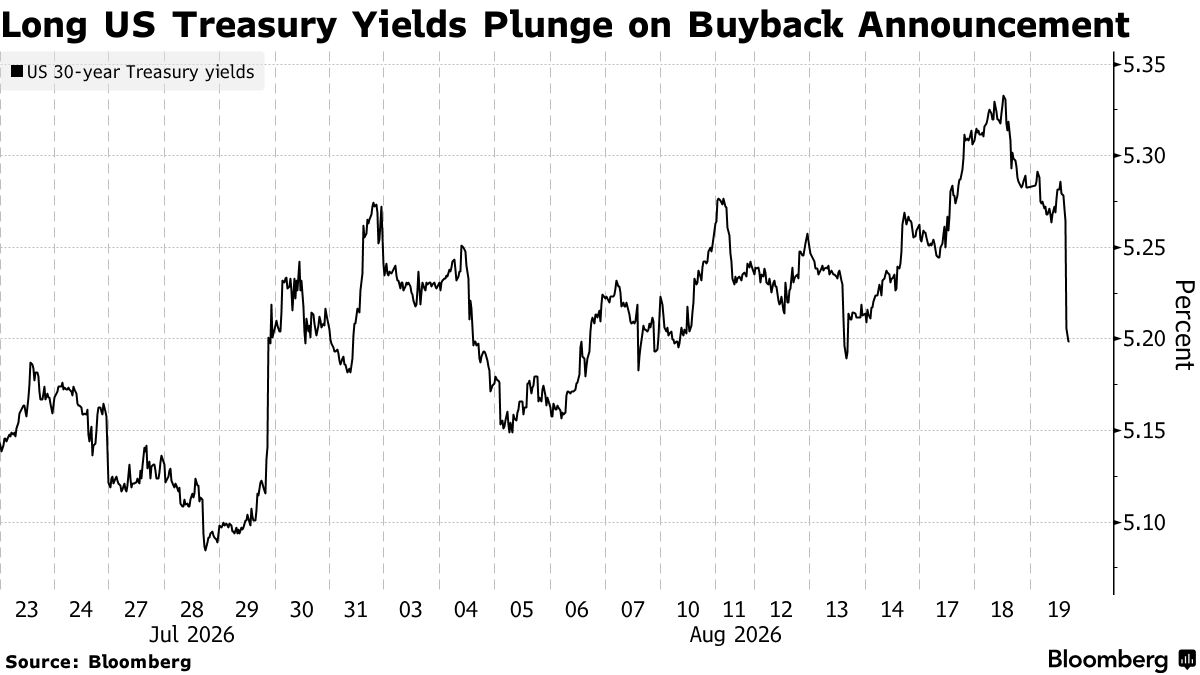
Bloomberg – Bessent Boosts Debt Buybacks After Climb in Treasury Yields
______
4. Two Sigma Co-Founder Says Founder Feud Led to Loss of Major Investor
Two Sigma Investments’ billionaire co-founder John Overdeck said the quantitative hedge fund group lost a “major investor” due to his feud with co-founder David Siegel.
Overdeck described the fallout from the men’s clash Wednesday while he was testifying concerning another major split in his life — his divorce from wife Laura Overdeck. Their New Jersey matrimonial trial, in which she’s seeking a share of his stake in Two Sigma, kicked off last week.
John Overdeck, who began his testimony on Aug. 12, brought up the unnamed investor who redeemed as part of arguments over whether several Two Sigma documents, including the firm’s original operating agreements, should be sealed during the trial. He expressed concern that other investors could leave if certain documents became public. “If the investors become aware that there are disclosable disputes or arbitration among the partners, it gives them reason to question whether the company will be able to conduct itself in the way they’ve expected it to,” Overdeck said on the stand. “I am concerned large investors of the company would consider reducing their investments with the company.”
Overdeck and Siegel have been embroiled in a decades-long feud that the firm disclosed as a material risk in 2023. The two have also been involved in arbitration over their disagreements. Both stepped down from top executive roles, but Overdeck has since rejoined the firm’s management committee.
Two Sigma declined to comment on Overdeck’s testimony. A person familiar with the matter said the client who left did so in 2023.
Two Sigma was able to replace the client who left, Overdeck said. The firm’s assets under management are also now at an all-time high of more than $75 billion, and it has been raising capital for new funds.

Bloomberg – Two Sigma Lost a ‘Major Investor’ Over Co-Founders’ Feud
______
5. University of California System Sells $1 Billion of Private Equity Stakes
The University of California system sold $1 billion of private equity stakes to HarbourVest Partners, according to people familiar with the matter.
UC Investments, which manages a roughly $190 billion portfolio that includes retirement, endowment and cash assets, started the sales process earlier this year, the people said, asking not to be identified discussing confidential details.
The portfolio sold at a discount of more than 10% and includes funds from software and other technology-focused buyouts, the people said. Campbell Lutyens advised the investment office on the sale, the people said. The secondhand market for private stakes ballooned in recent years, initially propelled by interest-rate increases that slowed dealmaking and spurred fund managers and their backers to look for new ways to drum up cash.
The US war with Iran and fears of the impact of artificial intelligence on software and other companies contributed to higher discounts in the secondary market. While secondary volumes hit a record $121 billion in the first half of 2026, the volume of deals by clients of private funds grew marginally — to $56 billion from $54 billion a year earlier, according to Evercore Inc.
UC Investments’ portfolio as of mid-2025 included $39 billion of market value of private assets, with private equity accounting for a little more than half of that, according to its most recent annual report. Private equity allocation increased to 10% of the total portfolio from 5% in mid-2020.
Bloomberg – University of California Offloads $1 Billion of Private Equity Stakes
______
6. China Recovers Rocket Booster on Land for First Time
China recovered a rocket booster on land for the first time, a major step toward catching up with US companies such as Elon Musk’s SpaceX.
A Zhuque-3 rocket successfully landed on its legs in the northwestern province of Gansu after helping send a satellite into orbit on Wednesday, according to the official Xinhua News Agency. The rocket took off from Jiuquan, one of China’s main space launch centers.
A video clip posted online showed the rocket tapering back on thrust to touch down gently on special legs, which should allow it to be reused. The breakthrough marks a significant milestone for China’s space program and the craft’s developer, LandSpace Technology, as reusable rockets can substantially lower the cost of launching satellites into space. China successfully recovered a rocket last month, but it did so at sea. “LandSpace’s successful booster recovery with the Zhuque-3 is a watershed moment for China’s commercial space sector,” said Eric Zhu, an analyst at Bloomberg Intelligence.
Still, the nation’s had its share of setbacks, such as a rocket exploding during launch earlier this month.
The Zhuque-3 is developed by commercial launch provider LandSpace, which applied last year to go public in Shanghai, as it races to catch up to SpaceX and Blue Origin LLC, which is backed by Jeff Bezos. The company’s past achievements include beating SpaceX in launching a methane-fueled rocket.
SpaceX has been recovering and recycling the boosters of its Falcon 9 rockets since 2017, helping it grab a near-monopoly in heavy-lift rocket launches and supporting the growth of its thousands of Starlink satellites.
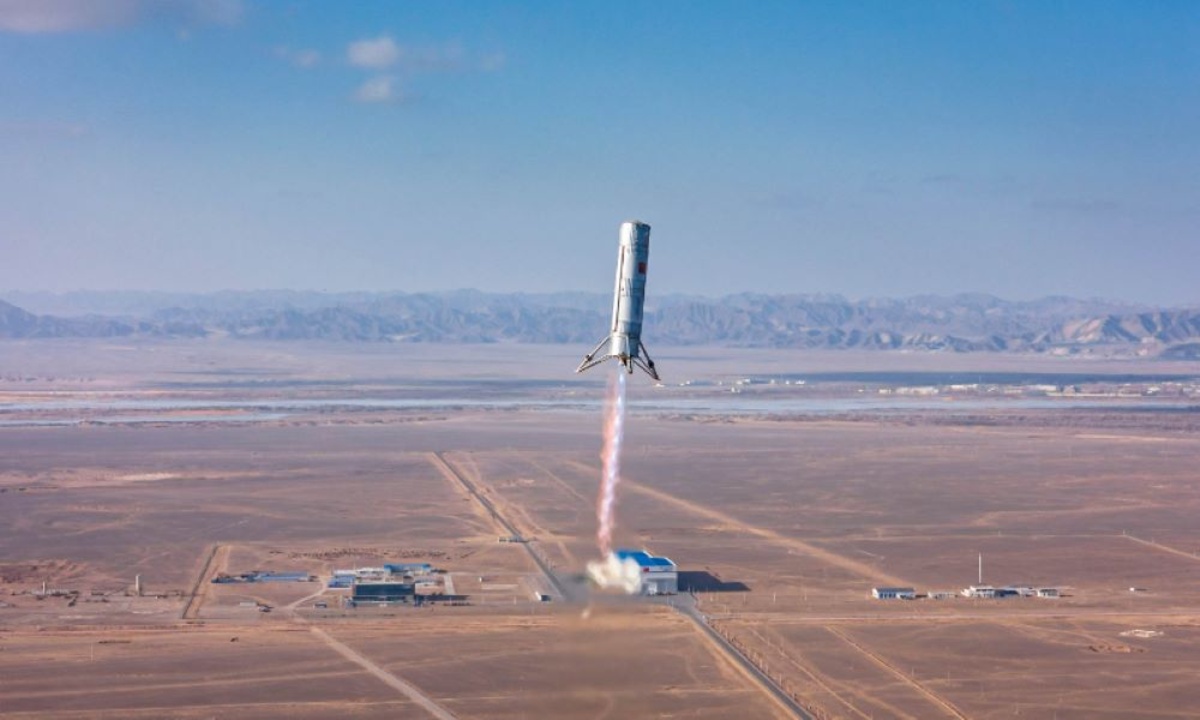
Bloomberg – China Rocket Comes Home for First Time, Closing in on SpaceX
______
7. US Retailer Target Posts Higher Q2 Profit and Boost From Tariff Refunds
The highly anticipated initial public offering of Yushu Technology Co., known as Unitree Robotics, drew huge demand from retail investors as China’s leading humanoid robot maker opened books in Shanghai.
The retail portion of the IPO was 5,526 times subscribed, with individual investors submitting 9.8 million orders, according to an exchange filing released on Monday.
The Hangzhou-based company sold 40.4 million shares at 150.8 yuan apiece, raising about 6.1 billion yuan ($904 million) to become mainland China’s first publicly traded humanoid robot maker. The company is expected to debut on Shanghai’s STAR Market this month. The offering gives Unitree a market value of approximately 61 billion yuan. The high level of interest underscores the investor appetite for physical AI companies, one of Beijing’s strategic priorities. The strong subscription was also likely aided by backing from strategic investors including AI startup DeepSeek, reinforcing confidence in Unitree and the growing convergence of artificial intelligence and robotics.
About 20% of the shares for sale have been allocated to strategic investors including DeepSeek, a Tencent Holdings Ltd.-affiliated investment vehicle, and investment arms of major state-owned enterprises such as China National Petroleum Corp., China Southern Power Grid Co. and China Telecom Corp.
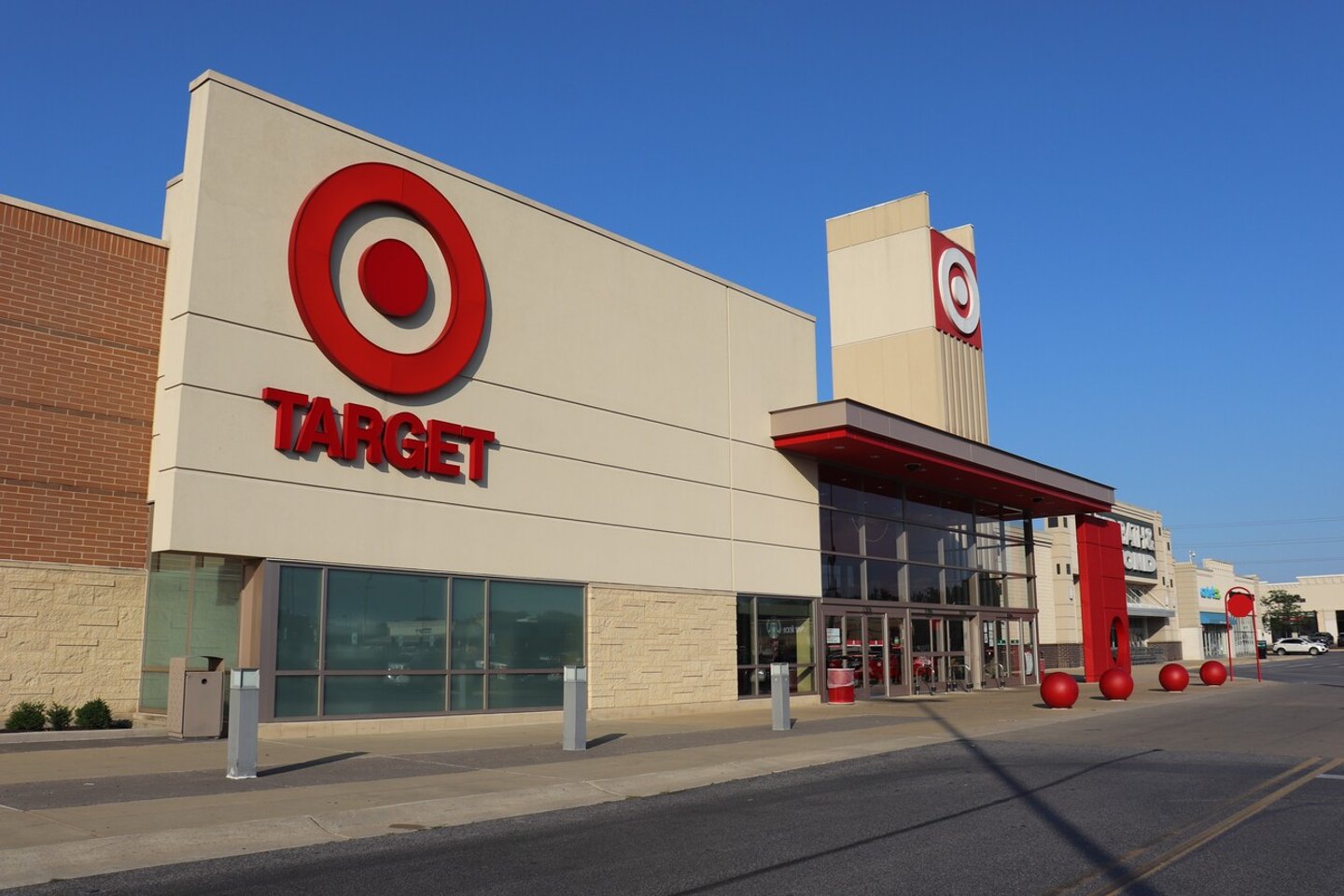
Financial Times – Target profits double after $1bn tariff refund
______