—— Walmart to Sell Multi-Tranche Dollar Bonds; Microsoft Ends Revenue Sharing with OpenAI; Developer Seeks $4.54bn in Junk-Debt for Nvidia-Linked AI Data Center; United CEO Scott Kirby Slams American Airlines for Declining Merger Overture; Organic Juice Maker Suja Life Seeks $213m in US IPO as Markets Reopen; California Man Charged with Attempted Assassination of President Trump at DC Gala; Intel Bond Sale Draws $50 Billion in Orders to Fund Irish Plant Buyback
1. Walmart to Sell Multi-Tranche Dollar Bonds
Walmart’s entrance into the bond market this Monday aligns with a broader rush among blue-chip American corporations to tap credit markets before potential volatility increases. By offering a diverse five-part deal, Walmart is catering to varying investor appetites for duration, with the 10-year benchmark providing a spread that reflects the company’s strong investment-grade standing. The retail giant’s move follows a pattern of large-scale corporate refinancing seen earlier this year by other tech and consumer staples leaders who are bolstering their balance sheets amidst shifting interest rate expectations.
The issuance arrives during a heavy week for the primary market, as institutional investors shift focus toward high-quality paper. While market attention has recently been dominated by AI-driven capital expenditures and energy price fluctuations, Walmart’s straightforward corporate-purpose financing underscores the ongoing demand for stability.
As traders keep a close eye on the “Warsh pivot” at the Federal Reserve and the persistent inflationary pressure from energy markets, the success of this multi-billion dollar offering will serve as a litmus test for corporate credit resilience in a high-uncertainty environment.
Bloomberg – Walmart Plans to Sell Investment-Grade Bonds on Monday
______
2. Microsoft Ends Revenue Sharing with OpenAI
The restructuring of the Microsoft-OpenAI partnership signals a “de-risking” strategy for the tech giant as regulatory scrutiny and market competition intensify. By ending the revenue-sharing agreement and removing exclusivity, Microsoft gains the flexibility to integrate a broader array of models—including its own internal “MAI” projects and open-source alternatives—without being tethered solely to OpenAI’s roadmap. This pivot acknowledges a new reality where OpenAI has become a formidable competitor, recently securing multi-billion dollar compute deals with Amazon and Google to power its next-generation agents.
For OpenAI, the loss of exclusivity is a necessary step toward its ambition of becoming a vertically integrated AI powerhouse. Accessing Amazon’s Trainium chips and vast data center footprint allows Sam Altman’s firm to diversify its infrastructure beyond Azure’s limits.
While Microsoft remains a massive shareholder with its 27% stake, the “unbundling” of their operational ties suggests that the era of the “Big Tech + Single Startup” monopoly is giving way to a more fluid, multi-cloud ecosystem where performance and cost-per-token will dictate the next winners of the AI race.
Bloomberg – Microsoft to Stop Sharing Revenue With Main AI Partner OpenAI
______
3. Developer Seeks $4.54bn in Junk-Debt for Nvidia-Linked AI Data Center
The aggressive expansion of AI infrastructure has pushed data center developers deeper into the high-yield credit markets as they race to secure the massive capital required for power and cooling logistics. This $4.54 billion offering by the Tract-backed entity is a direct bet on the sustained demand for Nvidia-powered computing clusters. By targeting the junk-bond market during a window of heightened investor appetite, the developers are capitalizing on the scarcity of “plug-and-play” data center capacity, especially in strategic hubs like Nevada where access to utility substations has become a critical bottleneck.
This surge in riskier debt issuance—surpassing $22 billion year-to-date for AI-linked projects—reflects a broader trend where traditional equity is being supplemented by high-yield instruments to accelerate speed-to-market. While the February offering was massively oversubscribed, the sheer volume of new supply in the market is testing the limits of institutional lenders.
As the “Big Tech” arms race between Google, Meta, and Microsoft continues to deplete global data center inventory, these specialized developers are emerging as the essential, albeit highly leveraged, architects of the autonomous age.
Bloomberg – Nvidia-Tied Data Center Taps Junk-Debt Market for $4.5 Billion
______
4. United CEO Scott Kirby Slams American Airlines for Declining Merger Overture
The public confirmation of United Airlines’ failed bid for American Airlines marks a desperate tactical pivot as the US aviation industry grapples with the economic fallout of the Iran war. Scott Kirby’s aggressive rhetoric underscores the immense pressure on legacy carriers to find scale amidst surging fuel prices and a volatile domestic market. Despite Kirby’s argument that the merger would serve as a catalyst for job creation and industrial strength, the “Big Four” consolidating into a “Big Three” faces an uphill battle against both antitrust sentiment and the administration’s stated preference for maintaining competitive pricing.
The collapse of these talks leaves United to navigate a challenging 2026 fiscal year in isolation. With President Trump signaling his disapproval of further domestic airline consolidation and the DOJ maintaining a watchful eye on hub dominance, the path to inorganic growth through mega-mergers appears effectively blocked.
For investors, the focus now shifts back to how these carriers will manage shrinking margins as energy costs remain elevated due to the ongoing Strait of Hormuz closure and the persistent risk of a wider regional conflict.
Financial Times – United chief hits out at American Airlines for refusing merger talks
______
5. Organic Juice Maker Suja Life Seeks $213m in US IPO as Markets Reopen
Suja Life’s move to go public marks a significant test for the “health and wellness” sector in a 2026 market defined by volatile consumer spending and high energy costs. By pricing its IPO at a potential $927 million valuation, Suja is leaning into its recent Q1 2026 profitability turn to convince investors that its portfolio of premium, cold-pressed brands can scale beyond specialty retail. The involvement of Paine Schwartz Partners underscores the trend of private equity firms seeking exits for food-tech and nutritional beverage investments as the IPO window begins to crack open for companies with clear paths to sustained net income.
The company’s growth strategy hinges on its diversified brand architecture, ranging from the high-margin Vive Organic wellness shots to the mass-market appeal of Slice Soda. As inflationary pressures from the ongoing Middle East conflict impact logistics and packaging costs, Suja’s ability to maintain its premium pricing at major retailers like Walmart and Target will be a critical metric for post-IPO performance.
For the broader market, Suja’s debut will serve as a bellwether for whether investors are ready to reward growth in the consumer staples space after a year of heavy focus on AI and infrastructure.

Bloomberg – Organic Juice Maker Suja, Backer Seek $213 Million in US IPO
______
6. California Man Charged with Attempted Assassination of President Trump at DC Gala
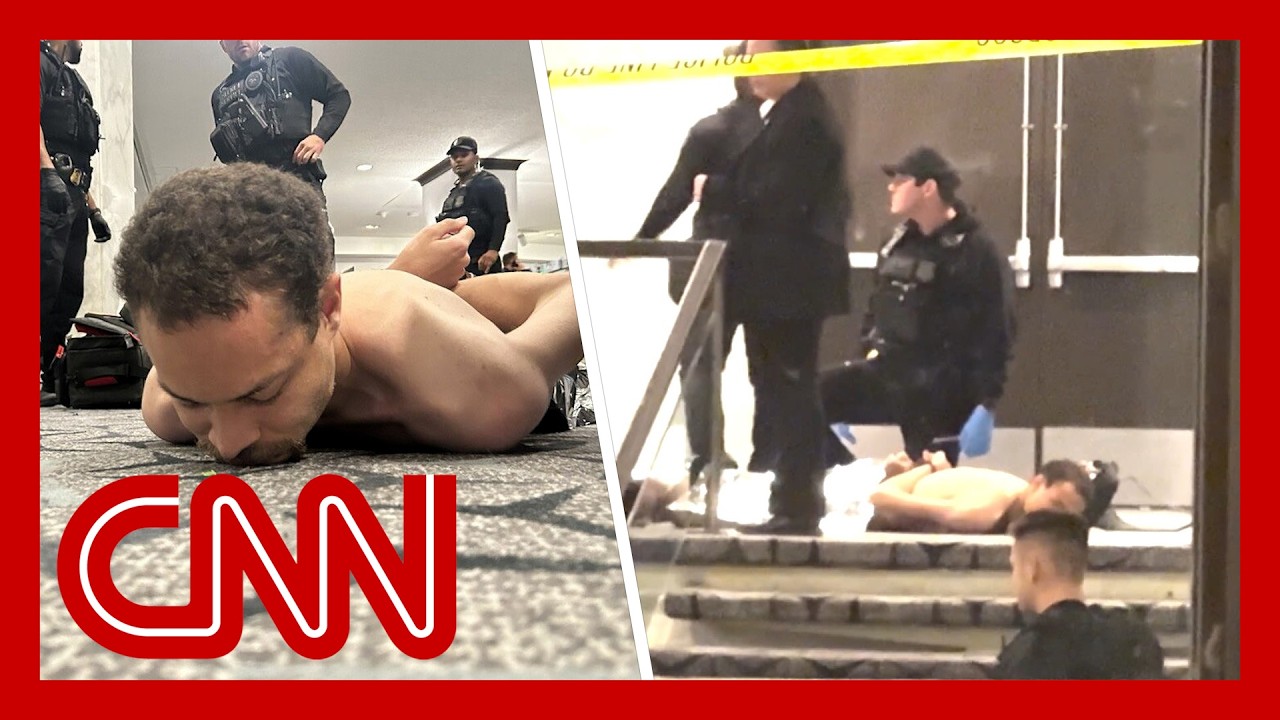
The security breach at the Washington Hilton has sent shockwaves through the capital, marking a violent escalation in the political tensions surrounding the 2026 administration. Secret Service agents and local law enforcement moved swiftly to intercept Cole Tomas Allen as he attempted to bypass security perimeters during the high-profile White House Correspondents’ Association dinner. The immediate evacuation of the President and Vice President highlights the severity of the threat, which occurred amidst a period of intense global volatility and domestic political friction.
The manifesto sent by Allen, currently under review by federal investigators, paints a portrait of a suspect motivated by radical political grievances. By labeling the sitting President a “traitor,” Allen’s rhetoric mirrors the deep polarization currently gripping the American electorate.
As the Justice Department moves forward with the prosecution, the incident is expected to trigger an immediate and comprehensive review of security protocols for public appearances involving the executive branch, especially as the administration navigates the complex fallout from the ongoing Iran war and domestic economic challenges.
Bloomberg – Gala Shooting Suspect Charged With Trying to Assassinate Trump
______
7. Intel Bond Sale Draws $50 Billion in Orders to Fund Irish Plant Buyback
The Department of Justice’s decision to drop its investigation into the Federal Reserve’s headquarters renovation marks a pivotal shift in the central bank’s leadership transition. By handing the inquiry over to the Fed’s Office of Inspector General, the DOJ has effectively removed a significant political and legal cloud hanging over Kevin Warsh’s confirmation process. Warsh, known for his more dovish leanings compared to the current hawkish consensus, is widely expected to prioritize growth and potential rate cuts—a prospect that immediately resonated with bond markets.
The market’s reaction underscores the high stakes of the Fed’s “Warsh pivot.” The decline in short-dated Treasury yields reflects a growing bet among institutional investors that the upcoming leadership change will usher in a period of monetary easing to support the administration’s economic agenda.
While US Attorney Jeanine Pirro maintained a stern tone regarding future accountability, the immediate removal of the DOJ from the process is being interpreted by Washington insiders as a “green light” for the Senate to proceed with Warsh’s confirmation hearings without the distraction of an active criminal probe.

Bloomberg – Intel Draws $50 Billion of Investor Orders for $6.5 Billion Bond
______