
— U.S. Job Growth Surges as Unemployment Rate Drops Again; Apple Revenue Decline Beats Expectations; Carvana Shares Soar on Narrower Loss; WHO Ends Global Covid Emergency; April New Home Listings Plunge; PacWest Fuels Regional Bank Rally; MTA Buys $82M Harlem Site for Subway Project
1. U.S. Job Growth Surges as Unemployment Rate Drops Again
The U.S. Bureau of Labor Statistics reported today that nonfarm payrolls increased by 253,000 in April, exceeding March’s 165,000, while the unemployment rate dropped to a decades-low 3.4%.
Leading sectors in job creation included healthcare, professional services, leisure, and hospitality. However, revised figures for the previous two months cut prior job gains by 149,000.
In April, average hourly earnings rose 0.5% from the previous month and were up 4.4% year over year.
The latest data shows resilient labor demand, which, while positive overall, complicates the Federal Reserve’s policy decisions.
KPMG economists noted that the new numbers were “far from ideal” and suggested the Fed may need to continue raising rates.

______
2. Apple Revenue Decline Beats Expectations
On Thursday after the market closed, Apple Inc. released its fiscal second-quarter earnings report, showing total revenue of $94.8 billion, surpassing the forecasted $92.6 billion. Although revenue fell 2.5% quarter-over-quarter, the decline was less than the 5% drop previously warned to investors.
The earnings results indicate that demand for Apple computers and phones is gradually recovering, which is also favorable for investors in key suppliers such as Qualcomm.
Revenue from the flagship iPhone reached $51.3 billion, exceeding expectations and rising 1.5% year-over-year.
Apple also announced a $90 billion stock repurchase plan, consistent with last year’s program, and declared a 4% increase in its quarterly dividend to $0.24 per share.
This morning, Apple shares rose 2.2% in pre-market trading, with a year-to-date gain of 28%.
Apple’s revenue has now declined for two consecutive quarters, and the company expects revenue to drop by about 3% in the current quarter.
Revenue in Apple’s China market also increased, supported by the recovery of the local economy.

______
3. Carvana Shares Soar on Narrower Loss
Heavily indebted auto retailer Carvana announced Thursday that its first-quarter EBITDA was $24 million, and net loss per share was $1.51, better than analysts’ forecast of $1.96. As losses came in narrower than expected, Carvana’s share price surged 35% today — its largest gain since March 2020.
In 2022, used car inventories rose while the Federal Reserve continued to hike interest rates, leading to an overall decline in used car prices.
Piper Sandler analyst Alexander Potter said Carvana appears to have come back from the brink of collapse, but the company is now facing liquidity issues, and macroeconomic conditions remain poor. Investing in Carvana stock, he said, requires “a strong stomach.”
Carvana CEO Ernest Garcia stated that the company has reduced its vehicle inventory, cut back on marketing spending, and lowered costs by $160 million. The company’s top priority now is to generate cash flow as soon as possible.
Carvana has had a strong start to 2023, with the goal of reducing debt and achieving positive cash flow quickly.

______
4. WHO Ends Global Covid Emergency
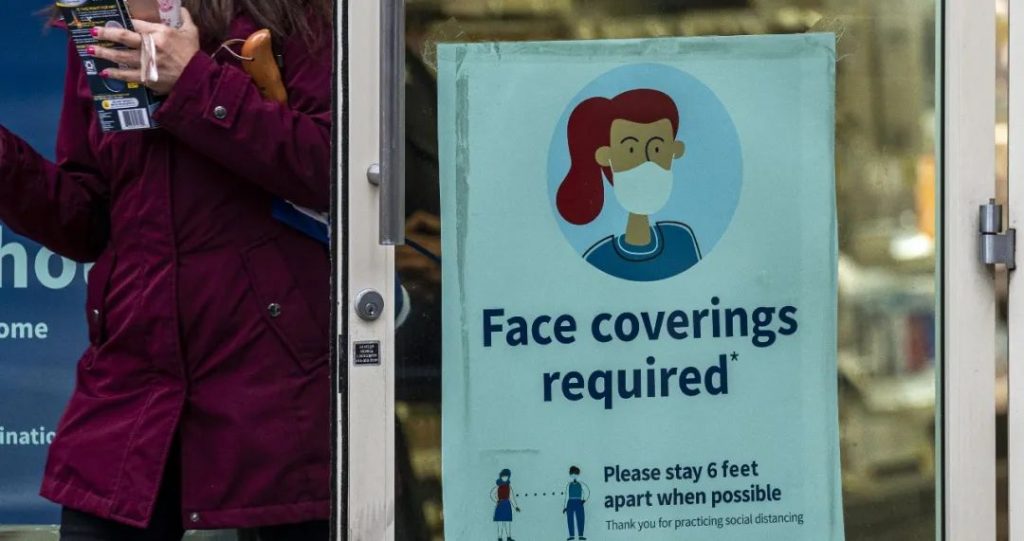
Today, the World Health Organization’s (WHO) Covid-19 Emergency Committee announced at its fifteenth meeting that Covid-19 will no longer be classified as a global health emergency.
As Covid-19 infection levels have returned to early-2020 conditions, the United States plans to end its national emergency designation for the virus on May 11.
To date, the coronavirus has caused 20 million deaths worldwide. WHO will still refer to Covid-19 as a pandemic, citing the ongoing risks posed by virus mutations.
WHO stated that the virus will continue to coexist with humanity, and countries must not lower their guard simply because the emergency designation has ended.
The coronavirus remains powerful — last week, one person died every three minutes.
______
5. April New Home Listings Plunge
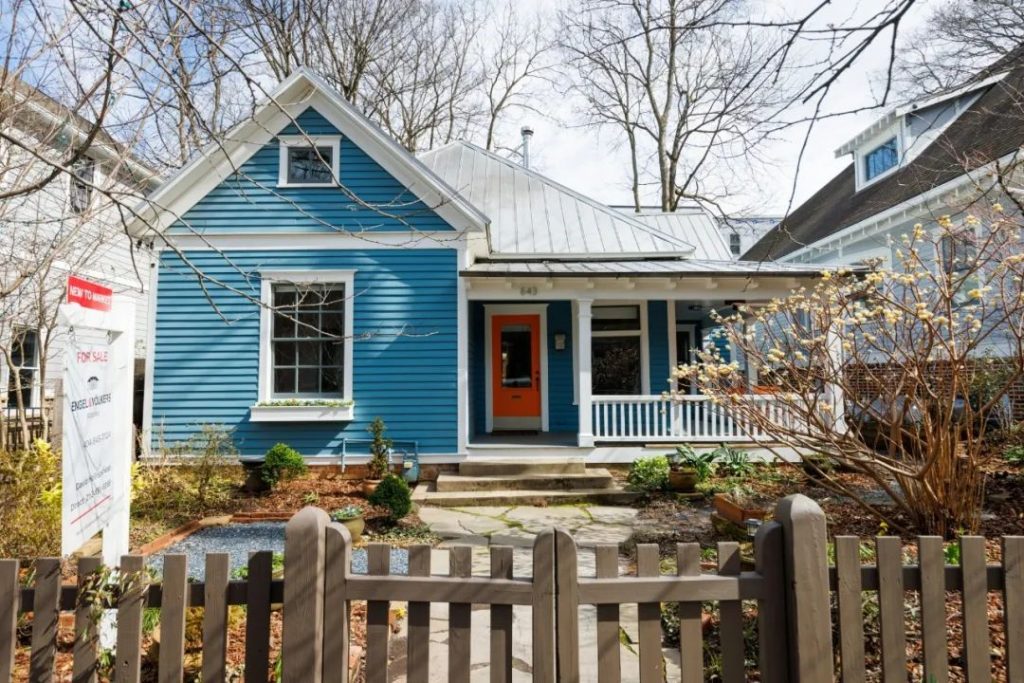
According to the latest data from Realtor.com, new home listings in April fell 21% year-over-year and were down 31% compared to the same period in 2019.
As mortgage costs surged, buyers adopted a wait-and-see approach, and homeowners also chose not to sell during the spring season.
Realtor.com Chief Economist Danielle Hale stated that homeowners are reluctant to sell primarily because their locked-in mortgage rates are far below market rates, and selling would require them to take out a more expensive loan to buy a new home.
The data also showed that the number of homes sold in April declined 23%. The median listing price rose 2.5% year-over-year to $430,000, marking the slowest pace of price growth since April 2020.
Although home sales have slowed significantly, there is still no clear or sustained downward trend in home prices.
______
6. PacWest Fuels Regional Bank Rally
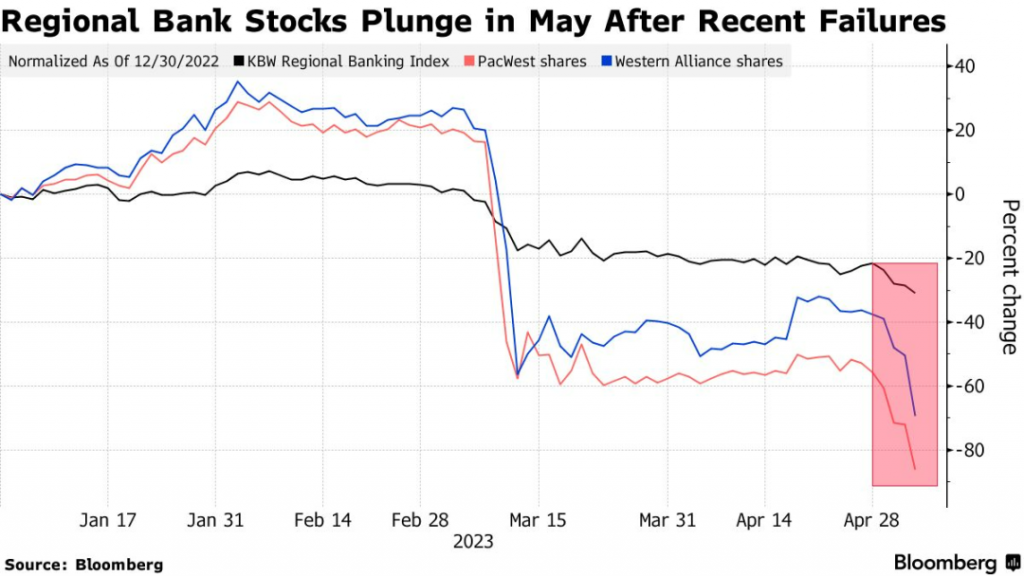
Today, shares of PacWest Bancorp surged 60%, triggering a rally in regional bank stocks — shares of Western Alliance and Zions Bancorp also rose 42% and 18%, respectively.
On Thursday, PacWest disclosed that it was holding talks with potential investors. Fears that the bank was in crisis sent its shares plunging 51% that day.
Since early March, concerns have grown over unrealized losses in U.S. regional banks’ balance sheets. Several banks have experienced runs, and four have already failed.
Billionaire investor Bill Ackman believes the banking crisis is far from over, though others argue that these banks’ stocks have been excessively sold off.
Buying stocks of banks like PacWest is akin to catching a falling knife.
______
7. MTA Buys $82M Harlem Site for Subway Project
The Metropolitan Transportation Authority (MTA) of New York recently acquired a 1.6-acre site in Harlem from Extell Development for $82 million. It is estimated that MTA paid an 80% premium for the site.
Extell originally purchased the land in 2014 for $39 million and spent an additional $21 million to buy out PathMark’s lease. When negotiations with MTA began, Extell priced the property at $114 million.
MTA plans to use the site to build a new station on the Q subway line and to construct underground connections to the nearby 4, 5, and 6 lines.
MTA purchased Extell’s land at a price well above market value, delivering Extell a substantial return.

______
This content is sourced from Financial Times, Bloomberg, and The Real Deal, among other financial news outlets.