—— Blackstone Executive Pushes Back on AI Bubble Concerns; Meta Ramps Up AI Spending as Shares Slide More Than 7%; Hedge Funds Build Near-Record Short Positions; Blackstone Cuts Some Property Valuations; GTA 6 Hype Drives 22% Jump in US PlayStation 5 Sales; US Orders Some Diplomats and Families to Leave Saudi Arabia; Moderna, Merck Shares Fall on Possible Leak of Melanoma Vaccine Data
1. Blackstone Executive Pushes Back on AI Bubble Concerns
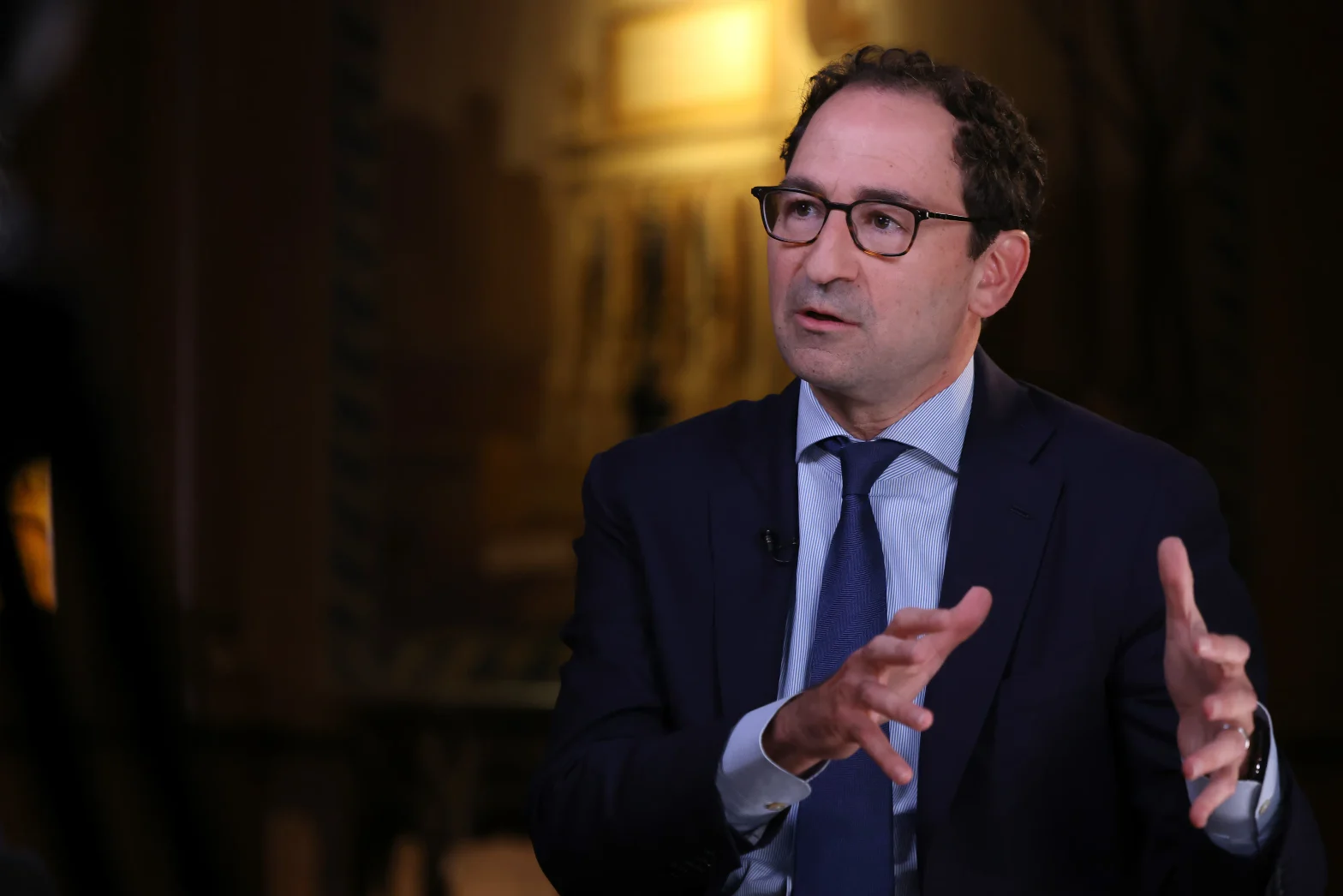
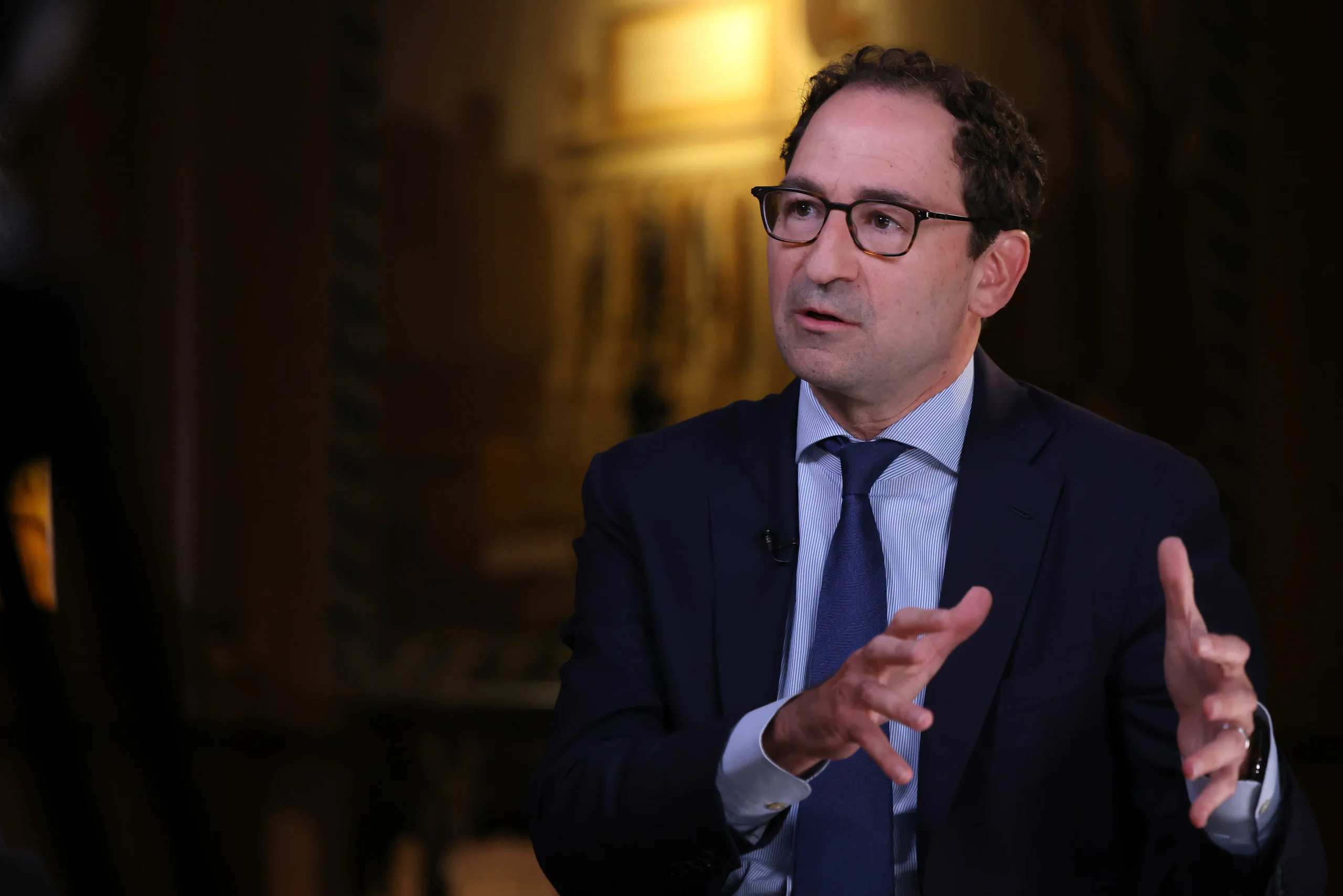
Blackstone President Jon Gray pushed back against growing concerns that the artificial intelligence boom has entered bubble territory, just days after billionaire investor Ken Griffin said the market is “almost certainly” in a bubble. Speaking to Bloomberg Television on Thursday, Gray argued that the current AI investment cycle is fundamentally different from the buildup to the telecom bubble of the 1990s.
In a traditional bubble, Gray said, companies build capacity first and then hope that demand eventually arrives. The AI industry is facing almost the opposite situation, with companies expanding infrastructure while still trying to keep pace with rapidly rising demand. Gray pointed to Ode, an AI consulting firm Blackstone created with Anthropic, saying the company is already struggling to keep up with customers. “Demand is almost parabolic,” he said.
At 56, Gray has made AI the largest investment theme of his career. Blackstone has assembled a data-center empire worth about $200 billion and has also been incorporating AI across the hundreds of businesses under its control. The scale of spending has nevertheless raised concerns among some investors, who see parallels between the enthusiasm surrounding AI and the excesses that preceded the dot-com crash.
Blackstone is positioning itself around the physical infrastructure required to support the expansion of AI, rather than simply betting on the technology itself. Gray said the firm is focused on building data centers and other long-term assets that will be needed as companies continue to deploy AI systems and demand for computing power grows.
Bloomberg – Jon Gray Rebuts AI Bubble Warnings, Calls Demand ‘Parabolic’
______
2. Meta Ramps Up AI Spending as Shares Slide More Than 7%;
Meta Platforms is preparing to spend even more aggressively on artificial intelligence after Chief Executive Officer Mark Zuckerberg told investors that the company’s heavy investment in the technology is beginning to pay off. The company raised its capital-spending outlook for 2026 and unveiled a new class of nonvoting stock that could eventually be used to help fund acquisitions and other expenses. The moves nevertheless sent Meta shares lower, with the stock falling more than 7% to $648.26 in New York trading.
Meta said capital expenditures will reach $135 billion to $145 billion this year, raising the bottom of its previous forecast from $130 billion. The company’s future spending commitments have also grown to $825 billion, including leases, computing agreements and energy contracts. The scale of those commitments underscores how much money Meta is continuing to put behind the data centers and computing infrastructure needed to support its AI ambitions.
Zuckerberg has been trying to convince investors that the rising costs are justified, and he pointed to recent progress as evidence that the strategy is working. Meta has made headway with its AI technology in recent months, particularly with its new AI agent Muse, while its core advertising business remains strong. “Our investments are paying off, the core business is strong, and we’re seeing velocity across the board,” Zuckerberg said in the earnings report.
Investors were less convinced by the outlook. Meta’s shares fell sharply after the results, while the company’s credit risk measure climbed to a record. The five-year credit default swaps on Meta’s debt rose as much as 8.9 basis points to about 119.3 basis points a year, according to ICE Data Services. The higher cost of insuring against a potential default reflects growing investor concern over the financial risks associated with the company’s spending plans.
The results also opened a technology earnings season in which investors are expected to focus heavily on the enormous sums being committed to AI and whether those investments can ultimately generate sufficient returns. Alphabet, Microsoft and Amazon, three of the biggest corporate spenders on AI data centers, are scheduled to report their quarterly results next week.

Bloomberg – Meta Falls After Boosting Spending Plans for AI Bet
______
3. Hedge Funds Build Near-Record Short Positions
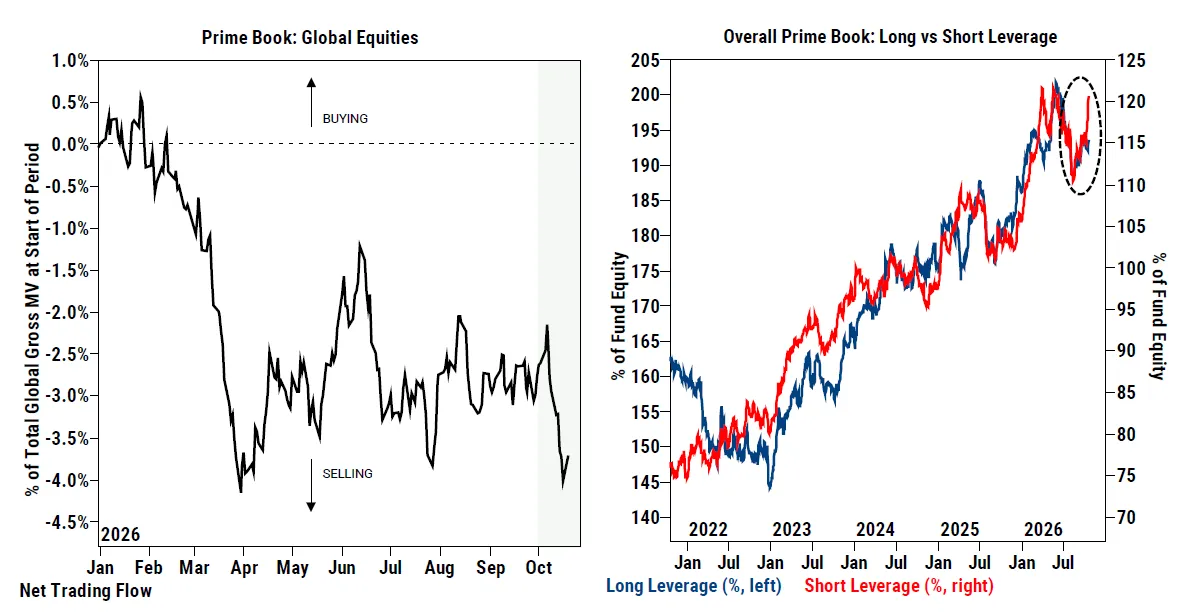
Hedge funds have been adding aggressively to stock shorts this month, leaving bearish positioning near a five-year high and creating the potential for a sharp short squeeze if markets suddenly turn higher. Goldman Sachs’ prime brokerage desk says short sales across global equities have exceeded long purchases by roughly five to one, while short leverage across its book has climbed to the 99th percentile of its five-year range.
At the same time, net leverage among fundamental long/short funds has fallen close to a three-year low, even as gross leverage has increased. The combination suggests that managers are not simply pulling out of equities, but are taking on more short exposure while keeping their overall net positions relatively low.
The shift has followed a sharp reversal in the AI trade. A hotter-than-expected US inflation reading, together with renewed concerns over whether massive spending on AI computing capacity will generate sufficient returns, has prompted investors to sell semiconductor and AI infrastructure stocks. The selling began with Asian memory stocks before spreading across the broader technology sector. The Nasdaq 100 dropped 5.5% last week, its steepest weekly decline since April 2025, while futures on the benchmark were down nearly 2% on Thursday.
The selloff has not been particularly kind to hedge funds that remain exposed to the sector. Goldman’s team led by Vincent Lin said in a note this week that global fundamental long/short funds were down 2.5% in October through Monday, reducing their year-to-date gain to 10.1%.
Technology, media and telecommunications-focused funds have performed even worse, falling 7.4% so far this month.
Bloomberg – Hedge Funds Pile Into Shorts as Goldman Flags Stock Squeeze Risk
______
4. Blackstone Cuts Some Property Valuations
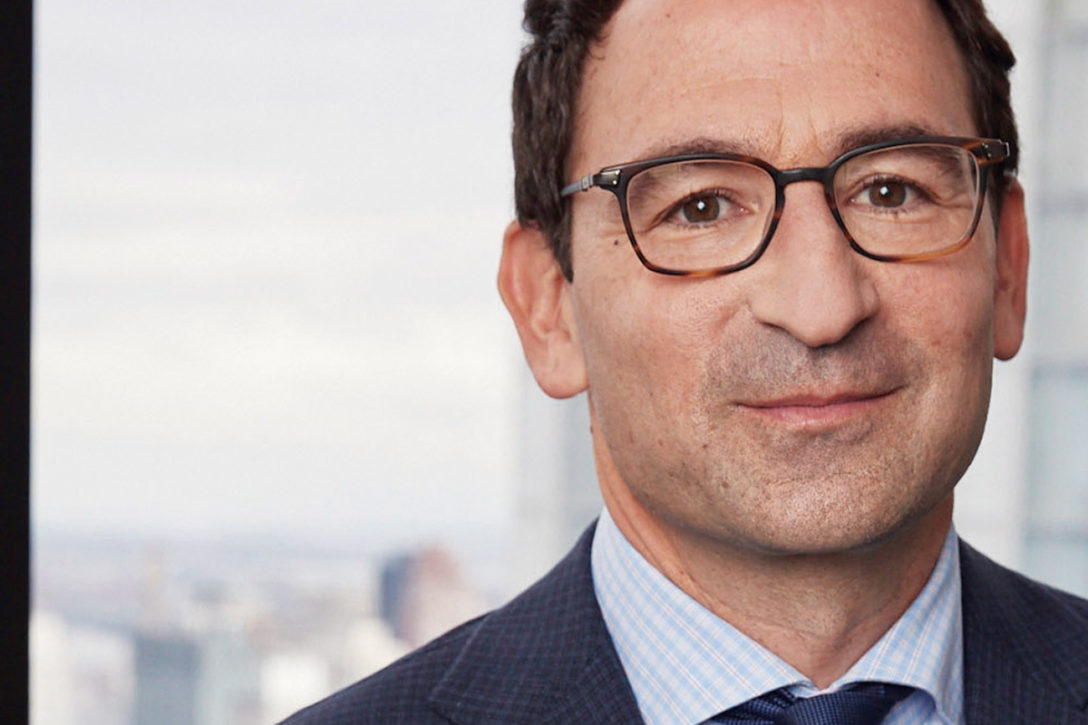
Blackstone president Jon Gray said rising interest rates and geopolitical turmoil had forced the world’s largest alternative asset manager to mark down the value of some property holdings and delay planned public offerings of several portfolio companies. The $1.4tn investment group has recently reduced valuations on slower-growing real estate assets, including large property portfolios in Europe and US multifamily housing, to reflect the impact of higher interest rates.
In an interview with the Financial Times, Gray said the valuation adjustments reflected higher capitalization rates and borrowing costs. At the same time, greater market volatility has made it harder for Blackstone to return capital to investors as quickly as it had expected by taking large investments public. “We have taken five companies public this year, but it has slowed, and we’ve had to delay a few,” Gray said, describing the group’s asset-realisation plans as increasingly mixed.
The outlook has weakened considerably since Gray said in January that Blackstone had “one of our largest IPO pipelines in history”. This month, AirTrunk, the Blackstone-backed data centre operator in Asia, postponed its planned listing until next year. Firmus, another data centre operator backed by Blackstone, meanwhile abandoned a closely watched IPO in Australia. The setbacks have slowed Blackstone’s efforts to use public markets to accelerate exits and return capital to investors.
Gray said the near-term pace of realisations was slower than expected but would eventually normalise as market conditions improved. Blackstone had been moving in that direction before geopolitical volatility disrupted the process, he said, adding that “the sun will come back out”.
The comments came as Blackstone reported third-quarter results that were broadly in line with expectations, although profits generated from asset sales had slowed. The group continued to demonstrate strong fundraising capabilities, however, bringing in new capital from investors ranging from sovereign wealth funds to wealthy individuals.
Blackstone reported $1.32 a share in distributable earnings for the quarter, a measure analysts commonly use as a proxy for cash flow. Fee-related earnings came in at $1.26 a share, slightly below forecasts.
Financial Times – Blackstone cuts property valuations as higher rates hit returns
______
5. GTA 6 Hype Drives 22% Jump in US PlayStation 5 Sales
Anticipation for the imminent release of Grand Theft Auto VI is giving Sony’s nearly six-year-old PlayStation 5 a fresh boost. PS5 unit sales in the US rose 22% in September from a year earlier, according to research firm Circana, while revenue from the hardware climbed 43%, making Sony the top-earning console maker during the month.
The increase in revenue was helped not only by stronger demand but also by price increases introduced over the past year. Sony’s $900 PS5 Pro has attracted particular attention, with the upgraded console either sold out or in limited supply at online retailers around the world, including Amazon, Best Buy, MediaMarkt and Yodobashi Camera. Its stronger performance and graphics capabilities have made the PS5 Pro an appealing choice for players looking to experience GTA 6 at its highest visual quality.
GTA 6 is scheduled for release on Nov. 19 and is initially expected to be available only on Sony’s PlayStation and Microsoft’s Xbox platforms, with a PC version coming later. The game is widely expected to sell millions of copies and potentially set new records for the industry. Sony has a much larger console ecosystem than its rivals, giving the company an advantage as players prepare for one of the most anticipated game launches in years.
The excitement around GTA 6 has already spread beyond the game itself. An exclusive Netflix mini movie tied to the title topped the streaming service’s viewing charts in September, while Twitch chief executive Dan Clancy warned game studios that GTA 6 could absorb much of players’ attention during the holiday season. The unusually intense anticipation is translating into demand for the hardware needed to play the game.
For Sony, the upcoming release is providing a sales lift to a console that is nearing the end of its product cycle and approaching the stage when a successor would normally be expected. At the same time, the company and its industry peers are dealing with elevated memory costs, which are squeezing the margins on every new console produced.

Bloomberg – ‘Grand Theft Auto VI’ Fuels 22% Jump in Sony PlayStation 5 Sales
______
6. US Orders Some Diplomats and Families to Leave Saudi Arabia
The US has ordered some diplomats and their families to leave Saudi Arabia as the security threat from Houthi militants intensifies, following a series of increasingly deadly attacks by the Iran-backed group from Yemen. At least four people were killed a day earlier in attacks on an oil facility and an airport in Saudi Arabia’s east, adding to concerns over the safety of American personnel in the region.
Saudi Aramco evacuated its headquarters in Dhahran on Thursday after an alarm was triggered, according to people familiar with the matter. The cause of the alarm remained unclear, and employees were subsequently told to work from home. It was also unclear how long the remote-work arrangement would remain in place. Saudi Aramco did not immediately respond to requests for comment.
The evacuations come as tensions across the Middle East escalate sharply. The New York Times reported that the US and Israel are drawing up plans for renewed strikes against Iran, while Tehran has said it carried out attacks on additional tankers traveling through the Strait of Hormuz. The developments raise the risk that the conflict could increasingly threaten both energy infrastructure and one of the world’s most important oil-shipping routes.
The US personnel pullout is also broader than Saudi Arabia. NBC News reported that some American military personnel are expected to be removed from bases in Jordan, Kuwait and Qatar, suggesting Washington is reassessing the security risks facing its forces across the region.

Bloomberg – US Pulls Diplomats From Saudi as Houthi and Iran Tensions Worsen
______
7. Moderna, Merck Shares Fall on Possible Leak of Melanoma Vaccine Data
American households that rely primarily on heating oil are facing significantly higher energy costs this winter. The US Energy Information Administration (EIA) expects heating bills for these households to rise about 21% from last winter.
The forecast adds to the energy-cost pressures facing the Trump administration. With the midterm elections just four weeks away, Republicans are expected to face voter dissatisfaction over higher gasoline, electricity and other energy costs.
Heating oil prices are closely linked to diesel, which has surged as the US-Iran war and Ukrainian drone strikes on Russian refineries have tightened fuel supplies.
The EIA expects heating oil prices across the US to rise about 30% this winter from a year earlier. However, milder weather in the Northeast is expected to partially offset the impact on household bills, as homeowners may consume less fuel.
About 3% of US households primarily rely on heating oil, with the vast majority located in the Northeast. Maine has the highest share of heating-oil-dependent households in the country. As of Sept. 28, heating oil prices in the state stood at $5.96 per gallon, nearly 80% above the level a year earlier.
The EIA also raised its forecast for crude oil prices. It now expects Brent crude to average $105 a barrel in the fourth quarter, $14 higher than its previous estimate. US retail diesel prices are expected to remain above $6 a gallon through October before falling toward $4.50 a gallon next year.
On the supply side, the agency expects Middle Eastern oil production and exports to gradually recover. Increased shipments through the Strait of Hormuz, combined with alternative transportation routes and other supply workarounds, could eventually ease pressure on global oil markets.

Bloomberg – Moderna, Merck Shares Fall After Possible Melanoma Data Leak
______