—— AI Infrastructure Stocks Slump as OpenAI Misses Key Growth Targets; UAE to Exit OPEC on May 1 as Iran War Redraws Global Energy Map; Prediction Markets as “Side Hustle” Fails as 69% of Traders Lose Money; Coca-Cola Taps “Mini-Cans” to Win Inflation-Stressed Consumers; Airbus Profit Plummets 50% as Supply Chain Woes Hand Edge to Boeing; Blue Apron Supplier FreshRealm Files Bankruptcy; NYC Mayor Delays $127bn Budget, Pressures State to Cut PTET Tax Breaks
1. AI Infrastructure Stocks Slump as OpenAI Misses Key Growth Targets
The reported miss on performance targets has reignited a debate over the sustainability of the AI investment boom. According to internal sources, OpenAI’s Chief Financial Officer Sarah Friar has expressed private concerns that the startup may struggle to fund its astronomical data center expansion—estimated to require over $1.4 trillion—unless revenue growth accelerates sharply. This tension is reportedly creating a rift between Friar’s push for fiscal discipline and CEO Sam Altman’s vision of securing as much compute power as possible.
The divergence in the AI market is becoming increasingly stark. While OpenAI-linked stocks have risen approximately 75% since late 2024, a basket of companies tied to Alphabet (Google) has surged more than 300% over the same period, buoyed by the rapid rise of Gemini and the successful monetization of AI features in Search.
As investors prepare for the upcoming Big Tech earnings season, the focus has shifted from “visionary potential” to “tangible ROI,” putting intense pressure on infrastructure providers like Vertiv and GE Vernova to prove that the massive capital expenditures from AI developers will continue unabated despite these early signs of a growth plateau.

Bloomberg – OpenAI-Linked Stocks Slump on Report It Missed Key Targets
______
2. UAE to Exit OPEC on May 1 as Iran War Redraws Global Energy Map
The UAE’s departure from OPEC marks a historic fracturing of the Gulf’s energy monolith at a moment of extreme global instability. By exiting the cartel on May 1, Abu Dhabi is reclaiming its sovereign right to set production levels, a move designed to maximize its massive investments in spare capacity as the Iran war chokes off traditional supply routes. While the Strait of Hormuz closure currently forces all regional producers to throttle back output, the UAE is positioning itself for a “post-war” future where it can act as a swing producer independent of Riyadh’s supply-cut mandates.
This strategic decoupling signals the end of the decades-long Saudi-Emirati energy alliance. For OPEC+, the loss of its most technologically advanced and well-capitalized member severely diminishes its ability to defend price floors. As crude trades near $111 a barrel, the UAE’s “agility-first” approach underscores a growing belief among Gulf states that the rigid quotas of the past are incompatible with the rapid shifts in energy flows caused by regional conflict.
This exit not only weakens the group’s geopolitical leverage but also complicates international efforts to stabilize global inflation as energy security becomes a fractured, every-nation-for-itself pursuit.
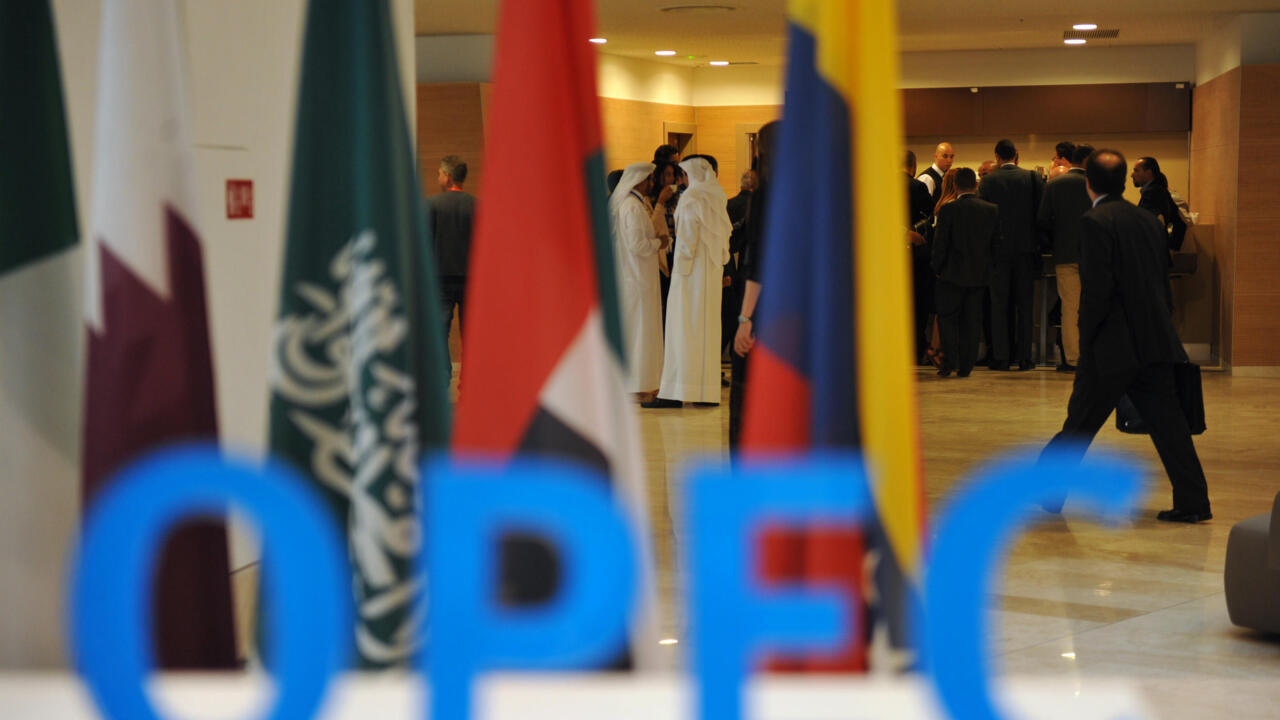
UAE to Leave OPEC in May as Iran War Reshapes Oil Market
______
3. Prediction Markets as “Side Hustle” Fails as 69% of Traders Lose Money
The explosion of prediction markets—offering bets on everything from elections to Middle East regime changes—has created a digital “casino” masked as a sophisticated financial tool. While enthusiasts frame these platforms as more accurate than traditional polling or expert analysis, the blockchain ledger reveals a stark wealth transfer from retail “experimenters” to high-frequency algorithmic bots. For the average user, the dream of a lucrative side hustle has largely resulted in a net drain on personal savings, with the vast majority of participants ending up in the red.
Professor Martineau’s findings highlight a dangerous misconception among young traders: the belief that “knowledge” of current events translates to “alpha” in the market. In reality, the concentrated gains of the top 1% suggest that technical execution and speed are far more critical than political or social insight.
As these platforms continue to grow amidst global volatility, the gap between the marketed potential for financial freedom and the statistical reality of retail loss poses a significant risk to an already economically squeezed demographic.
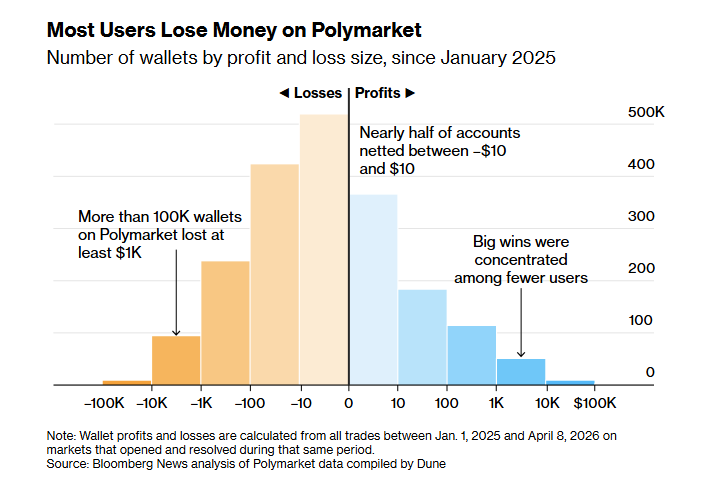
Bloomberg – Most Prediction Market Traders Are Losing Money While Bots Rack Up Gains
______
4. Coca-Cola Taps “Mini-Cans” to Win Inflation-Stressed Consumers
Coca-Cola’s strategic pivot toward “affordability and premiumization” has allowed it to navigate a K-shaped consumer recovery with remarkable agility. By shrinking pack sizes to lower the absolute price barrier—a move that saw mini-can volume soar in convenience stores—the company has retained price-sensitive shoppers who might otherwise switch to generic brands. Simultaneously, its ability to command a premium for specialized, high-volume products like the “Superfan” edition in the UK demonstrates a robust brand equity that can still capture discretionary spending from affluent demographics.
The company’s decision to raise its full-year 2026 earnings forecast to 8%–9% reflects a growing confidence in this dual-track strategy. As the Iran war continues to fluctuate energy and logistics costs, Coca-Cola is proving that essential “small luxuries” like a cold soda remain resilient.
While competitors struggle with the binary choice of raising prices or losing volume, Coca-Cola’s internal engineering of its product mix—leveraging data to place the right size at the right price point—sets a high bar for the consumer staples sector this earnings season.

Bloomberg – Coca-Cola Posts Best Growth Since 2024 With Smaller Sizes
______
5. Airbus Profit Plummets 50% as Supply Chain Woes Hand Edge to Boeing
Airbus’s struggle to fix its fragmented supply chain has created a rare opening for Boeing to reclaim its manufacturing dominance. The 84% profit drop in Airbus’s commercial aircraft division highlights the severe impact of industrial bottlenecks, specifically with engine delivery targets that Pratt & Whitney has failed to meet. While Airbus battles these internal production hurdles and the fallout from faulty fuselage panels, Boeing has demonstrated a more resilient recovery in output, marking a significant shift in the duopoly’s balance of power for the first time in nearly a decade.
The divergence in performance comes at a precarious time for the aviation industry. Surging jet fuel costs driven by the Iran war are squeezing airline margins, making efficient, on-time aircraft deliveries more critical than ever. As Airbus CEO Guillaume Faury pivots to address Middle East-related logistical risks, the company’s ability to hit its ambitious 870-delivery target for 2026 remains in doubt.
Investors are now closely watching whether Airbus can resolve its disputes with key component suppliers before Boeing cements its lead in the high-stakes narrowbody market.

Bloomberg – Airbus Profit Drops as Earnings Collapse at Main Aircraft Unit
______
6. Blue Apron Supplier FreshRealm Files Bankruptcy
FreshRealm’s bankruptcy marks a turbulent end to its aggressive expansion strategy, highlighting the fragile nature of the meal-kit supply chain. Despite years of acquiring new production capacity, the company’s recent struggles with cost-cutting and a high-profile product recall proved fatal to its balance sheet. The March recall, triggered by contaminated raw materials from sub-tier suppliers, not only strained FreshRealm’s relationship with its primary client, Blue Apron, but also necessitated a costly settlement that effectively liquidated the company’s core operations.
For the broader grocery tech sector, the acquisition of FreshRealm’s assets by Misfit Market signals a consolidation of the at-home delivery market. Misfit Market, known for its focus on reducing food waste, now inherits a sophisticated but debt-laden infrastructure.
By stepping in to fulfill Blue Apron’s contracts, Misfit Market is positioning itself as a critical backend player in the meal-kit ecosystem, even as Blue Apron itself navigates a consumer market increasingly squeezed by inflation and rising energy costs from the ongoing Iran conflict.

Bloomberg – Blue Apron’s Lone Meal Maker Files Bankruptcy After Food Recalls
______
7. NYC Mayor Delays $127bn Budget, Pressures State to Cut PTET Tax Breaks
The Department of Justice’s decision to drop its investigation into the Federal Reserve’s headquarters renovation marks a pivotal shift in the central bank’s leadership transition. By handing the inquiry over to the Fed’s Office of Inspector General, the DOJ has effectively removed a significant political and legal cloud hanging over Kevin Warsh’s confirmation process. Warsh, known for his more dovish leanings compared to the current hawkish consensus, is widely expected to prioritize growth and potential rate cuts—a prospect that immediately resonated with bond markets.
The market’s reaction underscores the high stakes of the Fed’s “Warsh pivot.” The decline in short-dated Treasury yields reflects a growing bet among institutional investors that the upcoming leadership change will usher in a period of monetary easing to support the administration’s economic agenda.
While US Attorney Jeanine Pirro maintained a stern tone regarding future accountability, the immediate removal of the DOJ from the process is being interpreted by Washington insiders as a “green light” for the Senate to proceed with Warsh’s confirmation hearings without the distraction of an active criminal probe.

Bloomberg – Mamdani Pushes to Shrink NY Hedge-Fund, Private-Equity Tax Break
______