—— Trump Delivers Record-Breaking SOTU; Deutsche Bank and Goldman Sachs Deploy Agentic AI for Compliance; UBS Warns Private Credit Defaults Could Hit 15%; Trump Immigration Overhaul Triggers Corporate Talent Exodus; US Mortgage Rates Hit 6.09% as Refinancing Activity Jumps 4%; Jefferies Sued by Fund Investors Over First Brands Collapse; Nvidia Annual Revenue Surpasses 215 Billion Dollars.
1. Trump Delivers Record-Breaking SOTU
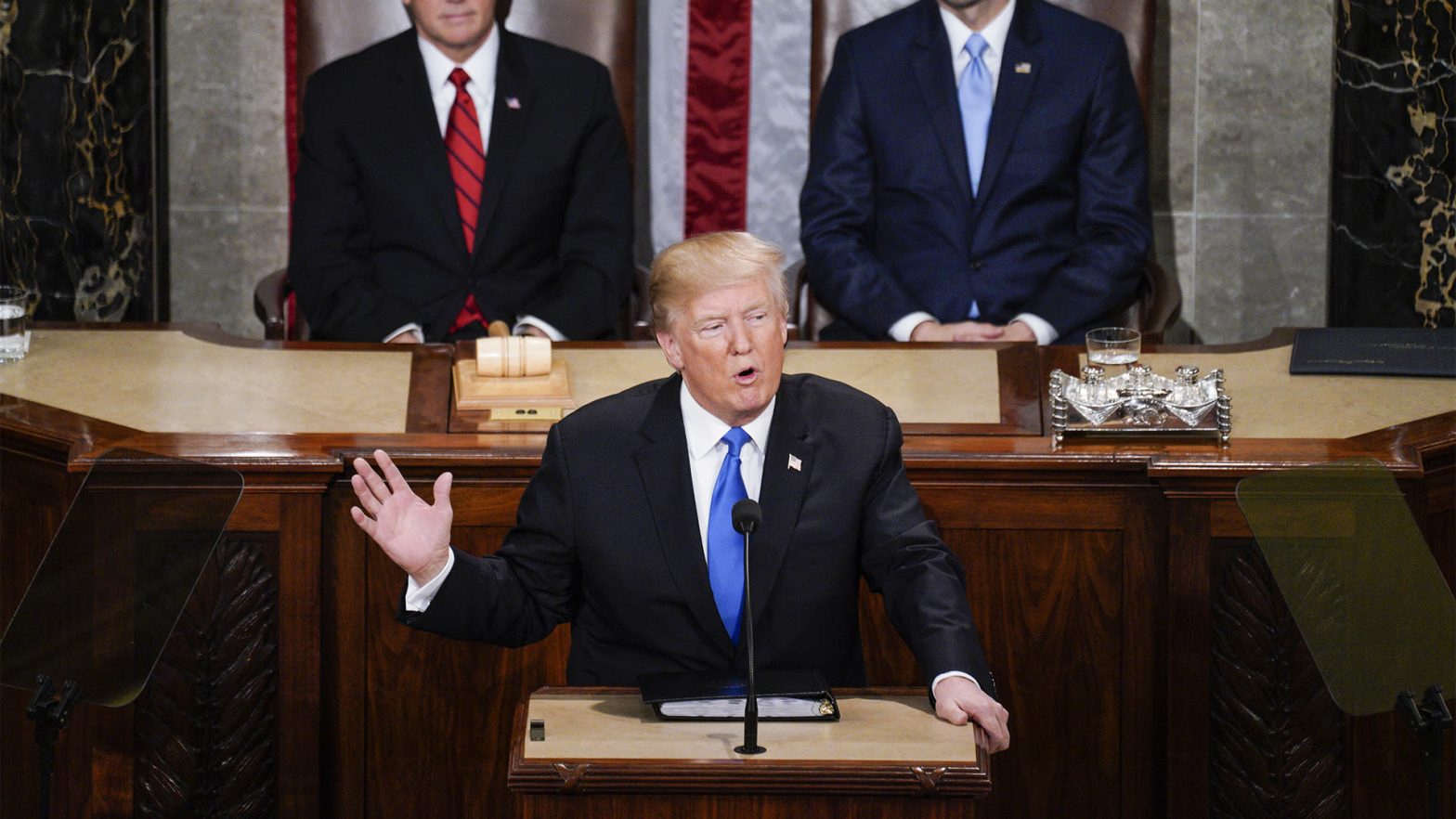
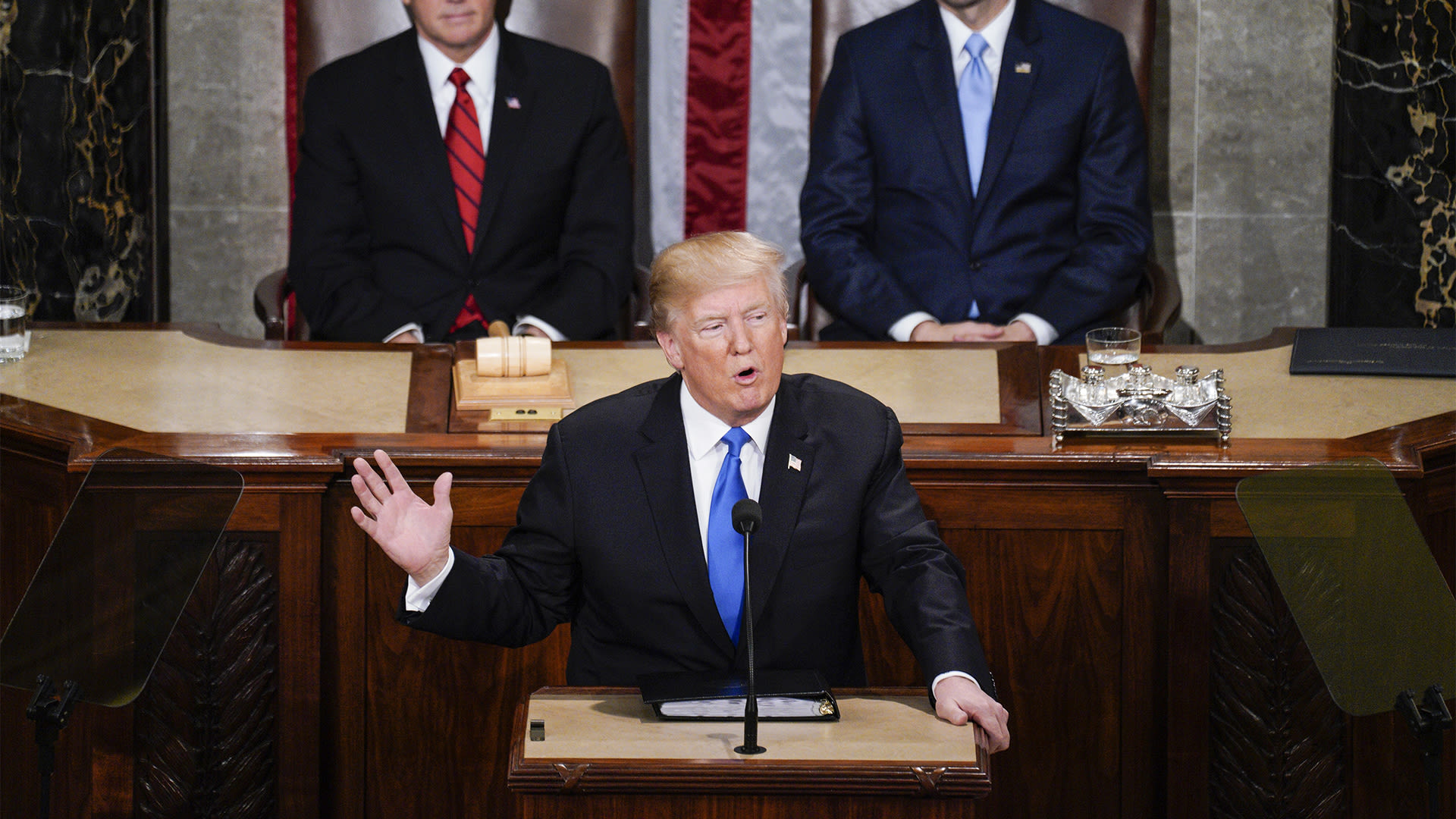
President Donald Trump delivered a 108-minute State of the Union address on Tuesday—the longest in modern US history—doubling down on a message of unprecedented economic triumph despite sagging approval ratings. Facing critical midterm elections in November, Trump repeatedly claimed the nation has entered a new “Golden Age,” declaring that America is now “bigger, better, richer, and stronger” than ever before. While recent polls indicate that 55% of Americans feel worse off than a year ago, the President boasted that inflation is “plummeting,” incomes are “rising fast,” and the “roaring economy is roaring like never before.”+2
Throughout the nearly two-hour speech, Trump focused on self-congratulation rather than unveiling fresh policy ideas to address the cost-of-living crisis. He cited falling prices for gasoline, eggs, and beef as evidence of his success, though independent fact-checkers noted that overall food prices remain elevated and the national gas average of $2.92 is well above his $2.30 claim. Trump also utilized the platform to blast the Supreme Court’s recent decision striking down his global tariffs, calling the ruling “totally wrong” and “unfortunate.”
In a bid to win over blue-collar voters, he pledged that the federal government would provide up to $1,000 in matching retirement funds for workers without access to 401(k) plans, though he provided no specifics on how the program would be funded.
Bloomberg – Trump Brushes Off Affordability Worries in State of Union Speech
______
2. Deutsche Bank and Goldman Sachs Deploy Agentic AI for Compliance
Deutsche Bank AG and Goldman Sachs Group Inc. are spearheading the integration of agentic artificial intelligence into their core compliance operations to bolster trading surveillance and detect potential misconduct. Unlike standard AI chatbots, agentic AI is designed to act autonomously—planning and executing complex workflows to spot anomalies in orders and market movements. Bernd Leukert, Deutsche Bank’s head of technology, noted that the lender is collaborating with Google Cloud to develop large language models (LLMs) specifically for flagging market abuse. The bank also plans to roll out an LLM-based system later in 2026 to monitor the internal and external communications of its sales and trading staff for any suspicious behavioral patterns.
Simultaneously, Goldman Sachs is testing autonomous agents powered by Anthropic’s Claude 4.6 model to handle labor-intensive back-office tasks such as trade reconciliation and regulatory reporting. Goldman CIO Marco Argenti described these systems as “digital co-workers” capable of reasoning through multi-step processes that previously resisted automation. These agents are particularly effective at identifying subtle signals of market manipulation or illicit coordination that might be hidden in non-standard professional jargon. While regulators like the UK’s FCA have raised concerns about the speed and governance of autonomous AI, both banks emphasize that human compliance officers remain the final decision-makers.
The shift underscores a broader trend in 2026 where financial institutions move from reactive monitoring to proactive, AI-driven risk mitigation.

Bloomberg – Deutsche Bank, Goldman Look to AI to Flag Trader Misconduct
______
3. UBS Warns Private Credit Defaults Could Hit 15%
UBS Group AG strategists, led by Matthew Mish, raised their worst-case default forecast for the $1.8 trillion private credit industry to 15% on Tuesday, up from 13% just weeks ago. The revised outlook identifies “rapid and severe AI disruption” as a primary catalyst capable of upending corporate borrowers. With direct lenders heavily exposed to the tech sector—estimates suggest 40% of sponsor-backed loans are tied to software—the emergence of AI tools that threaten traditional business models has created a precarious environment. UBS noted that current default rates are trending toward 5%, while signs of borrower distress, such as Payment-in-Kind (PIK) interest, are nearing post-pandemic highs.
The grim forecast coincides with a confidence crisis triggered by Blue Owl Capital Inc., which recently moved to permanently halt redemptions in one of its funds and sell off $1.4 billion in assets. This decision wiped $2.4 billion off Blue Owl’s market value and dragged down shares of major peers including Ares Management, Blackstone, and Apollo. The market is increasingly concerned that high-leverage software firms, long the darlings of private credit, could be rendered obsolete by AI-driven automation.
While some industry leaders argue the panic is exaggerated, UBS emphasizes that credit investors can no longer ignore “technological displacement” as a systemic risk, warning of a potential credit crunch that echoes the early structural fractures of 2008.
Bloomberg – Private Credit Fears Deepen With UBS Warning of 15% Defaults
______
4. Trump Immigration Overhaul Triggers Corporate Talent Exodus
The world’s largest corporations are grappling with lost personnel and forced relocations as Donald Trump’s overhaul of the US immigration system prompts a rethink of the nation’s status as a global talent hub. Professional services firms, tech giants, and manufacturers report that once-routine visa applications now face massive backlogs and higher denial rates. According to the Financial Times, White House policies—including a new $100,000 fee for H-1B specialty worker applicants and enhanced social media screenings—have severely disrupted the ability of multinationals to bring top-tier engineers and scientists to the US. In one extreme case, an Atlanta-based employee had a January visa appointment rescheduled by US officials to 2027.
This tightening of legal immigration pathways is pushing organizations to establish talent hubs outside the US. Xiao Wang, CEO of consultancy Boundless Immigration, noted a slowdown in US applications as clients increasingly look toward the UK and Canada. Scott Bettridge of law firm Cozen O’Connor highlighted that companies are now “parking” critical new hires in cities like Toronto for a year, with the intent of later transferring them to the US via the more affordable L-1 intra-company program.
As talent mobility becomes slower and more costly, executives are being forced to make strategic trade-offs that could permanently shift the landscape of global corporate headquarters.
Financial Times – US role as global talent hub in doubt amid Donald Trump’s visa crackdown
______
5. US Mortgage Rates Hit 6.09% as Refinancing Activity Jumps 4%
US mortgage rates slipped last week to their lowest levels since September 2022, fueling a significant uptick in refinancing activity but failing to lure hesitant homebuyers back into the market. According to Mortgage Bankers Association (MBA) data released Wednesday, the 30-year fixed mortgage rate dropped 8 basis points to 6.09% for the week ending Feb. 20. Similarly, the rate on 5-year adjustable-rate mortgages (ARMs) fell to 5.23%. This downward trend has spurred a 4% increase in the refinancing index—now at its second-highest level in five months—as homeowners move to lock in lower monthly payments amid the first sustained rate relief in years.
Despite the drop in borrowing costs, the purchase market remains in a state of malaise. The MBA’s measure of home purchase applications fell 4.7% last week to its lowest mark since April, illustrating that record-high home prices continue to outweigh the benefits of cheaper financing. While President Donald Trump recently directed Fannie Mae and Freddie Mac to purchase $200 billion in mortgage-backed securities (MBS) to drive down costs, volatility linked to 2025 tariff policies and inflation concerns has kept secondary market spreads wide.
As the spring selling season approaches, the housing market remains a tale of two sectors: a robust refinancing wave for current owners versus a stalled entry for prospective buyers struggling with affordability.
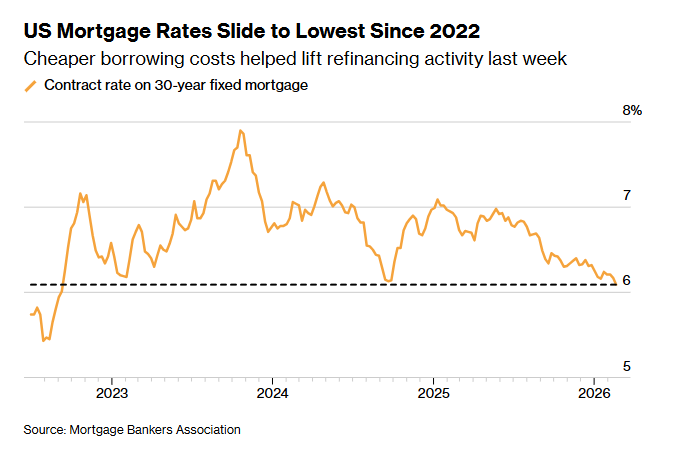
Bloomberg – US Mortgage Rates Reach Lowest Since 2022, Spurs Refinancing
______
6. Jefferies Sued by Fund Investors Over First Brands Collapse
AI startup Anthropic hosted a virtual event titled “The Briefing: Enterprise Agents” on Tuesday, unveiling 10 new industry-specific plugins for its Claude Cowork platform. These tools are engineered to automate sophisticated workflows across human resources, investment banking, design, and legal services. Anthropic announced high-profile partnerships with FactSet, LSEG, S&P Global, and Intuit, enabling business users to conduct real-time financial analysis, equity research, and wealth management directly within the Claude interface. The company also introduced the Claude Agent SDK, allowing enterprises to build and manage private plugin marketplaces tailored to their internal compliance and operational standards.
The live demonstration triggered immediate and divergent swings across Wall Street. Shares of financial information providers FactSet, S&P Global, and Moody’s all climbed at least 2% as the tools validated their role as essential data “ingredients” for the AI era. Intuit’s stock also saw a 5% pre-market rebound following its multi-year partnership announcement with Anthropic. Meanwhile, Spotify Technology SA experienced a volatile session; its shares initially jumped 3% after an on-screen mention of its “Honk” internal agent—which reportedly allows top developers to supervise rather than write code—before turning lower as the market weighed the implications of white-collar automation.
This release follows a brutal “SaaSpocalypse” sell-off in early February triggered by Anthropic’s initial legal tools, though this latest briefing focused on integrating AI into established professional ecosystems.
Bloomberg – Jefferies Fund Sued by Investors Over First Brands Collapse
______
7. Nvidia Annual Revenue Surpasses 215 Billion Dollars
Nvidia, the world’s most valuable company, beat Wall Street estimates on Wednesday, as the continued boom in AI infrastructure propelled it to record-breaking financial heights. For the fourth quarter of fiscal 2026 (ended January 25, 2026), Nvidia reported revenue of $68.1 billion, a 73% increase year-over-year, outperforming the consensus estimate of $66.2 billion. For the full fiscal year, total revenue surpassed the $200 billion milestone for the first time, reaching $215.9 billion, while net income exceeded $100 billion—a historic feat for the semiconductor industry.
The primary driver of this growth was the Data Center segment, which posted record quarterly revenue of $62.3 billion, fueled by the rapid deployment of its Blackwell architecture. CEO Jensen Huang stated that computing demand is growing exponentially and that customers are racing to invest in AI infrastructure, noting that Blackwell GPUs are effectively “sold out.” Looking ahead, Nvidia provided stellar guidance, forecasting revenue of $78 billion for the current quarter—well above the $72.1 billion anticipated by analysts.
Despite potential headwinds from Trump administration tariffs, Nvidia remains committed to its roadmap, with the next-generation Vera Rubin GPU on track for launch later in 2026 to secure its monopoly in the global AI factory buildout.

Financial Times – Nvidia rallies on robust earnings powered by AI investment boom
______