—— Private Credit Contagion: Ares Caps Redemptions at $10.7B Fund; Latino Voter Drift Threatens GOP Grip on Power; DeepSeek Ignites “Agentic Fever” with Major Hiring Push; US Deploys 82nd Airborne to Middle East; Microsoft Secures 700MW Texas Site After OpenAI Exit; Amazon and Anthropic Decimate Software Stocks; Gulf Monarchies Edge Toward Direct Conflict.
1. Private Credit Contagion: Ares Caps Redemptions at $10.7B Fund
The $1.8 trillion private credit market, long celebrated as Wall Street’s new gold mine, hit a critical liquidity barrier this Tuesday. Ares Management announced it is limiting withdrawals at its $10.7 billion Ares Strategic Income Fund after investors sought to redeem 11.6% of outstanding shares—more than double the fund’s 5% quarterly cap. The move follows a similar “gating” event at Apollo Global Management on Monday, where clients received just 45% of their requested capital. The coordinated pullback sent Ares shares sliding 4% in Tuesday trading, as the industry grapples with the inherent tension between illiquid direct-lending assets and the daily liquidity expectations of retail investors.
The surge in exit requests marks a pivotal shift in sentiment regarding asset quality and AI-driven disruption. Analysts point to growing anxiety over the sector’s heavy exposure to enterprise software companies—which comprise 21% of the Ares portfolio—now viewed as vulnerable to rapid generative AI displacement. While Ares maintained that the fund saw positive net inflows of $708 million during the quarter, the decision to enforce the 5% limit signals a defensive posture intended to protect long-term solvency. Currently, the spotlight has shifted to Blackstone’s BCRED and Blue Owl, with market participants questioning whether the “semi-liquid” structure of these funds can withstand a sustained macro shock.
As of late March 2026, the private credit industry faces its most significant “stress test” since the 2008 financial crisis, as the era of easy yields gives way to a complex battle for liquidity.

Bloomberg – Ares Limits Private Credit Fund Withdrawals as Redemptions Surge
______
2. Latino Voter Drift Threatens GOP Grip on Power
The Latino voters who propelled Donald Trump back to the White House in 2024 are emerging as the primary threat to his party’s control of Congress as the 2026 midterm elections approach. A fresh national poll by Florida Atlantic University for Bloomberg News reveals that the core issues of inflation and the economy remain the dominant anxieties for U.S. Hispanics, with many reporting little to no relief under the current Republican administration. As gas prices surge toward $4 a gallon amidst the intensifying conflict with Iran, early warning signs—including the election of Miami’s first Democratic mayor in decades—suggest that the GOP’s hold on key demographic strongholds is fracturing.
The affordability squeeze is transforming from a kitchen-table grievance into a potent electoral liability. With Democrats needing only a net gain of a few seats to retake the House, nearly a dozen Republican-held districts with sizable Hispanic populations are now classified as vulnerable. The Bloomberg analysis highlights a growing “disconnection” between the administration’s aggressive immigration tactics and the immediate financial survival needs of Latino families, who earn less on average than other ethnic groups. Currently, while the Senate remains a steeper climb for the opposition, the erosion of the “Red Wall” in the Sun Belt signifies a potential shift toward a divided government in late 2026.
As November nears, Republican leaders like Maria Elvira Salazar are urging a strategic pivot, warning that if the party cannot curb the cost-of-living spike, the historic multi-ethnic coalition built during the 2024 cycle will be a short-lived anomaly in American politics.

Bloomberg – Republicans at Risk of Losing Latino Support Ahead of Midterms
______
3. DeepSeek Ignites “Agentic Fever” with Major Hiring Push
One year after shaking the foundations of Silicon Valley with its R1 reasoning model, Chinese AI disruptor DeepSeek is doubling down on the next frontier: Autonomous Agents. On Tuesday, the Hangzhou-based startup posted a cluster of 17 specialized job openings, including “Agent Deep Learning Algorithm Researchers” and “Infrastructure Engineers.” The move signals a strategic pivot from traditional Large Language Models (LLMs) to AI agents capable of planning, reasoning, and executing complex tasks across digital ecosystems with minimal human oversight. This recruitment drive coincides with a domestic “agentic fever” in China, fueled by the rapid viral adoption of OpenClaw, an open-source framework that integrates autonomous capabilities into platforms like WeChat.
The hiring spree suggests that DeepSeek’s next flagship iteration will be “agent-native” by design. Unlike predecessors that primarily offer text-based insights, these new models are being engineered to act as digital proxies—operating software, managing workflows, and navigating multi-modal environments. While DeepSeek remains famously secretive about its product roadmap, the focus on data evaluation and agentic algorithms underscores its commitment to refining Reinforcement Learning (RL) for real-world utility. Currently, as the tech world anticipates a successor to the R1 model, DeepSeek’s pivot toward the “Agent Economy” reflects a broader 2026 trend: the transition from AI as a consultant to AI as a doer.
Industry observers expect this move to intensify the competition with OpenAI and Anthropic, as the race for the first truly autonomous enterprise AI agent reaches a fever pitch this fiscal year.
Bloomberg – DeepSeek’s Latest Job Postings Highlight Pivot to Agentic AI
______
4. US Deploys 82nd Airborne to Middle East
Escalating the military stakes in the Persian Gulf, the Trump administration is preparing to dispatch approximately 3,000 troops from the elite 82nd Airborne Division to the Middle East. According to the Wall Street Journal, a formal order for a brigade combat team is imminent, as Washington weighs high-stakes options to break Iran’s blockade of the Strait of Hormuz. Known as America’s Global Response Force, the 82nd is trained to deploy anywhere within 18 hours, specializing in parachute assaults to seize strategic assets like airfields and energy infrastructure.
The arrival of paratroopers signals a shift toward credible ground-force options. While the White House has not yet authorized “boots on the ground” inside Iran, President Trump has explicitly refused to rule out seizing Kharg Island—Tehran’s primary oil export terminal—to restore maritime flow. This rapid mobilization coincides with the arrival of two Marine Expeditionary Units, creating a multi-domain encirclement of the Iranian coast. Currently, as the five-day diplomatic reprieve ticks away, the presence of the 82nd Airborne serves as a potent “kinetic backup” to the administration’s demands.
Market analysts warn that any move toward Kharg Island would trigger a systemic shock to global supply chains, anchoring 2026 as a year of unprecedented geopolitical and economic volatility.

Bloomberg – US to Deploy 82nd Airborne Troops to Middle East, WSJ Says
______
5. Microsoft Secures 700MW Texas Site After OpenAI Exit
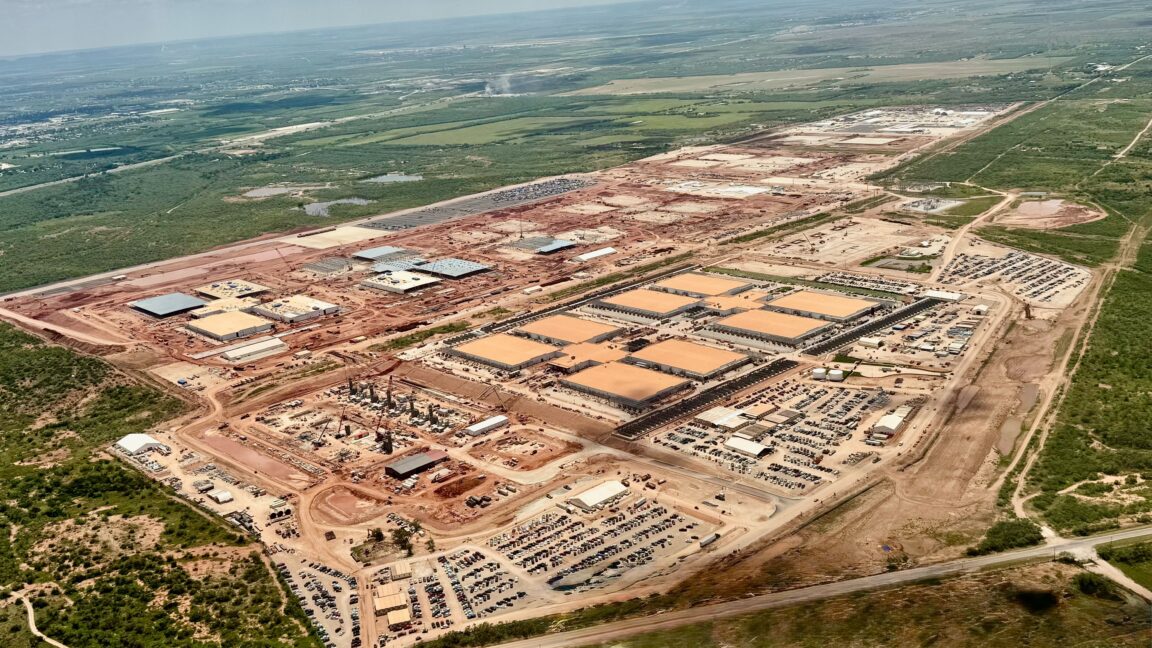
In a major consolidation of AI power, Microsoft Corp. has agreed to lease a massive data center project in Abilene, Texas—a site originally earmarked for Oracle and OpenAI. Representing a staggering 700 megawatts of capacity, the facility sits adjacent to the flagship “Stargate” campus. The deal with developer Crusoe materialized after OpenAI and Oracle walked away from negotiations due to financing hurdles and shifting technical requirements. Microsoft’s swift intervention underscores its aggressive pivot toward massive capital expenditure, coming just months after the company inked $50 billion in long-term server farm commitments.
The acquisition marks a stark contrast to Microsoft’s infrastructure “pause” from a year ago. As internal AI workloads and Azure cloud demand surge in early 2026, the company is moving to lock down high-density power sites before competitors like Meta can secure them. By absorbing a project originally designed for its closest partner, Microsoft is reinforcing its role as the primary landlord of the AI revolution. Currently, while OpenAI has pivoted to alternative hosting solutions, Microsoft’s move ensures it retains control over the physical layer of the Texas “AI Corridor.”
Market analysts suggest that this 700MW addition is a strategic hedge against potential power shortages, solidifying Microsoft’s ability to scale next-generation models throughout this fiscal year.
Bloomberg – Microsoft to Rent Texas Data Center Dropped by Oracle, OpenAI
______
6. Amazon and Anthropic Decimate Software Stocks
The software industry’s valuation moat was breached this Tuesday as a dual-threat from Amazon and Anthropic sent shockwaves through the tech sector. Reports that Amazon Web Services (AWS) is deploying autonomous AI agents to backfill technical roles—previously eliminated in mass layoffs—met with Anthropic’s reveal that its Claude chatbot can now natively “take over” a user’s computer to navigate browsers and spreadsheets. The realization that AI is transitioning from an assistant to a primary executor triggered a massive sell-off; high-flying incumbents like UiPath and Atlassian cratered nearly 10%, dragging the iShares Software ETF to its worst quarterly performance since the 2008 financial crisis.
The contagion is rapidly spreading from equity markets to the bedrock of private finance. In a rare defensive maneuver, private credit titans Ares and Apollo Global Management moved to curb redemptions this week, citing heightened risk in loans tied to software makers deemed “vulnerable” to the AI agent revolution. The shift underscores a radical departure from the status quo: the market is no longer pricing software on “growth per seat,” but on its ability to survive an era of autonomous digital labor. As of late March 2026, the IGV index has plummeted 23% this year alone, reflecting a systemic de-leveraging of the SaaS model.
In light of these developments, analysts warn that the “Agentic Pivot” is not just a software update, but an existential re-rating of the entire digital economy.

Bloomberg – Software Stocks Drop on Report Amazon Is Developing New AI Tools
______
7. Gulf Monarchies Edge Toward Direct Conflict
In what market analysts are describing as a “make-or-break” moment for the tech giant, Apple Inc. announced Monday that its 2026 Worldwide Developers Conference (WWDC) will run from June 8 to June 12. The centerpiece of the event will be the introduction of iOS 27, a software overhaul designed to position the iPhone maker as a leader in on-device artificial intelligence. The conference kicks off with a high-profile keynote at Apple Park, where the company is expected to unveil a transformed Siri—transitioning from a basic voice assistant to a sophisticated, chatbot-like interface capable of complex system-wide task execution.
The software-heavy showcase serves as the critical prologue to a blockbuster hardware cycle this fall. While WWDC26 will focus on “under-the-hood” optimizations to fix OS bloat and bugs, Bloomberg reports that the latter half of 2026 will see the debut of Apple’s most radical hardware shifts yet, including the iPhone 18 Pro line and a highly anticipated foldable iPhone. The integration of neural-engine processing at the silicon level is expected to be the defining theme of the June developer tools. Currently, the industry is looking for clarity on Apple’s “hybrid AI” approach—combining its proprietary on-device models with cloud-based partnerships for advanced queries.
As the AI race intensifies, WWDC26 stands as Apple’s most vital opportunity to reclaim its status as an innovator in an era increasingly defined by autonomous digital agents and specialized LLM hardware.
Bloomberg – Gulf States Weigh Military Options to Counter Iran’s Escalation
______