—— Meta Inks Blockbuster 100 Billion Dollar AI Deal with AMD; Trump’s New 10% Global Tariffs Take Effect Tuesday; Novo Nordisk Ignites Obesity Drug Price War; Miami Developer Gencom Snaps Up Two NYC Luxury Hotels; Harvard Study Finds AI Predicts 71% of Fund Trades; Anthropic Unveils Claude Cowork Enterprise Plugins; FedEx Sues US Government for Tariff Refunds
1. Meta Inks Blockbuster 100 Billion Dollar AI Deal with AMD
Meta Platforms Inc. announced a landmark five-year strategic partnership with Advanced Micro Devices (AMD) on Tuesday to deploy up to 6 gigawatts (GW) of AI data center infrastructure. The agreement marks a decisive win for AMD in its race to challenge Nvidia’s dominance in the AI chip market. Starting in the second half of 2026, Meta will begin deploying custom AMD Instinct GPUs based on the forthcoming MI450 architecture alongside 6th Gen EPYC CPUs, codenamed “Venice.” AMD CEO Lisa Su stated that the deal is valued at “double-digit billions” of dollars per gigawatt, implying a total contract value that could exceed $100 billion over the five-year term. The infrastructure will utilize the jointly developed “Helios” rack-scale architecture to optimize large-scale AI workloads.
In a move to align long-term incentives, AMD issued Meta performance-based warrants to purchase up to 160 million shares of AMD common stock. The warrants are structured to vest in tranches as Meta hits specific deployment milestones up to 6 GW and as AMD’s share price achieves thresholds reaching as high as $600. If fully exercised, Meta could become a major stakeholder with a roughly 10% interest in the chipmaker. The deal supports Mark Zuckerberg’s strategy to “aggressively front-load” computing capacity, with Meta’s 2026 capital expenditure projected to reach $135 billion. Following the announcement, AMD shares surged as much as 15% in pre-market trading, while Meta shares edged up 0.6%.
Analysts view the partnership as a critical diversification for Meta and a clear confirmation of AMD’s status as a Tier-1 provider for the AI era.
Bloomberg – Meta to Spend Billions of Dollars on AMD Gear, Buy Stock
______
2. Trump’s New 10% Global Tariffs Take Effect Tuesday
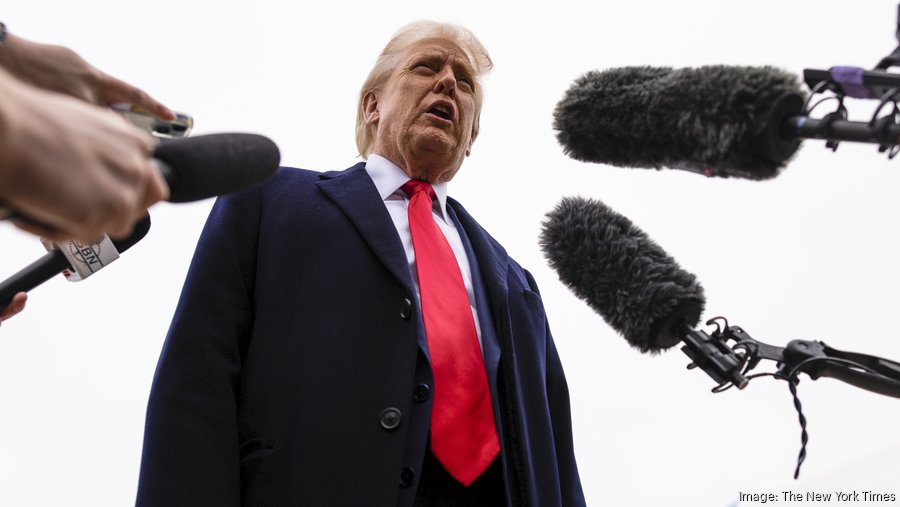
Tuesday, marking a rapid strategic pivot by the White House after the Supreme Court struck down his original sweeping duties last Friday. By invoking Section 122 of the Trade Act of 1974—a statute designed to address “large and serious” balance-of-payments deficits—the administration is attempting to bypass the constitutional limits highlighted by the Court’s 6-3 ruling. While the initial levy is set at 10%, Trump escalated his rhetoric over the weekend, threatening to raise the rate to the statutory maximum of 15% in response to what he termed a “ridiculous and anti-American” judicial decision. U.S. Customs and Border Protection (CBP) has begun collections at the 10% rate, though officials confirm a formal order for a 15% hike is currently being drafted.
The lack of legal and temporal clarity has triggered significant disruption across global markets and diplomatic channels. Major trading partners, including the European Union and India, have abruptly frozen ongoing trade negotiations, citing the inability to plan amidst such volatile policy shifts. In the UK, trade groups expressed “cold comfort” that the starting rate was not 15%, warning that the unpredictability of the “Trump tariff wall” makes it nearly impossible for exporters to manage margins for goods currently in production. The Section 122 authority is limited to a 150-day duration unless extended by Congress, and it includes exemptions for critical sectors such as energy, pharmaceuticals, and essential minerals.
Markets remain on edge ahead of the President’s State of the Union address, seeking guidance on the 15% implementation timeline and the fate of over $133 billion in previously collected duties now subject to legal refund claims.
Bloomberg – Trump’s 10% Levy Takes Effect as US Rebuilds Tariff Wall
______
3. Novo Nordisk Ignites Obesity Drug Price War
Danish pharmaceutical giant Novo Nordisk A/S announced Tuesday that it will significantly reduce the list prices, or wholesale acquisition costs (WAC), for its semaglutide portfolio in the US starting January 1, 2027. Under the new pricing structure, the monthly list price for the obesity treatment Wegovy, the diabetes drug Ozempic, and the oral version Rybelsus will be standardized at $675 across all dosages. This represents a 50% cut for Wegovy from its current $1,349 price tag and a 34% reduction for Ozempic’s $1,028 cost. The move is designed to expand patient access and lower out-of-pocket expenses for individuals whose insurance costs are directly linked to list prices. Following the news, Novo Nordisk shares fell roughly 3% in Copenhagen, while rival Eli Lilly saw a 4% decline in US pre-market trading.
The aggressive pricing strategy follows a turbulent week for Novo Nordisk. On Monday, the company’s stock suffered its worst single-day drop in years after its next-generation drug CagriSema failed to outperform Eli Lilly’s Zepbound in a head-to-head Phase 3 trial. Furthermore, the Trump administration’s recent launch of TrumpRx.gov and successful Medicare price negotiations have placed immense pressure on drugmakers to improve affordability. Jamey Millar, Novo’s US operations chief, noted that while list prices are dropping, the impact on net sales should be minimal due to the complex system of rebates already in place.
Investors are now looking to see if Eli Lilly will respond with its own cuts for Zepbound, which currently carries a list price of $1,086.
Bloomberg – Novo Will Slash US List Prices for Wegovy, Ozempic Next Year
______
4. Miami Developer Gencom Snaps Up Two NYC Luxury Hotels
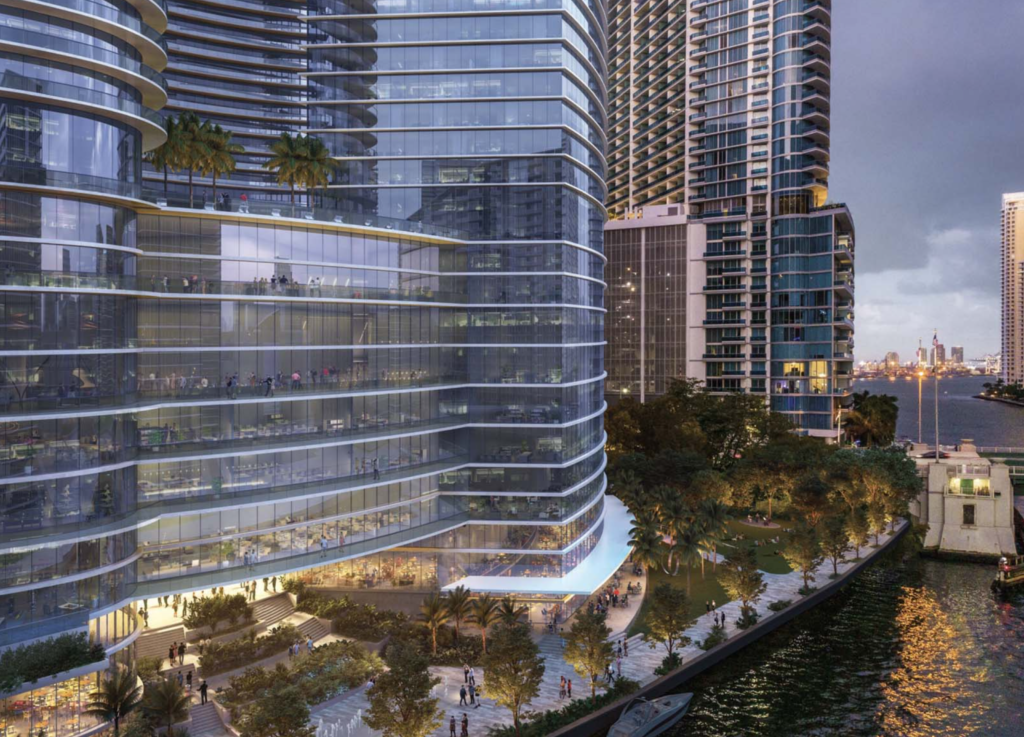
Miami-based real estate developer Gencom has acquired two high-profile New York City luxury hotels in the past four months, signaling an aggressive expansion into the Manhattan market. Following the $230 million purchase of the InterContinental New York Times Square in December, the firm recently completed its acquisition of The Ritz-Carlton New York, Central Park for an estimated $320 million. Chief Investment Officer Alessandro Colantonio noted a significant shift in financing: while family offices typically account for about 20% of the capital pool, they now provide over 50% of the funding for Gencom’s latest deals, reflecting a heightened appetite among wealthy families for irreplaceable luxury real estate.
This trend is bolstered by a partnership with White Bridge Capital, a Miami-based firm founded by former Citigroup and Blackstone executives that advises affluent families from Latin America and Europe. The collaboration has granted Gencom access to substantial cash commitments, enabling the firm to bypass traditional bank delays and close deals with record speed. Gencom, which now manages nearly $8 billion in assets, also owns the Thompson Central Park purchased in 2024.
Despite broader economic headwinds, New York’s luxury segment saw average daily rates (ADR) rise 4.7% in 2025, reinforcing Colantonio’s strategy of targeting iconic, branded assets with enduring global appeal and strong performance fundamentals.
Bloomberg – Family Office Cash Drives New York Luxury Hotel Buying Spree
______
5. Harvard Study Finds AI Predicts 71% of Fund Trades
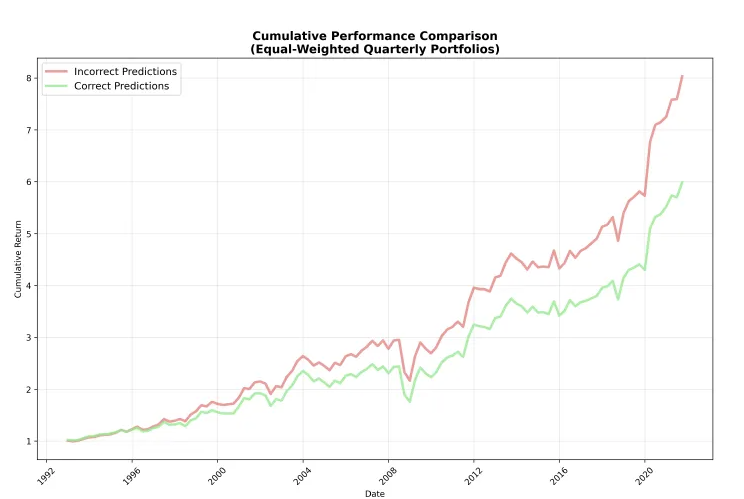
A landmark academic study led by Harvard Business School researchers suggests that the “expert judgment” of active fund managers is increasingly being encoded into predictable patterns. By employing a neural network algorithm trained on over 30 years of trading data (1990-2023), the system successfully anticipated 71% of mutual fund portfolio adjustments—accurately forecasting whether a manager would buy, sell, or hold a stock based on variables like fund size, investor flows, and market conditions. The findings signal that much of the multi-trillion dollar active management industry has inadvertently adopted a “common playbook” that machines can now replicate with ease.
The study’s most revealing twist, however, lies in its failure rate. The remaining 29% of trades—those the AI could not predict—were found to be the primary drivers of market outperformance. This suggests that while machines have mastered the industry’s routine reactions to peer behavior and economic shifts, the true value of human intelligence now resides exclusively in unconventional, non-linear decision-making. As the financial sector enters 2026, the implication is clear: human managers who rely on standard strategies are becoming obsolete, while those who can consistently deviate from detectable patterns remain the last guardians of genuine Alpha.
The research underscores a shift where AI handles the “grunt work” of logic, leaving humans to focus on high-stakes creativity and contextual intuition.
Bloomberg – Harvard-Led Study Says AI Can Predict 71% of Active-Fund Trades
______
6. Anthropic Unveils Claude Cowork Enterprise Plugins
AI startup Anthropic hosted a virtual event titled “The Briefing: Enterprise Agents” on Tuesday, unveiling 10 new industry-specific plugins for its Claude Cowork platform. These tools are engineered to automate sophisticated workflows across human resources, investment banking, design, and legal services. Anthropic announced high-profile partnerships with FactSet, LSEG, S&P Global, and Intuit, enabling business users to conduct real-time financial analysis, equity research, and wealth management directly within the Claude interface. The company also introduced the Claude Agent SDK, allowing enterprises to build and manage private plugin marketplaces tailored to their internal compliance and operational standards.
The live demonstration triggered immediate and divergent swings across Wall Street. Shares of financial information providers FactSet, S&P Global, and Moody’s all climbed at least 2% as the tools validated their role as essential data “ingredients” for the AI era. Intuit’s stock also saw a 5% pre-market rebound following its multi-year partnership announcement with Anthropic. Meanwhile, Spotify Technology SA experienced a volatile session; its shares initially jumped 3% after an on-screen mention of its “Honk” internal agent—which reportedly allows top developers to supervise rather than write code—before turning lower as the market weighed the implications of white-collar automation.
This release follows a brutal “SaaSpocalypse” sell-off in early February triggered by Anthropic’s initial legal tools, though this latest briefing focused on integrating AI into established professional ecosystems.
Bloomberg – Anthropic Links AI Agent With Tools for Investment Banking, HR
______
7. FedEx Sues US Government for Tariff Refunds
Paramount Skydance announced Friday that its 108 billion dollar hostile bid to acquire Warner Bros. Discovery (WBD) has cleared a critical US antitrust milestone. The company confirmed that the statutory waiting period under the Hart-Scott-Rodino Act expired without intervention from the Department of Justice (DOJ), removing a major legal impediment to the deal. This regulatory progress comes even as WBD remains officially committed to a rival 83 billion dollar agreement with Netflix. Paramount’s bid is notably bankrolled by Oracle founder and prominent Donald Trump donor Larry Ellison, who has provided a personal guarantee for over 40 billion dollars in equity financing.
The swift clearance is widely interpreted as a signal of favor from the White House, especially as allies of the President expand their influence across the media landscape. Unlike Netflix’s offer, which seeks only WBD’s studios and HBO, Paramount’s 30 dollar per-share all-cash proposal aims to acquire the entire company, including CNN and Discovery. Paramount argues its plan poses less regulatory risk than a Netflix merger, which would create a dominant streaming monopoly. Backed by additional funding from Jared Kushner’s Affinity Partners and Middle Eastern sovereign wealth funds, the Paramount deal is moving into a decisive phase.
WBD has been granted a seven-day waiver by Netflix to engage in final negotiations with Paramount before a scheduled March 20 shareholder vote to decide the future of the Hollywood giant.
Financial Times – FedEx sues Trump administration for tariff refunds
______