—— Democratic Upset in Trump’s Home District Signals GOP Strategic Overreach; Disney’s Tech Strategy Reeling as Sora Shuts Down and Epic Games Stumbles; US Mortgage Rates Hit 6.43%; Robinhood announces $1.5 billion stock buyback; Barclays cuts lending to small borrowers; VW in talks to convert car plant for missile defense.
1. Democratic Upset in Trump’s Home District Signals GOP Strategic Overreach
In a stunning symbolic reversal for the Trump administration, Democrat Emily Gregory has claimed victory in a special election to represent Florida’s 87th District—the very neighborhood housing the President’s Mar-a-Lago resort. Despite receiving Trump’s “complete and total endorsement” just 24 hours prior, Republican candidate Jon Maples failed to hold the seat in a district the President won handily in 2024. While the win does not shift the balance of power in Tallahassee, it serves as a potent warning shot for the GOP ahead of the 2026 congressional midterms.
The upset highlights the pitfalls of the GOP’s aggressive redistricting tactics. Political analysts are labeling this a “dummymander”—a scenario where partisan maps are drawn so thinly to maximize seats that they become vulnerable to localized swings in voter sentiment. With national anxieties rising over inflation and the escalating Iran conflict, the loss of a foundational Republican stronghold suggests that the party’s 2024 coalition is under severe strain.
Currently, the defeat is being framed as a personal setback for President Trump. For the Democrats, flipping the President’s primary residence is a psychological milestone that could supercharge fundraising and volunteer mobilization nationwide.
In light of these developments, Republican strategists are urgently recalibrating their “safe seat” logic. As of late March 2026, the road to November looks increasingly precarious for the GOP, as the “Palm Beach Rebellion” proves that no district is immune to the shifting winds of the current economic and geopolitical climate.

Bloomberg – Democrats Flip Florida Seat Representing Trump’s Mar-a-Lago
______
2. Disney’s Tech Strategy Reeling as Sora Shuts Down and Epic Games Stumbles
The Latino voters who propelled Donald Trump back to the White House in 2024 are emerging as the primary threat to his party’s control of Congress as the 2026 midterm elections approach. A fresh national poll by Florida Atlantic University for Bloomberg News reveals that the core issues of inflation and the economy remain the dominant anxieties for U.S. Hispanics, with many reporting little to no relief under the current Republican administration. As gas prices surge toward $4 a gallon amidst the intensifying conflict with Iran, early warning signs—including the election of Miami’s first Democratic mayor in decades—suggest that the GOP’s hold on key demographic strongholds is fracturing.
The affordability squeeze is transforming from a kitchen-table grievance into a potent electoral liability. With Democrats needing only a net gain of a few seats to retake the House, nearly a dozen Republican-held districts with sizable Hispanic populations are now classified as vulnerable. The Bloomberg analysis highlights a growing “disconnection” between the administration’s aggressive immigration tactics and the immediate financial survival needs of Latino families, who earn less on average than other ethnic groups. Currently, while the Senate remains a steeper climb for the opposition, the erosion of the “Red Wall” in the Sun Belt signifies a potential shift toward a divided government in late 2026.
As November nears, Republican leaders like Maria Elvira Salazar are urging a strategic pivot, warning that if the party cannot curb the cost-of-living spike, the historic multi-ethnic coalition built during the 2024 cycle will be a short-lived anomaly in American politics.

Bloomberg – Disney CEO’s First Week Marred by ‘Fortnite,’ OpenAI Woes
______
3. US Mortgage Rates Hit 6.43%
One year after shaking the foundations of Silicon Valley with its R1 reasoning model, Chinese AI disruptor DeepSeek is doubling down on the next frontier: Autonomous Agents. On Tuesday, the Hangzhou-based startup posted a cluster of 17 specialized job openings, including “Agent Deep Learning Algorithm Researchers” and “Infrastructure Engineers.” The move signals a strategic pivot from traditional Large Language Models (LLMs) to AI agents capable of planning, reasoning, and executing complex tasks across digital ecosystems with minimal human oversight. This recruitment drive coincides with a domestic “agentic fever” in China, fueled by the rapid viral adoption of OpenClaw, an open-source framework that integrates autonomous capabilities into platforms like WeChat.
The hiring spree suggests that DeepSeek’s next flagship iteration will be “agent-native” by design. Unlike predecessors that primarily offer text-based insights, these new models are being engineered to act as digital proxies—operating software, managing workflows, and navigating multi-modal environments. While DeepSeek remains famously secretive about its product roadmap, the focus on data evaluation and agentic algorithms underscores its commitment to refining Reinforcement Learning (RL) for real-world utility. Currently, as the tech world anticipates a successor to the R1 model, DeepSeek’s pivot toward the “Agent Economy” reflects a broader 2026 trend: the transition from AI as a consultant to AI as a doer.
Industry observers expect this move to intensify the competition with OpenAI and Anthropic, as the race for the first truly autonomous enterprise AI agent reaches a fever pitch this fiscal year.
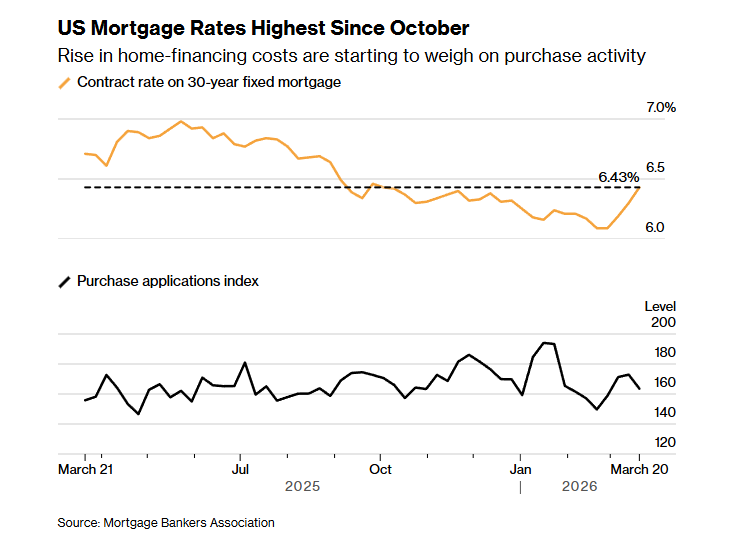
Bloomberg – US Mortgage Rates Jump Further to Five-Month High of 6.43%
______
4. Robinhood announces $1.5 billion stock buyback
Robinhood Markets Inc. announced a new stock buyback program, authorizing the firm to repurchase up to $1.5 billion of its shares. This move comes as the company’s stock has faced a 39% decline since the start of 2026, following a strong performance last year. Chief Financial Officer Shiv Verma stated that the authorization reflects management’s confidence in the company’s ability to deliver innovative products and create shareholder value. The buybacks, which have no expiration date, are expected to be executed over approximately three years.
This decision follows a period where Robinhood’s profits were impacted by a downturn in the cryptocurrency market.

Bloomberg – Robinhood Approves $1.5 Billion Share-Buyback Program Amid Slump
______
5. Barclays cuts lending to small borrowers
Barclays Plc is reducing its asset-based lending to smaller borrowers following losses tied to the collapses of Market Financial Solutions Ltd. and Tricolor Holdings. The British bank is now shifting its strategic focus toward loans and securitizations for larger corporate clients. According to sources familiar with the matter, Barclays has already withdrawn from several deals and increased its pricing to account for higher perceived risks in the sector. While a representative for the bank declined to comment, the downfalls of the UK property lender MFS and the US subprime auto company Tricolor have intensified the spotlight on lending to non-bank entities that operate outside of traditional regulatory oversight. These private credit lines, often known as warehouse facilities, allow non-banks to fund products like mortgages and auto loans before they are packaged into securities.
At the end of 2025, Barclays reported £160.6 billion ($215 billion) in exposure to securitized assets, a figure that reflects its extensive role as an originator and sponsor in these financial markets.
Bloomberg – Barclays Pulls Back on Asset-Based Lending After MFS, Tricolor
______
6. Amazon and Anthropic Decimate Software Stocks
The software industry’s valuation moat was breached this Tuesday as a dual-threat from Amazon and Anthropic sent shockwaves through the tech sector. Reports that Amazon Web Services (AWS) is deploying autonomous AI agents to backfill technical roles—previously eliminated in mass layoffs—met with Anthropic’s reveal that its Claude chatbot can now natively “take over” a user’s computer to navigate browsers and spreadsheets. The realization that AI is transitioning from an assistant to a primary executor triggered a massive sell-off; high-flying incumbents like UiPath and Atlassian cratered nearly 10%, dragging the iShares Software ETF to its worst quarterly performance since the 2008 financial crisis.
The contagion is rapidly spreading from equity markets to the bedrock of private finance. In a rare defensive maneuver, private credit titans Ares and Apollo Global Management moved to curb redemptions this week, citing heightened risk in loans tied to software makers deemed “vulnerable” to the AI agent revolution. The shift underscores a radical departure from the status quo: the market is no longer pricing software on “growth per seat,” but on its ability to survive an era of autonomous digital labor. As of late March 2026, the IGV index has plummeted 23% this year alone, reflecting a systemic de-leveraging of the SaaS model.
In light of these developments, analysts warn that the “Agentic Pivot” is not just a software update, but an existential re-rating of the entire digital economy.
Bloomberg – Software Stocks Drop on Report Amazon Is Developing New AI Tools
______
7. VW in talks to convert car plant for missile defense
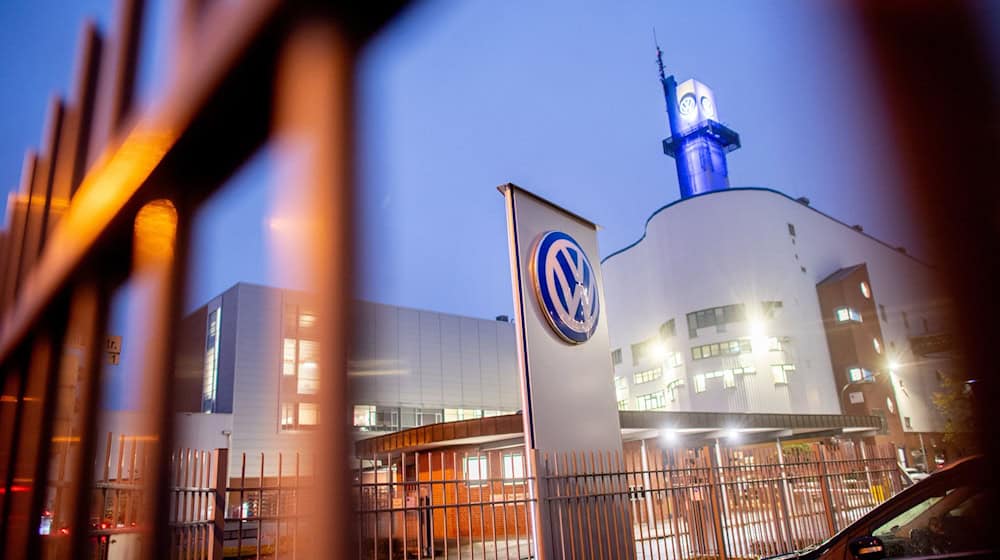
Volkswagen is in negotiations with Israel’s Rafael Advanced Defense Systems to pivot production at its Osnabrück factory from automobiles to military components. The two companies plan to convert the embattled plant to manufacture parts for the Iron Dome air defense system, marking a significant shift for the German automaker as it faces plummeting profits and fierce competition in the EV sector.
The proposed tie-up aims to save all 2,300 jobs at the site in Lower Saxony, which had previously been under threat of closure. While the factory would produce heavy-duty trucks, launchers, and generators for the system, it would not manufacture the actual projectiles. The German government is reportedly supporting the move, which represents a major return to weaponry production for the group.
The partnership reflects a growing trend of German industrial firms seeking opportunities in the booming defense sector amid a stuttering transition to electric vehicles.
If successful, the venture could even lead to expansion at the site, with the two companies hoping to sell the defense systems to various European governments.
Financial Times – VW in talks with Israel’s Iron Dome maker to shift from cars to missile defence
______