—— US Job Growth Sluggish in November as Unemployment Rises to Four-Year High; Citadel Further Shrinks Its Chicago Presence; Pimco Raises Over $7 Billion for Asset-Based Finance Strategy; US Retail Sales Flat in October; Luckin Weighs Bid for Blue Bottle to Expand Premium Coffee Push;
1. US Job Growth Sluggish in November as Unemployment Rises to Four-Year High
US job growth remained weak in November, and the unemployment rate rose to the highest level in four years, underscoring continued cooling in the labor market after a soft October.
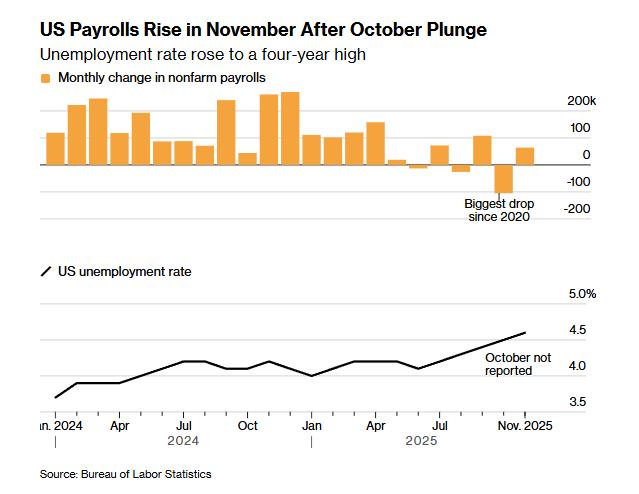
Nonfarm payrolls increased by 64,000 in November after falling 105,000 in October, according to Bureau of Labor Statistics data released Tuesday. The unemployment rate rose to 4.6% from 4.4% in September. The BLS didn’t publish an October jobless rate because it couldn’t retroactively gather data after the government shutdown.
The October payroll decline — the largest since late 2020 — was driven by a 162,000 drop in federal government employment as workers who accepted deferred resignation offers under the Trump administration officially left payrolls. The modest rebound in November, following October’s pullback, highlights the recent choppiness in the labor market.
Meanwhile, the rising unemployment rate shows that many out-of-work Americans continue to struggle to secure new jobs. Despite caveats, the report will shape investor expectations for next year’s interest-rate trajectory.
The Federal Reserve cut rates for the third consecutive meeting last week to support what Chair Jerome Powell described as a “gradually cooling” labor market with “significant” downside risks. But policymakers remain divided over whether more rate cuts will be needed next year.
The median Fed projection shows just one rate cut in 2026, though some officials see none, while traders are pricing in two. “The labor market remains weak, but the pace of deterioration probably is too slow to spur the FOMC to ease again in January,” said Samuel Tombs, chief US economist at Pantheon Macroeconomics.
Bloomberg – US Payrolls Rise 64,000 After October Drop, Unemployment Up
______
2. Citadel Further Shrinks Its Chicago Presence
Citadel is continuing to reduce its presence in Chicago. Three years after billionaire founder Ken Griffin left the city for Florida over concerns about taxes and crime, the firm is moving its remaining Chicago operations out of the former Citadel Center downtown to a new 50,000-square-foot office north of the Chicago River — roughly 10% of the space it occupied in 2020.
Citadel relocated its headquarters to Miami in 2022. According to people familiar with the matter, the company now has about 200 employees left in Chicago, down from a peak of roughly 1,100, with many having moved to Miami or New York. The former Citadel Center building is now up for sale and no longer bears the firm’s name.
Griffin’s departure has become a cautionary tale for Chicago. Mayor Brandon Johnson has pushed for a major tax on corporations based on employee count — a measure opposed by the City Council and previously labeled a “job killer” by former mayor Rahm Emanuel. Other major companies, including Boeing, Caterpillar and Tyson Foods, have also exited the area, but Citadel’s move remains the most high-profile, removing highly paid jobs and substantial philanthropic support.
Griffin donated more than $600 million to Chicago institutions, including a $125 million gift to the science museum, which renamed itself the Kenneth C. Griffin Museum of Science and Industry. Since relocating to Miami, he has directed about $325 million to Florida institutions.
Chicago’s luxury real estate market was also hit: Griffin sold six of his Gold Coast condos at a combined loss of roughly $30 million, while the sale of his final property is still pending.
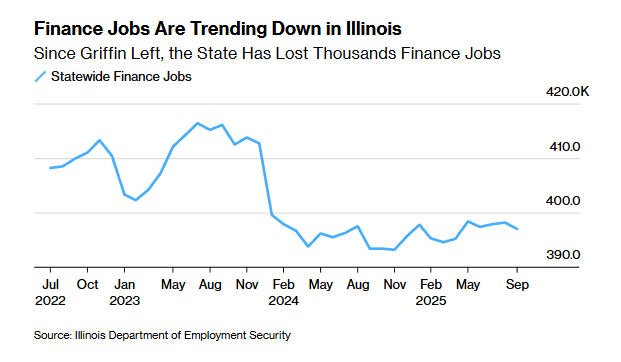
The local job market has weakened as well — Illinois finance-sector employment has fallen 2.7% since Griffin’s departure, to 397,000 roles as of September. This represents a significant setback for a city historically central to the global derivatives industry and home to CME Group and Cboe Global Markets.
Bloomberg – Citadel Leaves Chicago Tower as City Faces ‘Job Killer’ Tax
______
3. Pimco Raises Over $7 Billion for Asset-Based Finance Strategy
Pacific Investment Management Co. (Pimco) has raised more than $7 billion for an asset-based finance (ABF) strategy, including its first investment vehicles dedicated solely to insurance companies and high-net-worth individuals, according to a person familiar with the matter. The funds will invest in loans backed by hard and financial assets across residential and consumer markets. Pimco declined to comment on the fundraising.
The capital includes Pimco Asset-Based Lending Co., an evergreen fund for wealthy individuals expected to surpass $500 million in early 2026, as well as a dedicated insurance-capital fund that collected $1.8 billion to invest directly in private investment-grade loans. Additional commitments are expected in the coming months. Pimco previously noted that the influx of insurance capital has lowered yields and weakened terms in investment-grade private credit, allowing the firm to secure attractive senior financing on complex ABF portfolios.
Roughly one-third of the investors are new to Pimco, bringing total assets in its private ABF funds to more than $20 billion by year-end. Pimco has been expanding its alternatives platform as it diversifies beyond fixed income. Its specialty finance strategy lends against financial and hard assets, investing in digital infrastructure, auto loans, equipment lending, aircraft leasing, residential mortgages, credit-card receivables and non-consumer loans.
Pimco has been increasingly active in large transactions. Earlier this year, the firm led a $27 billion debt package for a Meta Platforms data center and partnered with KKR to acquire a stake in Harley-Davidson’s financing unit and motorcycle-loan portfolio. As banks scale back lending, asset-based finance has become a key area of growth for investment managers.
Other funds in the strategy include the $1.6 billion Specialty Finance Income Fund and Custom ABF strategic partnerships — separately managed accounts for global institutional investors that raised $2.8 billion.
Bloomberg – Pimco Gathers $7 Billion for New Asset-Based Finance Strategy
______
4. US Retail Sales Flat in October
US retail sales were little changed in October as strength in several categories was offset by a drop in motor vehicle purchases. The Commerce Department report — delayed due to the government shutdown — showed that total retail sales, unadjusted for inflation, were essentially flat after a revised 0.1% increase in September. Excluding auto dealers and gasoline stations, sales rose 0.5%.
Eight of 13 categories posted gains, with department stores and online merchants showing solid advances. Motor vehicle sales declined 1.6%, partly reflecting the expiration of federal EV tax credits. Lower gasoline prices also reduced gas station receipts.
Control-group sales — which feed into GDP calculations — climbed 0.8%, the strongest in four months, indicating that consumer spending gained momentum in the early weeks of the holiday shopping season. Shoppers, concerned about job security and high living costs, sought out discounts. Wealthier households continued to drive spending strength, while lower-income consumers remained cautious.
“It’s possible some of the strength in October reflected consumers shifting forward holiday spending, with non-store sales surging in October,” said Michael Pearce, chief US economist at Oxford Economics.
With major retailers launching promotions earlier, October is increasingly viewed as the unofficial start of the holiday shopping season. Solid Black Friday spending in November further suggests resilient demand.

Bloomberg – US Retail Sales Shows Resilient Consumer Spending Beyond Cars
______
5. Luckin Weighs Bid for Blue Bottle to Expand Premium Coffee Push
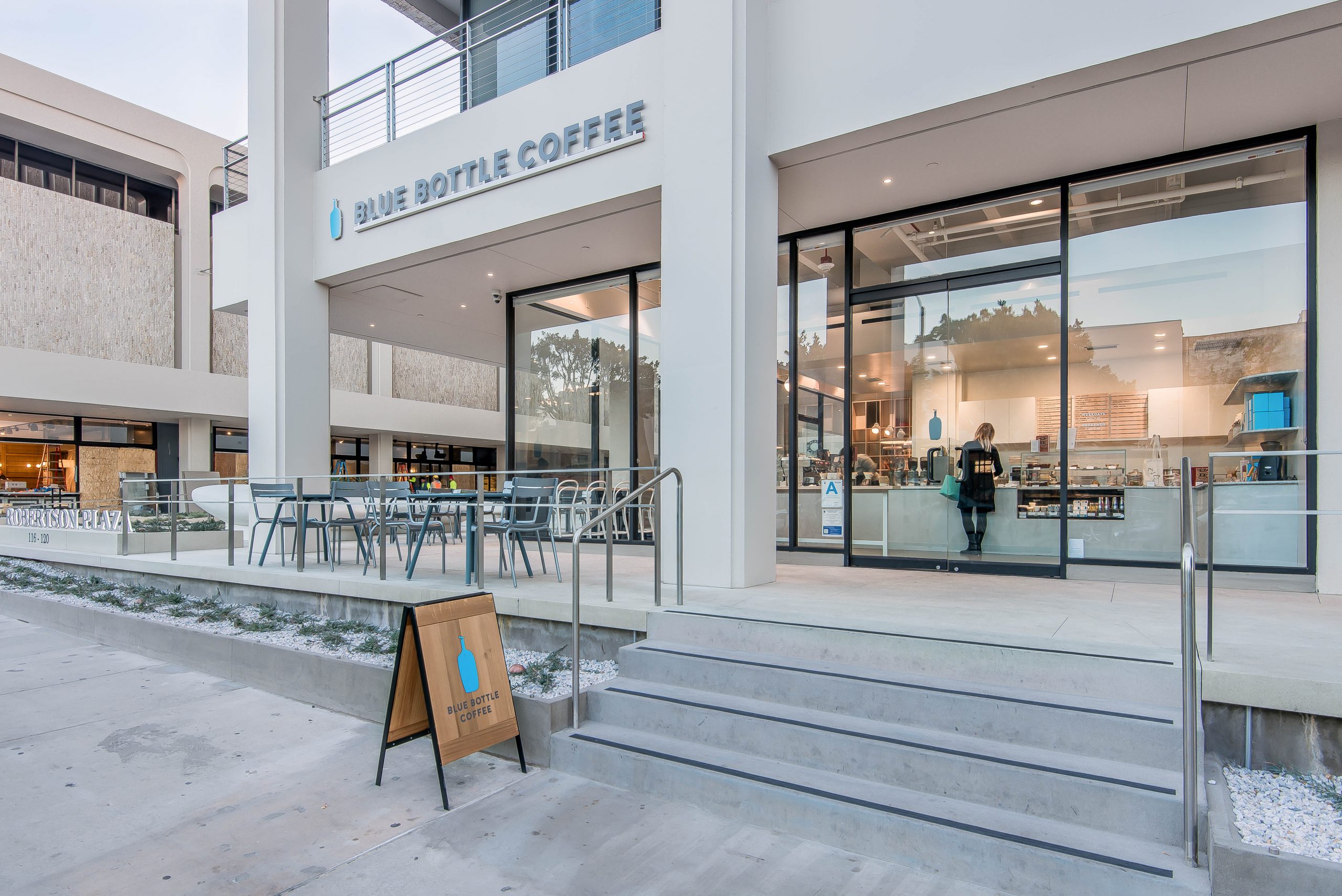
Luckin Coffee Inc. is considering making a bid for Nestle’s Blue Bottle Coffee to elevate its brand positioning and expand into the premium coffee segment, according to people familiar with the matter. Luckin and its backer Centurium Capital have also evaluated other possible acquisition targets, including the operator of % Arabica stores in China, partially owned by PAG.
They previously reviewed Coca-Cola’s Costa Coffee, though they are unlikely to proceed. Discussions are still at an early stage and may not result in a bid. Representatives for Nestle, PAG and Coca-Cola declined to comment, while Centurium, Luckin and % Arabica didn’t immediately respond.
Founded in 2017, Luckin rapidly scaled with thousands of stores offering low-price beverages and customized drinks such as coconut and cheese lattes. This expansion allowed it to surpass Starbucks in total store count in China, where Starbucks recently agreed to sell a majority stake in its China business to Boyu Capital.
Luckin has rebounded since its 2020 Nasdaq delisting over an accounting scandal. In the quarter through September, net revenue rose 50% from a year earlier to $2.1 billion, and net income reached about $180 million. The company opened a net 3,008 stores during the period — including new locations in Singapore, Malaysia and the US — bringing its global total to 29,214.
Nestle has been working with Morgan Stanley to explore options for Blue Bottle, per a recent Reuters report. Founded in California in 2002, Blue Bottle received a $425 million investment from Nestle in 2017 for a 68% stake. It now operates stores in the US, China, Hong Kong, Japan, Singapore and South Korea.
% Arabica, founded in 2013, has a strong presence across Asia and the Middle East, with additional locations in Europe and the Americas. Most of its stores — more than 80 — are located in mainland China.
Bloomberg – Luckin Coffee Is Said to Consider Bidding for Nestle’s Blue Bottle
______
6. iRobot Files for Bankruptcy
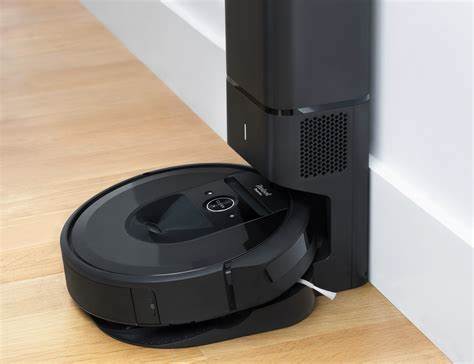
iRobot Corp., maker of the Roomba robot vacuum, filed for bankruptcy in the US and proposed transferring control of the company to its primary Chinese supplier, Shenzhen PICEA Robotics Co., and its subsidiary. The Massachusetts-based firm listed between $100 million and $500 million in assets and liabilities in its Chapter 11 filing. Under the proposed restructuring plan, iRobot’s common stock will be wiped out.
Founded in 1990 by MIT engineers, iRobot rose to prominence after launching Roomba in 2002, a product that became synonymous with autonomous home cleaning. However, earnings declined after the Covid era due to supply-chain disruptions and intensifying competition from lower-cost rivals. The company warned earlier this month that bankruptcy was possible. Shares plunged as much as 75% on Monday, reaching an all-time low.
Amazon.com had attempted to acquire iRobot in 2022, but the deal collapsed amid objections from European Union competition regulators. Although iRobot received more than $90 million in compensation for the failed transaction, much of it went toward advisory fees and repayment of a bridge loan provided by Carlyle Group Inc.
Last month, PICEA’s subsidiary Santrum Hong Kong acquired roughly $191 million in outstanding principal and interest on that loan. PICEA has since been in negotiations with iRobot to inject capital and address the remaining debt.
Bloomberg – Roomba Maker iRobot Files for Bankruptcy and Will Go Private
______
7. Brompton Revenue Holds Steady as Sales Slide
Brompton’s annual bike sales fell to their lowest level since 2021, marking another difficult year for the cycling industry. But the UK manufacturer expects revenue growth to return next year as post-pandemic headwinds ease and newer, more expensive models contribute more meaningfully to sales.
For the year ended March 31, Brompton sold 78,530 bicycles, down 7.5% from 84,899 the year before. However, total revenue dipped less than 1% to £121.5 million, thanks to the strong performance of its new G Line off-road model and expansion of its subscription service.
The company recorded a pre-tax profit of £130,500, a notable improvement from just £4,602 in 2024, according to financial results shared with the Financial Times. The UK’s largest bicycle maker has softened the impact of the post-Covid slowdown by focusing on higher-priced models such as the G Line, launched in October 2024 with a starting price of £2,599 versus £1,399 for the standard C Line four-speed. Brompton said revenue for the first half of the year ending March 2026 is already up 10% year over year.
Chief executive Will Butler-Adams said 2025 was affected by ongoing industry challenges, but he expects both revenue and profit to grow next year after three years of difficult trading.
Brompton’s subscription plan, which allows customers to rent a folding bike for £35 a month, grew 45% in 2025. The G Line, featuring larger wheels and stronger brakes, accounted for nearly 10% of annual turnover. With the G Line’s recent launch in Asia and the introduction of the new e-Motiq electric range in Europe this October—set to debut in the US early next year—Brompton expects these premium lines to be key growth drivers.
Bike manufacturers have struggled to clear excess inventory in recent years, facing what Butler-Adams called the “worst cold wind in 50 years.” The industry shifted from a pandemic-driven boom to deep discounting amid inflation pressures and supply-chain disruptions, pushing many brands and retailers out of business.

Financial Times – Brompton counting on pricier bikes to fuel recovery after sales drop
______