—— Crypto Extends Selloff as Bitcoin Drops Below $85,000; Nvidia Invests $2 Billion in Synopsys; Trump Says He Has Decided on Next Fed Chair Pick; Boston Rents Slide as Vacancies Surge; Citadel Securities Q3 Trading Revenue Climbs 9%; Sergey Brin Donates Over $1.1 Billion in Alphabet Stock
1. Crypto Extends Selloff as Bitcoin Drops Below $85,000
Cryptocurrencies tumbled again on Monday, adding fresh momentum to a broad selloff that had appeared to stabilize.
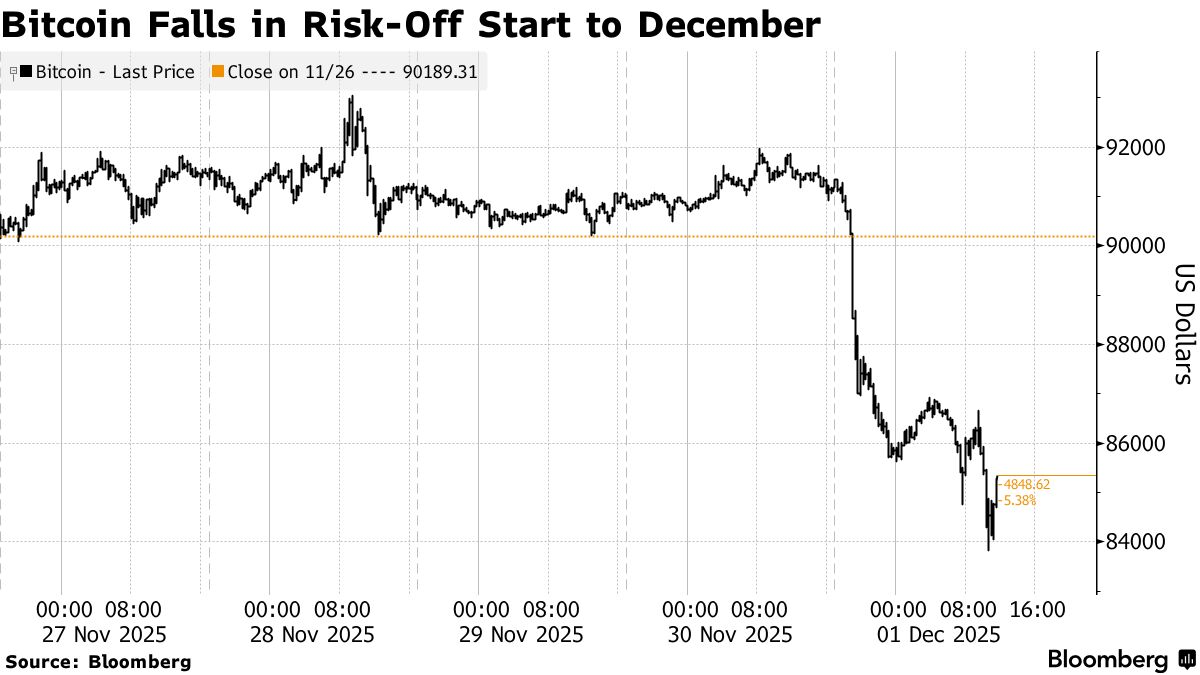
Bitcoin slid as much as 7% to below $85,000 in early New York trading, while Ether fell more than 7% to around $2,800. Solana dropped 8.4% as most major tokens followed suit.
The market has been fragile since a cascade of forced liquidations wiped out roughly $19 billion in leveraged positions in early October, days after Bitcoin hit its all-time high of $126,251. The coin fell 16.7% in November but briefly recovered above $90,000 last week before resuming its decline Monday.
“It’s a risk-off start to December,” said Sean McNulty, APAC derivatives trading lead at FalconX. “The biggest concern is the meagre inflows into Bitcoin ETFs and absence of dip buyers. We are watching $80,000 as the next key support.”
Digital assets were also pressured by global macro shifts. Asian equities were mixed following their strongest week in two months. Japan’s stocks fell and the yen strengthened as BOJ Governor Kazuo Ueda hinted at a potential rate hike.
“Rising JGB yields added downside pressure as investors assessed the possibility of a faster yen carry-trade unwind — historically weighing on risk assets including crypto,” said Jeff Ko, chief analyst at CoinEx.
The week ahead will offer crucial US economic data as policymakers evaluate the rate path into 2026. President Donald Trump said Sunday he has chosen his nominee for the next Fed chair, reiterating his expectation for interest-rate cuts.
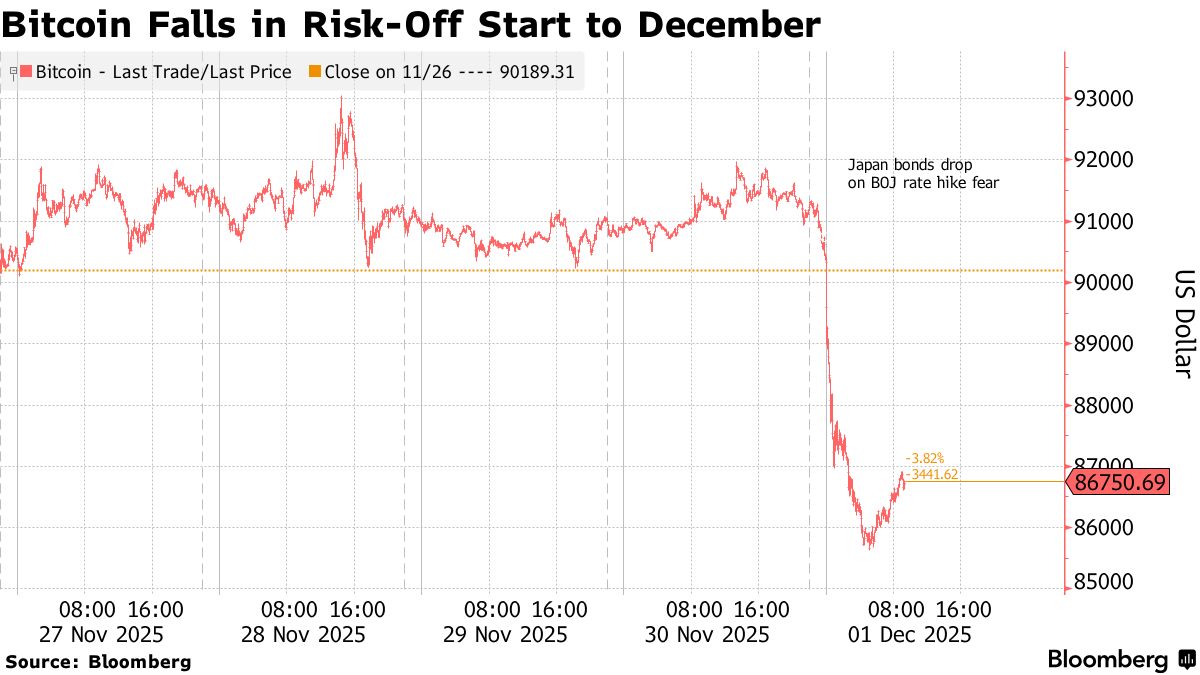
Bloomberg – Bitcoin Plunges to Below $85,000 in Risk-Off Start to December
______
2. Nvidia Invests $2 Billion in Synopsys
Nvidia Corp. has agreed to invest $2 billion in Synopsys Inc., strengthening a strategic collaboration focused on engineering and chip design. The deal marks another major investment by Nvidia in a critical supplier during the AI boom.
Nvidia purchased the shares at $414.79 each, slightly below Friday’s $418.01 closing price. The stake amounts to 2.6% of Synopsys’ outstanding shares.
Synopsys is one of the world’s largest providers of electronic design automation tools that map out billions of transistors in modern chips and verify hardware behavior before manufacturing. Its software is essential for designing AI processors such as Nvidia’s accelerators. Synopsys shares rose 7.4% in premarket trading, though they’re still down almost 14% for the year. Nvidia edged lower.
Nvidia has increasingly invested across the AI supply chain — including OpenAI, CoreWeave and even rival Intel, which received a $5 billion investment tied to joint chip development. Such deals have raised concerns about circular financing that boosts valuations and channels funds back into Nvidia’s own ecosystem.
The new partnership integrates Nvidia’s tools into Synopsys applications, deploys AI agents, and expands joint marketing efforts.
According to Bloomberg Intelligence analyst Niraj Patel, Synopsys’ technology — used by Alphabet, Tesla and others — will benefit from access to more advanced chips for design and simulation across automotive, aerospace, industrial and energy sectors.
______
Bloomberg – Nvidia Buys $2 Billion of Chip Software Maker Synopsys Stock
______
3. Trump Says He Has Decided on Next Fed Chair Pick
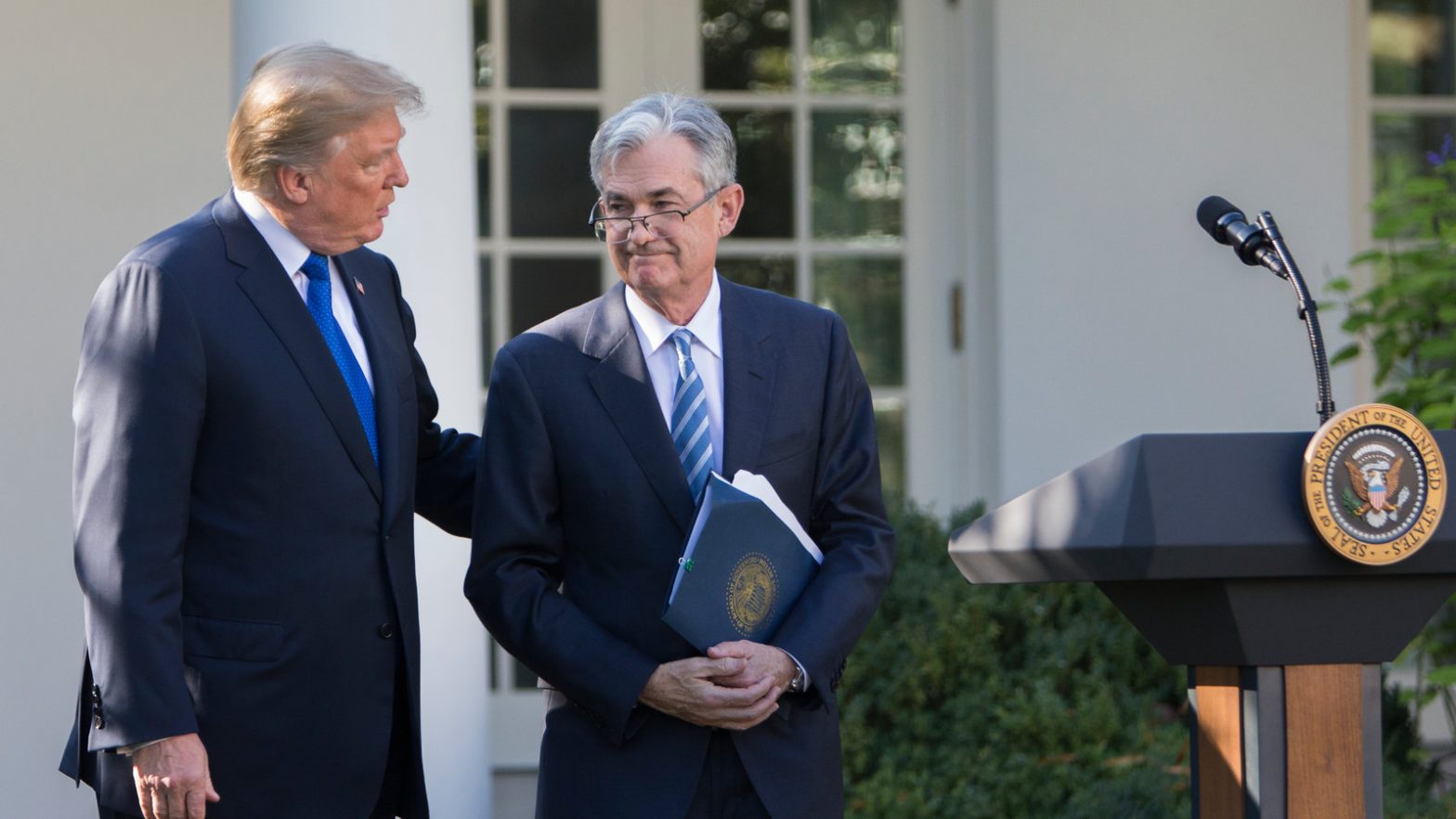
President Donald Trump said Sunday he has chosen his pick for the next Federal Reserve chair, making clear he expects his nominee to deliver interest-rate cuts.
“I know who I am going to pick,” Trump told reporters on Air Force One on his way back to Washington, without identifying the person. “We’ll be announcing it.”
Trump has repeatedly criticized current Chair Jerome Powell for not cutting rates fast enough and has signaled he wants someone who will more forcefully pursue rate reductions. People familiar with the matter told Bloomberg News last week that White House National Economic Council Director Kevin Hassett — Trump’s chief economic adviser — is viewed as the leading candidate. Speaking on CBS’ Face the Nation earlier Sunday, Hassett declined to say whether he is the frontrunner and called the report a “rumor,” though he pointed to the positive market reaction as a counter to concerns he would be seen as too closely aligned with Trump.
Trump trusts Hassett and views him as aligned with his desire for more aggressive rate cuts, according to people familiar with his thinking. Hassett has said he would accept the role if asked, though analysts have warned he may struggle to unify the Fed’s rate-setting committee and could be more susceptible to presidential pressure. News of his potential nomination briefly pushed the 10-year Treasury yield below 4%.
Treasury Secretary Scott Bessent, who is overseeing the selection process, said last week that Trump could announce his nominee before the Dec. 25 Christmas holiday.
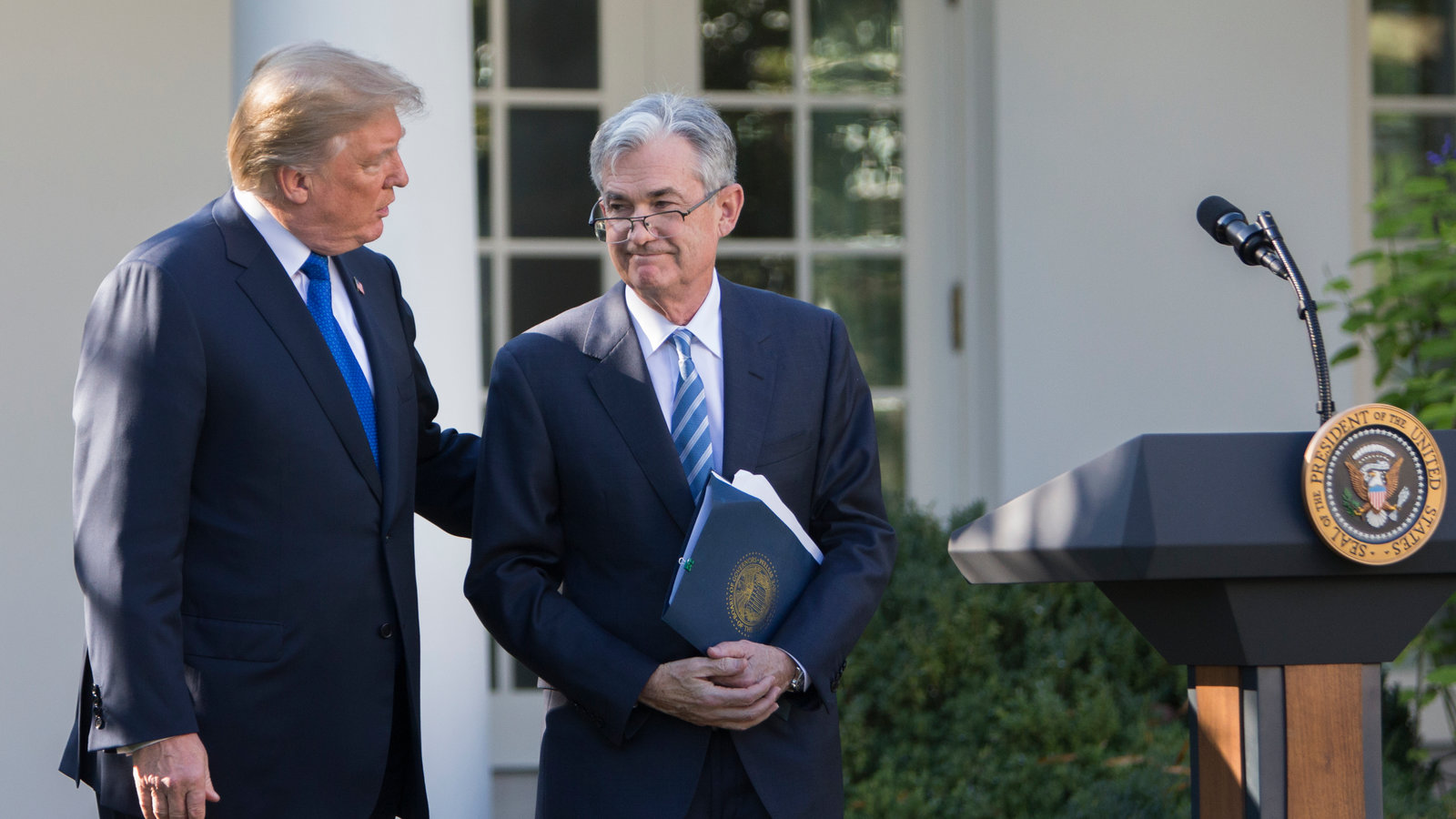
Bloomberg – Trump Says He Has Made His Choice to Lead the Federal Reserve
______
4. Boston Rents Slide as Vacancies Surge
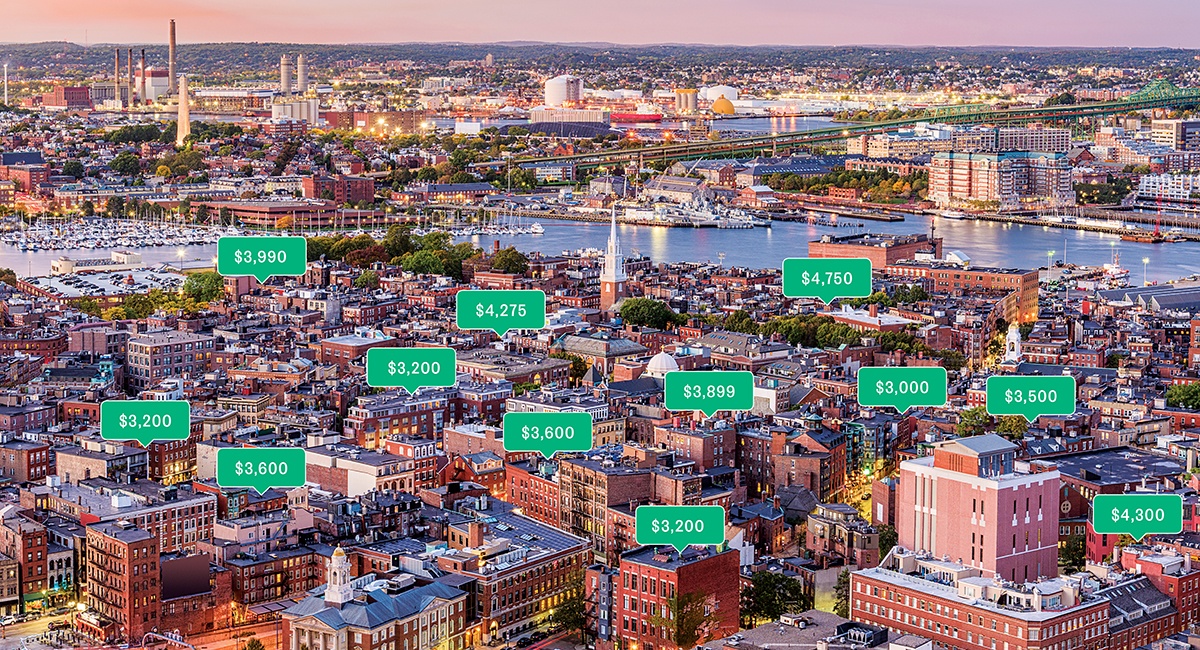
Boston real estate agent Jax Crerar is now advising landlords to “cut rents fast,” a sharp reversal in a city long known for fierce rental competition fueled by a booming biotech sector and a dense cluster of elite universities. But deep research-funding cuts, a cooling biotech market, and residents moving to other states are now dragging down tenant demand.
Even prime-location apartments are sitting empty. One of Crerar’s clients has a three-bedroom near MIT that has sat vacant for 160 days. The unit—previously shared by three graduate students—once rented for about $4,200 a month and is now listed at $3,550 with no takers. “They are willing to do anything to get people through the doors,” Crerar said. “Landlords who didn’t want pets are now taking pets. More are accepting undergrads. They just want their places filled.”
This dynamic mirrors what boomtowns like Austin have seen, though in Boston the cause is different: economic softness, not overbuilding. Massachusetts was one of just two states with negative employment growth in the 12 months through August. The biotech sector—long the state’s economic engine—is now weighed down by high rates and the post-Covid investment cooldown. President Donald Trump’s cuts to research funding and tighter H-1B visa limits aren’t helping.
Average asking rent in Boston fell to $3,043 in October, its first decline since 2021, according to RealPage, which incorporates concessions. Vacancies are the highest since the pandemic, CoStar data show. “It’s affordability and job insecurity,” said Greg Willett, chief economist at LeaseLock. “If there are economic stresses, it shows up first in the rental market.”
Supply has ticked up modestly—8,600 new units in the last year, 20% above the metro’s 10-year average—but remains far below the construction booms seen in other US cities. Still, it’s enough to give tenants leverage for the first time in years, offering rare relief in a city where a quarter of renters spend more than half their income on housing.
Bloomberg – Boston Rental Market Cools, Leaving Landlords ‘Willing to Do Anything’
______
5. Citadel Securities Q3 Trading Revenue Climbs 9%
Citadel Securities posted a 9% rise in third-quarter net trading revenue to $2.64 billion, putting the Miami-based market-making firm on pace to exceed last year’s record haul. According to people familiar with the matter, Citadel Securities generated about $8.4 billion in net trading revenue through September. In 2024, the firm recorded $9.7 billion, its highest total since its founding in 2002.
The performance comes amid elevated trading volumes and intensifying competition from peers including Jane Street and Hudson River Trading, both of which run hedge-fund-style trading divisions in addition to traditional market-making. Citadel Securities’ own hedge fund affiliate sits outside the market-making firm and does not contribute to its revenue totals.
Earlier Monday, Bloomberg reported that Jane Street is pacing for its own record year, with Q3 trading revenue reaching $6.83 billion — placing it among the largest Wall Street trading institutions.
Trading volumes have remained strong as investors reposition portfolios and President Donald Trump continues to overhaul global tariffs, benefiting banks and market makers that facilitate asset flows. Under CEO Peng Zhao, Citadel Securities has expanded into new asset classes and geographic markets.
Third-quarter net income rose 7% to roughly $1.05 billion, bringing year-to-date profit to about $3.7 billion. Compensation and benefits spending fell slightly to $855 million from $877 million a year earlier.
Like other high-frequency trading firms, Citadel Securities typically thrives during periods of volatility, when sharp swings in equity and fixed-income markets create valuable liquidity-provision opportunities.
Bloomberg – Citadel Securities on Track for Record Trading Revenue This Year
______
6. Sergey Brin Donates Over $1.1 Billion in Alphabet Stock
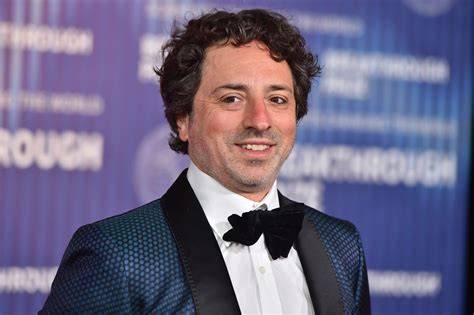
Sergey Brin, co-founder of Google, gave away more than $1.1 billion worth of Alphabet Inc. shares this week, according to a Friday regulatory filing. While the filing didn’t specify the recipients of the more than 3.5 million shares, a spokesperson for Brin’s family office said about $1 billion is going to Catalyst4 — the nonprofit he launched in 2021 to support research on central nervous system diseases and climate-change solutions.
Brin is also donating roughly $90 million to his family foundation, along with $45 million to the Michael J. Fox Foundation, which funds Parkinson’s disease research. In May, he made a similar gift of $700 million in Alphabet stock to the same three organizations.
Brin, 52, is the world’s fourth-richest person with a net worth of $255.5 billion, according to the Bloomberg Billionaires Index. His fortune has surged this year as Alphabet shares rallied, hitting a record $323 on Tuesday amid strong AI momentum.
Brin owns about 6% of Alphabet and has added $97.3 billion to his wealth so far this year.
Bloomberg – Sergey Brin Gifts $1.1 Billion in Alphabet Stock After AI Rally
______
7. Airbus A320 Fleet Needs Fix After Solar Radiation Glitch
Airbus SE cautioned that more than half of its active A320 jetliner family fleet will need a software fix after a recent incident revealed that “intense solar radiation” could corrupt data critical to functioning flight controls. The European planemaker stated that more than 6500 jets in total may be impacted. The advisory follows an unnerving October 30 incident involving a JetBlue aircraft that suffered a computer glitch, resulting in a sudden, unexpected downward pitch without pilot input, though the jet diverted safely with no injuries.
The finding risks becoming a significant headache for Airbus, given the A320 family is its most widely flown aircraft with more than 11 thousand in operation. The malfunction was traced to the plane’s elevator-aileron computer, ELAC 2. Regulators have issued a directive mandating the upgrade before an aircraft’s next regular flight, a necessity Airbus acknowledged will lead to operational disruptions.
American Airlines Group Inc. said about 340 jets are affected, with the vast majority scheduled to receive the update today and tomorrow. While most jets can receive an uncomplicated software update with minimal downtime, about 1000 older jets will require a hardware upgrade, necessitating grounding for the duration of the maintenance.
Hungarian discount carrier Wizz Air Holdings Plc, which operates an Airbus-only fleet, said it has immediately scheduled the necessary maintenance, which may affect some flights over the weekend.
The Real Deal – Crypto Downturn Wipes Out Nearly $1 Billion in Levered Bets
______