
— US Core CPI Continues to Ease; UBS Posts Record Quarterly Profit; China Cuts Mortgage Down Payments; Kardashian Sisters Seek Stake Buybacks; PIMCO Bullish on Mortgage Bonds; Wegovy Found Least Cost-Effective; US Loses Corn Export Crown
1. US Core CPI Continues to Ease
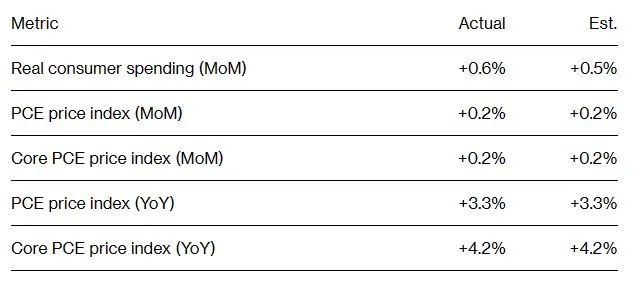
The US Bureau of Economic Analysis released data today showing that core CPI, excluding food and energy, rose 0.2% month-over-month in July.
Inflation-adjusted consumer spending rose 0.6% in July — the highest monthly gain so far this year.
The easing of inflation data highlights the effectiveness of the Federal Reserve’s tightening policies, but it is still too early to declare victory.
Another set of data released today showed that initial jobless claims fell to a one-month low, while continuing jobless claims increased.
The Personal Consumption Expenditures Price Index (PCEPI) also rose 0.2% in July.
______
2. UBS Posts Record Quarterly Profit
UBS Group reported today that its second-quarter pre-tax profit reached $29 billion, setting a new record for quarterly earnings.
However, the strong result mainly came from the difference between Credit Suisse’s asset value and the $3.8 billion UBS paid to acquire it.
UBS said it may fully absorb Credit Suisse by 2025 and plans to phase out the brand. CEO Sergio Ermotti stated that the company will cut 1,000 overlapping positions in Switzerland.
Following the acquisition, UBS’s global headcount reached 120,000, with plans to reduce it by 30%.

______
3. China Cuts Mortgage Down Payments
Today, the People’s Bank of China (PBOC) and the National Administration of Financial Regulation jointly announced that the minimum down payment ratio for first-time and second-time homebuyers will be lowered to 20% and 30%, respectively.
Although China recently cut its benchmark interest rate, most households have yet to feel a meaningful impact, as banks typically reprice existing loans at the beginning of each year.
Mortgage policies vary by city — in Beijing, the minimum down payment remains 40%, while in smaller cities it’s 20%.
According to PBOC’s latest quarterly financial report, the average mortgage interest rate in China was 4.11% in June, down 0.51 percentage points year-over-year.

______
4. Kardashian Sisters Seek Stake Buybacks
Three years ago, model and media personality Kylie Jenner sold a 51% stake in her cosmetics brand Kylie Cosmetics to Coty Inc. for $600 million.
Sources say she is considering buying back that stake, but the two parties have disagreements over the company’s valuation.
Kylie’s sister Kim Kardashian is also exploring the buyback of a 20% stake in her skincare brand SKKN by Kim. Coty acquired that stake for $200 million in 2020.
In recent years, both sisters have reportedly expressed concerns over Coty’s management practices, though the exact reasons remain unclear.

______
5. PIMCO Bullish on Mortgage Bonds
This year, strong demand for high-yield corporate bonds has pushed prices to record highs, making mortgage-backed securities (MBS) appear relatively cheap and more attractive.
According to Bloomberg, yields on newly issued MBS are about 1.66% higher than US Treasuries — the highest spread relative to corporate bonds in 17 years.
PIMCO portfolio manager Mohit Mittal said the current yield spread on MBS is very attractive and can help investors reduce credit risk. The firm believes mortgage bonds offer better value at present.
Major asset managers like PIMCO are shifting more capital toward MBS.
______
6. Wegovy Found Least Cost-Effective
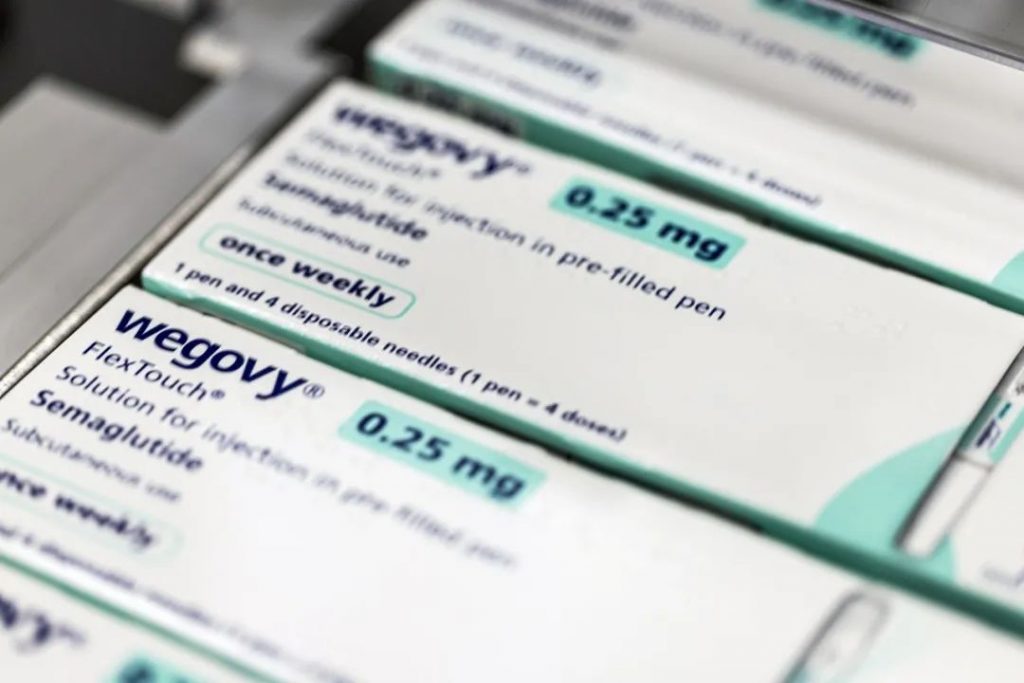
A new study has found that weight-loss drug Wegovy, developed by Novo Nordisk, is significantly less cost-effective than other options.
Researchers at Columbia University studied 100,000 obese teens to evaluate which medications offered the best value.
Although Wegovy helped patients lose the most weight, the monthly cost of $1,349 made it the least cost-effective among all drugs tested.
The study found that Wegovy would need to be discounted by at least 85% to rank as the most cost-effective.
The top-performing drug in terms of value was Qsymia by Vivus, which showed strong results when combined with lifestyle changes.
Columbia scientists argue that while there are many choices for weight-loss medication, Wegovy’s steep price makes it a poor value.
______
7. US Loses Corn Export Crown
For over 50 years, the United States held the title of the world’s largest corn exporter. But new data from the USDA shows that for the year ending August 31, the US has now ceded that position to Brazil.
In the 2023 harvest year, US corn exports accounted for 23% of global totals, compared to Brazil’s 32%. Projections suggest Brazil will maintain its lead in the 2024 harvest year starting September 1.
The US last briefly lost its top spot in 2013, during a severe drought.
Key factors include rising US living costs, farmland shortages, the US-China trade war started under Trump, and a stronger dollar.
Over the past decade, the US has also lost its lead in soybean and wheat exports.

______
This content is sourced from Financial Times, Bloomberg, and The Real Deal, among other financial news outlets.