—— Oracle Shares Slide as Surging AI Data Center Spending Ignites Profitability Concerns; Knicks Complete Historic 29-Point Comeback in Game 4; Ken Griffin Modifies Multi-Billion Dollar Miami Tower Plan; Trump Pulls Back Threatened Iran Strikes; New El Niño Emerges from Tropics; Gold Slumps to Six-Month Low; Wimbledon Raises Prize Money to Record £64.2mn
1. Oracle Shares Slide as Surging AI Data Center Spending Ignites Profitability Concerns
Oracle Corp. shares declined in premarket trading after the company reported quarterly capital expenses that were higher than estimates, raising investor concerns about the profitability of the AI infrastructure business. Capital expenditures, largely a measure of data center spending, were about $16.5 billion in the period ended May 31, bringing the annual total to $55.7 billion — higher than Oracle’s projection for $50 billion in spending. The company expects to spend about $70 billion on net capital expenditures in the current fiscal year, which ends in May 2027, Chief Financial Officer Hilary Maxson said during a conference call after the results were released Wednesday. The reported figure will be $20 billion to $25 billion higher due to prepayment for some components, she said.
Oracle, long known for its database software, has refashioned itself as a provider of computing power for artificial intelligence work and is embarking on a massive build-out of data centers for OpenAI and other customers. To handle the capital requirements, the company said it raised $43 billion in debt financing and $5 billion in equity during the fiscal year just ended.
Oracle shares dropped about 11% in early trading Thursday before markets opened in New York, after closing at $201.26. The stock has risen 35% over the past three months, likely driven by better investor sentiment toward computing providers and OpenAI, Oracle’s most important customer, wrote Derrick Wood, an analyst at TD Cowen.
In fiscal 2027, the company plans to raise another $40 billion in equity and debt, including $20 billion in a previously announced program to sell shares from time to time at market prices.
Bloomberg – Oracle Falls After Data Center Costs Overshadow AI Growth
______
2. Knicks Complete Historic 29-Point Comeback in Game 4
Inside Madison Square Garden, Jerry Seinfeld’s mouth was agape in disbelief. “What a team, what a team,” said actor Ben Stiller. “Most insane comeback I’ve ever seen.” The New York Knicks had just pulled off a record comeback at Game 4 of the NBA Finals, erasing a 29-point deficit Wednesday night to beat the San Antonio Spurs, 107-106, and take a 3-1 lead in the series. OG Anunoby delivered the decisive play, tipping in Jalen Brunson’s missed three-pointer with 1.2 seconds remaining to cap the largest comeback in NBA Finals history.
Inside the Garden, the Knicks looked finished for much of the night, even with the support of a raft of celebrities’ courtside, led by Timothée Chalamet and Spike Lee. San Antonio carried a 27-point advantage into halftime before New York mounted a furious second-half rally. Victor Wembanyama baited Knicks center Mitchell Robinson into a flagrant foul, telling him “I’m in your head” before Robinson gave him an arm to the face.
In Fort Greene, Brooklyn, fans packed bars and celebrated after watching the Knicks pull off the comeback. “Usually people will leave, they actually sat there and cheered until the end — they proved the naysayers wrong,” said Shanta’l Overton, a Knicks fan after the game.
The dramatic finish saw thousands of fans flooding the streets, stopping traffic on Eighth Avenue and climbing onto NYPD vehicles.

Bloomberg – Knicks Spark Euphoria From Bronx to Brooklyn After Epic Comeback
______
3. Ken Griffin Modifies Multi-Billion Dollar Miami Tower Plan
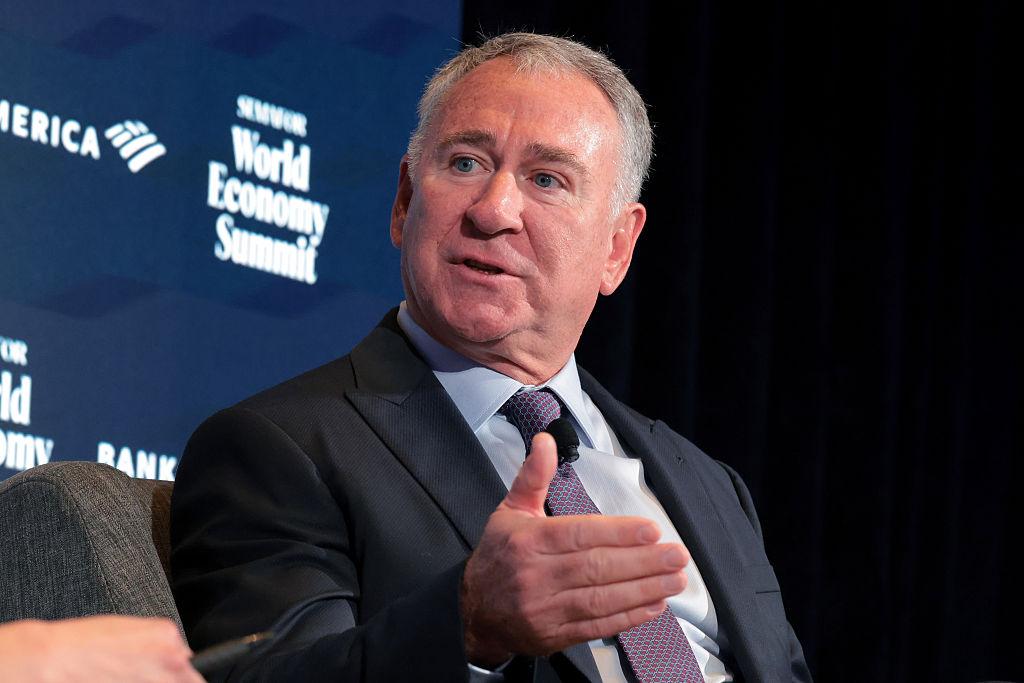
Fresh off a clash with New York City Mayor Zohran Mamdani, Griffin has updated his plans for a multi-billion dollar commercial tower and development along Biscayne Bay. The billionaire Citadel founder revealed a proposal to construct a 300-unit apartment building and a 1,420-space parking garage alongside another office building Griffin owns. The May 13 filing with Miami-Dade County also shows that a hotel that was to be built in a towering skyscraper has been stripped out to allow for more office space.
Griffin is still considering the development of a hotel across the street from his future headquarters, according to people with direct knowledge of the matter. Griffin has also bought up all of the units of a 22-story condo building across the street and will soon begin demolition to pave way for more development, according to a person with direct knowledge of the plans. Griffin, who’s worth $48.3 billion according to the Bloomberg Billionaires Index, has amassed about five acres of land spanning two blocks in Miami’s Brickell financial district. He’s spent years buying out individual owners at the Solaris to acquire the entire building as part of his vision for putting Citadel’s mark on the city.
Expanding the office space was linked to the spat with Mamdani, but the other changes had long been under consideration, said a person with knowledge of the plans.
Bloomberg – Ken Griffin Supercharges His Miami Bet After Mamdani Tax Fight
______
4. Trump Pulls Back Threatened Iran Strikes
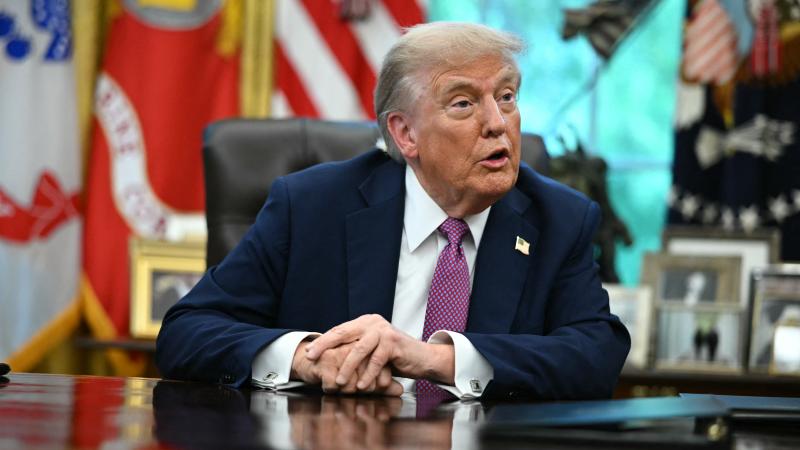
President Donald Trump pulled back threatened military strikes against Iran, a stark reversal that came just hours after he vowed to hit the Islamic Republic “VERY HARD” and threatened to seize its oil infrastructure. Trump on Thursday cited what he said were “discussions” that “have been brought to the highest level of Iranian leadership” for a negotiated end to the war. He said that a “time and place of the signing” would “be announced shortly,” without providing further details. However, Iran’s semi-official news agency Fars said the country had not yet approved the text of any agreement with the US, citing an informed source. “I have, as President of the United States of America, cancelled the scheduled strikes and bombings against Iran this evening,” Trump posted on social media.
Oil prices plunged nearly 4%, with Brent trading below $90 a barrel after Trump’s comments. Iran has yet to comment on Trump’s statement. Shares spiked.
Trump’s announcement is the latest in a string of threats he has pledged — and revoked — to strike since the start of the conflict in February. He has insisted a deal was within reach dozens of times, but none has yet materialized.
Earlier Thursday, he promised to seize Kharg Island, a crucial energy hub for Iran, a move that would likely require US ground troops.
Bloomberg – Trump Cancels Planned Iran Strikes in Latest Reversal
______
5. New El Niño Emerges from Tropics
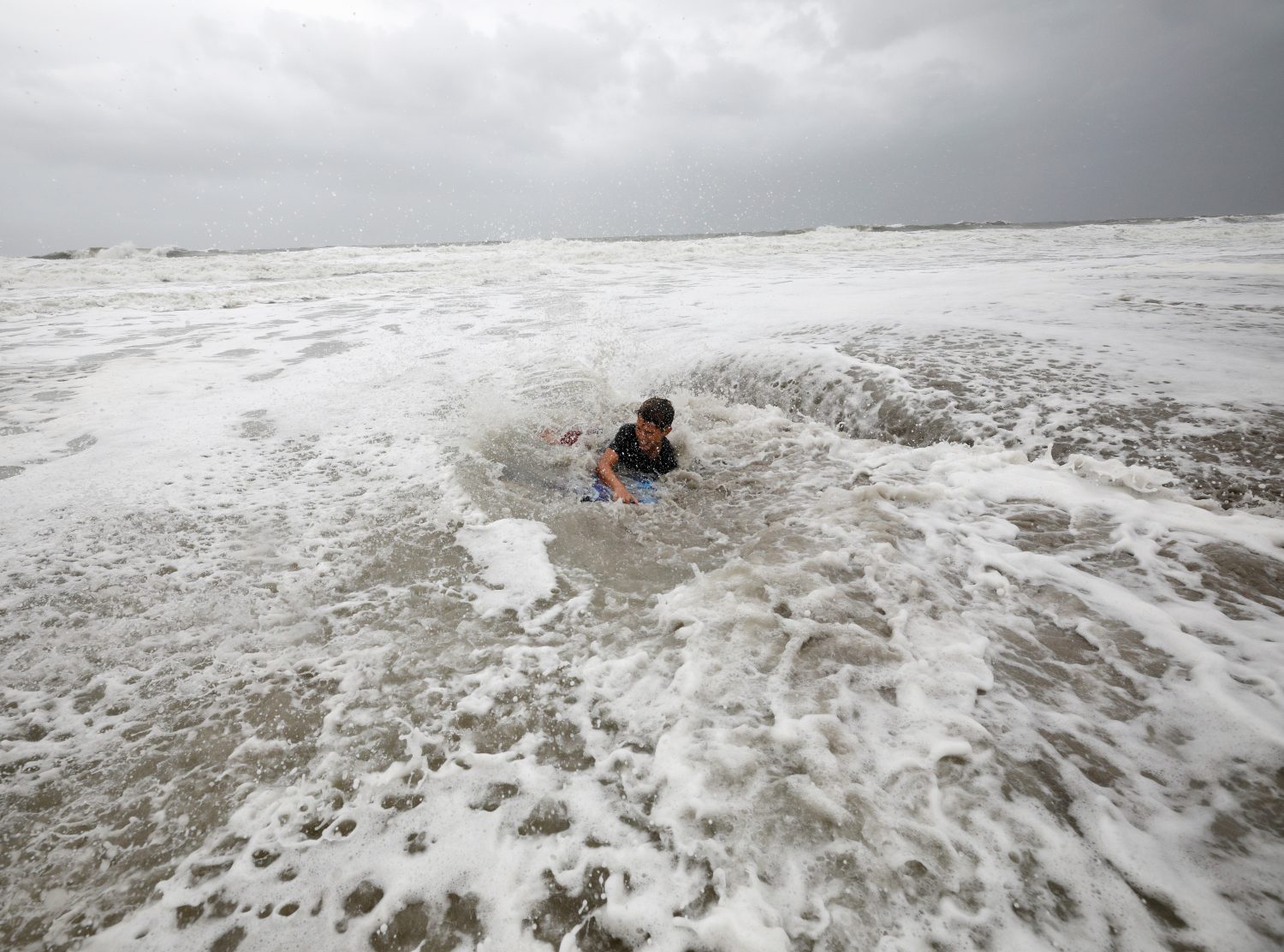
The last time El Niño emerged from the tropics, in 2023, nearly every corner of the economy felt its impact. Candy-bar makers reduced the amount of chocolate in their offerings, after drought in West Africa triggered higher cocoa bean prices. Some transatlantic flights got longer and others got shorter and bumpier, altering fuel consumption. Even soap prices bubbled up, as key ingredients became harder to source. The effects of the El Niño that just arrived threaten to be far worse. The US Climate Prediction Center said on Thursday the conditions, which it calculates emerged in May, will continue gathering strength and peak over the winter, raising the risk of punishing heat waves, severe drops in rainfall and devastating deluges in various corners of the world. This doesn’t bode well for governments, businesses and households already struggling with higher inflation linked to the US and Israel’s war in Iran.
Even before the CPC declared the event’s official arrival, the US Department of Agriculture had said it sees domestic food prices increasing by as much as 4.7% in 2026 from a year earlier, the biggest leap in three years. For products made from sugar and cocoa — the two crops most at risk from El Niño droughts, according to Marex Group, a financial-services firm in London — the USDA expects prices to jump as much as 8.4%. The last time the world faced such a strong El Niño, in 2015 and 2016, the result was more than $7.8 trillion in lost productivity, based on a Dartmouth College study, with the economic effects continuing to ripple for years afterward.
El Niño — or “the child” in Spanish, named for baby Jesus because Peruvian fishermen in the 1600s first noticed the phenomenon around Christmastime — is a weather pattern that occurs with sustained warming of Pacific Ocean surface temperatures. Trade winds weaken and sometimes even run backward, which in turn further increases the temperature of the ocean. This leads to patterns of high and low pressure that translate into excessive rains in some parts of the world and drought in others.
It’s a normal, cyclical event that used to come and go with little fanfare, except in the rarest of years.
Bloomberg – El Niño Slams Into a Global Economy Unprepared for More Chaos
______
6. Gold Slumps to Six-Month Low
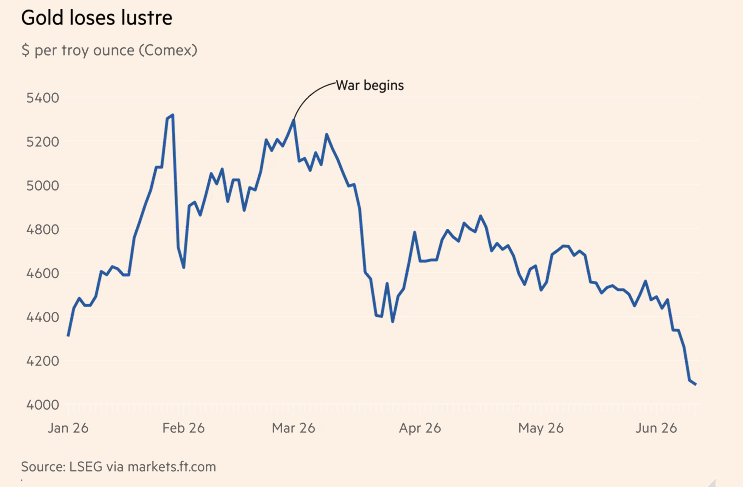
The price of gold dropped to a six-month low on Thursday as tensions in the Middle East, growing expectations of US interest rate rises and the looming SpaceX initial public offering piled pressure on bullion. Gold fell more than 1 per cent to touch $4,022 per troy ounce on Thursday morning, its lowest level since late November and leaving it on course for its worst quarter of performance in almost a decade. It was later trading up slightly on the day at $4,085. The yellow metal has fallen more than 20 per cent since the beginning of the war in the Middle East, which has forced some central banks to sell gold to help defend their currencies. It has also triggered an exodus of the speculative investors who had driven a bullion-buying frenzy late last year and early this year.
“When things kicked off in Iran, people de-risked their portfolios,” said Peter Kinsella, head of investment services at UBP. “People are selling gold to fund other non-performing assets on a margin basis. Any de-risking move is going to result in sales of gold.” Several central banks have been forced to sell gold in recent months, including Turkey, which sold and swapped $20bn in gold to defend its currency.
Russia has also sold gold to prop up its fiscal coffers.
Financial Times – Gold sinks to 6-month low as speculative investors exit
______
7. Wimbledon Raises Prize Money to Record £64.2mn
Pacific Investment Management Co. is warning that the “credit loss cycle is upon us” as heavy spending on artificial intelligence could widen economic outcomes and hit lower-quality borrowers. Pimco’s Richard Clarida, Andrew Balls and Daniel Ivascyn said in the firm’s latest annual secular outlook report that “the default cycle is reasserting itself, and we expect significantly higher losses in lower-quality credit such as leveraged and private direct lending.” Pimco, which manages $2.3 trillion in assets, said the AI buildout could widen the range of economic outcomes over the next five years while leaving weaker and more heavily leveraged borrowers exposed. High-grade credit spreads — the extra yield investors demand over US Treasuries to hold highly rated corporate debt — remain near their lowest levels in almost three decades. Demand for riskier debt has also held up despite a recent global bond selloff, as higher yields draw buyers.
Pimco said that backdrop clashes with “elevated secular uncertainty,” and “we interpret this as complacency rather than strength.” While the US economy has been resilient, “AI will disrupt old economy companies, especially highly levered ones.” The firm also pointed to “increased instances of maturity extensions and payment-in-kind structures that allow borrowers to repay debt with more debt,” a trend it said suggests “a more genuine default cycle is now unfolding, and investors should not expect past patterns of rapid recovery to repeat with the same reliability.” Pimco said one effect of the AI boom could be lower wage pressure and higher productivity, which it described as “a powerful disinflationary force, but geopolitical shocks and supply chain reconfiguration will likely put upward pressure on prices.”
Against that backdrop, Pimco said “central banks will do what it takes to keep inflation expectations anchored over the next five years,” and that “for this reason, sovereign bonds offer income plus the potential for capital gains in a future downturn.”
Financial Times – Wimbledon increases prize money as players demand higher share of revenues
______