—— Oxford Vaccine Production Set to Begin for Ebola Strain; Eli Lilly Agrees to Buy Three Vaccine Makers for Up to $3.8 Billion; Micron Market Cap Hits $1 Trillion; Qualcomm Clinches Deal with ByteDance to Supply AI Data Center Chips; ByteDance Offers Special Stock to AI Lab Staff to Curb Rival Poaching; Energy Shock from Iran War Shrinks Real Wages Across Rich Countries; Trump Administration Moves to Create Government-Wide NDA for Federal Workers
1. Oxford Vaccine Production Set to Begin for Ebola Strain
Production of an experimental Ebola vaccine from the developers of a Covid-19 shot is expected to begin soon, with animal studies underway as researchers race to bring a much-needed tool to the spiraling outbreak. Clinical trials for the shot could begin in two to three months, said Teresa Lambe, head of vaccine immunology, at the University of Oxford’s Pandemic Sciences Institute. “We are cautiously optimistic around that timing,” she said at a briefing. Animal studies, which are required for a vaccine to be tested in humans, have begun and more will get underway soon. The Oxford team is working to get the starting material needed to manufacture the vaccine to its partner, the Serum Institute of India, “as quickly as possible,” Lambe said. “We’re hoping to have clinical doses, if needed, within two to three months, all going well.”
There is no approved vaccine or treatment for the Bundibugyo strain of Ebola spreading in Democratic Republic of Congo. At least one other shot is also in development, but it’s expected to be ready for testing later than Oxford’s. The outbreak is currently spreading faster than responders can contain it, with suspected deaths climbing above 220 and treatment centers under attack. The Oxford vaccine uses the same approach that underpinned the Covid-19 shot from Oxford and AstraZeneca Plc. Lessons from the development of that vaccine have helped speed up the current research. Existing vaccines for different strains of Ebola are not currently being considered for front-line health workers, Gavi’s chief executive officer Sania Nishtar said in an interview. Gavi, which helps procure vaccines on behalf of countries, has said it is willing to make an advance purchase commitment for an Ebola shot as soon as it’s relevant. The commitment would encourage manufacturers to invest in trials, speed up development and “assign their A teams on this matter,” Nishtar said. Several treatments are also ready to be tested, including the antiviral remdesivir, which was used to treat Covid-19 infections.
While there is optimism around trials starting, experts caution that it will be many months until these products, if they prove effective, are widely available.

Bloomberg – Ebola Vaccine From Oxford Covid Team Nears Production for Trials
______
2. Eli Lilly Agrees to Buy Three Vaccine Makers for Up to $3.8 Billion
Eli Lilly & Co. agreed to buy three vaccine developers for as much as $3.8 billion, marking the drugmaker’s re-entry into the infectious disease space. The agreements with Curevo, LimmaTech Biologics and Vaccine Company give Lilly access to immunizations for shingles, common bacterial pathogens and Epstein-Barr Virus, according to a statement on Tuesday. “These acquisitions reflect a deliberate strategy to prevent disease at its source rather than treat its consequences,” Dan Skovronsky, Lilly’s chief scientific and product officer, said in a statement.
The drugmaker, flush with cash from its blockbuster obesity drugs, has been expanding into other disease areas as it builds out its pipeline beyond weight loss. The acquisitions come at a precarious time for vaccines, which have lost US government funding and support under Health Secretary Robert F. Kennedy Jr. Shares rose 1.3% in trading before US markets opened in New York. Lilly has a long history in infectious diseases. It was one of the first companies to mass produce penicillin in the 1940s and, over a decade later, was the first to make and distribute the Salk Polio Vaccine.
While it also sold an antibody treatment for people at high risk during the Covid-19 pandemic, the drugmaker had largely focused its attention on other areas in the intervening decades.
Bloomberg – Lilly to Buy Three Vaccine Developers for Up to $3.8 Billion
______
3. Micron Market Cap Hits $1 Trillion
Micron Technology Inc.’s market capitalization, which has soared about 700% over the past year, will more than double over the next 12 months, according to at least one analyst. UBS Group AG on Tuesday boosted its price target for the Boise, Idaho-based chipmaker to a street high of $1,625, roughly 116% higher than its close on Friday of $751. The new guidance is more than 200% higher than UBS’s previous target of $535 and implies a market value of more than $1.8 trillion that is larger than the current market capitalization of companies like Meta Platforms Inc., Tesla Inc. and Berkshire Hathaway Inc.
Micron Technology’s shares rallied 17% on Tuesday after a Huawei Technologies Co. official said the Chinese company had made a potential breakthrough on chip design, causing chip stocks to jump. The surge pushed Micron’s capitalization to $1 trillion.
The stock has rallied over the past year, fueled by memory chip demand.
Bloomberg – Micron Shares Rally, UBS Projects $1.8 Trillion Market Value
______
4. Qualcomm Clinches Deal with ByteDance to Supply AI Data Center Chips
Qualcomm Inc. reached a deal with TikTok owner ByteDance Ltd. to supply chips for artificial intelligence data centers, according to people familiar with the matter, marking a key win for a company trying to expand from smartphone processors into AI infrastructure. ByteDance is set to procure millions of Qualcomm chips known as application-specific integrated circuits, which will help support the social media company’s AI agent software, said the people, who asked not to be identified because the discussions are private. Qualcomm’s shares extended their gains to as much as 8.3% higher to a new intraday record. Representatives for San Diego-based Qualcomm declined to comment. A ByteDance spokesperson didn’t respond to requests for comment.
The Chinese tech giant is poised to become one of the chipmaker’s first major customers for the AI-focused ASICs. Qualcomm Chief Executive Officer Cristiano Amon has previously said that the company is beginning to line up clients for the chips.
During a post-earnings conference call last month, he mentioned “engagement” with a number of companies. Amon didn’t identify potential customers, but the remarks helped trigger a Qualcomm stock rally.
Bloomberg – Qualcomm Strikes AI Chip Deal With TikTok Owner ByteDance
______
5. ByteDance Offers Special Stock to AI Lab Staff to Curb Rival Poaching
ByteDance is offering special stock to employees of its AI lab to fend off poaching from rivals as China’s tech talent war heats up. The Beijing-based owner of TikTok is offering low-priced stock options linked to its Seed AI division to employees of the unit, according to four people with knowledge of the incentive. It is the first time ByteDance has issued shares tied to a specific business unit. The structure gives staff exposure to Seed’s growth without dilution from ByteDance’s other business lines. The move is meant to keep staff at the company after rivals including Tencent began poaching members of its top research team. Like in Silicon Valley, a fierce talent war is under way in China, particularly for engineers specialising in infrastructure and data labelling, areas viewed as critical to improving AI model efficiency amid constrained computing resources.
ByteDance, which aggressively recruited for Seed after establishing the lab in 2023, is widely regarded as having one of the highest concentrations of elite AI researchers in China. The company made early and large bets on AI infrastructure, becoming Nvidia’s largest Chinese customer. Tencent conceded late last year that it had fallen behind competitors in the development of large language models and has intensified its hiring push in recent months, including targeting ByteDance staff. Recent high-profile departures include Xiao Xuefeng, a senior member of Seed’s visual AI platform, and Zhang Chi, an infrastructure specialist, who both left for Tencent. The recruitment drive has been led by Yao Shunyu, a prominent AI researcher who joined Tencent from OpenAI last year. To stem the tide, ByteDance offered Seed employees around the world the option to buy so-called Doubao stock at $13 a piece this month, according to the people with knowledge of the incentive.
Their value has risen almost 30 per cent since the end of last year, when the units were priced at about $10, the people added, reflecting faster commercialisation of ByteDance’s LLMs in the cloud business and better model performance. The valuation is also low compared with those of rival AI labs in China, implying significant potential gains for employees.
Financial Times – ByteDance offers AI team special stock to fend off poaching
______
6. Energy Shock from Iran War Shrinks Real Wages Across Rich Countries
Workers’ pay packets are shrinking in relation to prices in a growing number of rich countries as the energy shock unleashed by the Iran war chokes off a nascent recovery in real wages. The squeeze on consumers in the UK, US and elsewhere comes as they face sharp increases in prices for petrol and airfares triggered by the closure of the Strait of Hormuz. US inflation jumped to an annual 3.8 per cent in April, while average hourly earnings increased 3.6 per cent over the year, meaning prices were rising faster than earnings for the first time in two years. “The war is roiling supply chains and will push prices higher [than] before, even if the strait were to open tomorrow,” said Diane Swonk, chief economist at KPMG US.
UK workers face a similar squeeze. Average earnings grew at an annual pace of just 0.1 per cent in real terms in the three months to March, excluding bonuses, and are set to fall outright as inflation rises over the coming months against a backdrop of very weak hiring. In the Eurozone, the energy shock represents a fresh setback for workers who had only just clawed back the ground lost in the 2022 inflationary shock. The drag on real wages comes as diplomatic efforts to end the Middle East conflict have intensified in recent days. On Monday, Iran’s top negotiators travelled to Doha as mediators pushed to hammer out the final details of a peace agreement that would involve the gradual reopening of the strait.
Claus Vistesen, at the consultancy Pantheon Macroeconomics, said he expected real wage growth to be close to zero across the Eurozone in 2026. He said it could already be “deeply negative” in countries such as France that had no fiscal space to shield consumers.

Financial Times – Real wages start to shrink in developed countries
______
7. Trump Administration Moves to Create Government-Wide NDA for Federal Workers
The Trump administration is moving to create a government-wide nondisclosure agreement for federal workers after a number of high-profile and unauthorized leaks in recent months. The Office of Personnel Management, which serves as the federal government’s human resources arm, proposed the standardized NDA form Tuesday and said agencies that use it would administer it to both new hires and current employees. The proposal specifically mentions leaks related to the American military raid in Venezuela in January and planned enforcement actions by immigration agents in the US.
OPM’s notice, sent to the Office of the Federal Register Tuesday, is a proposal, and the agency is seeking public comment on the scope, form and enforcement of any nondisclosure agreements.
It would restrict disclosures of its internal decision-making, “pre-decisional documents and interagency comments exchanged during internal coordination processes.”
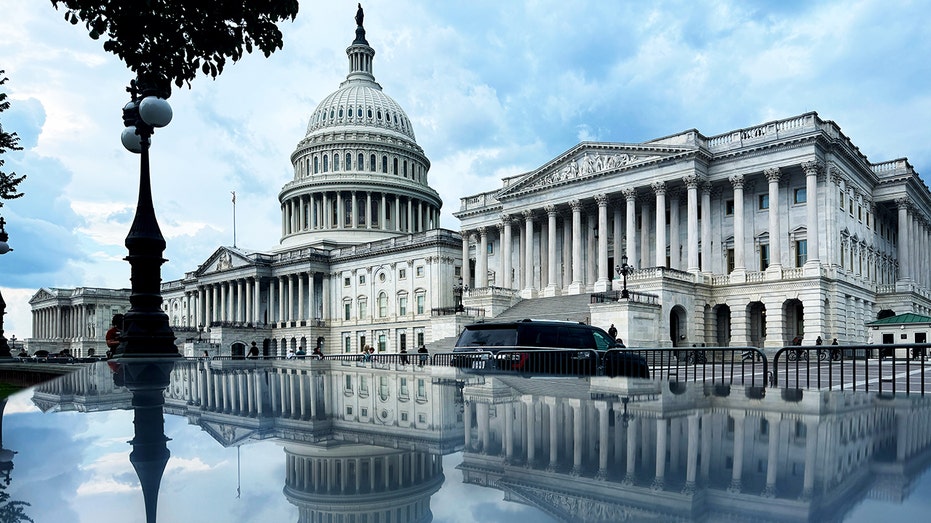
Bloomberg – Trump Administration Demands Federal Worker NDAs in New Crackdown on Leaks
______