—— Morgan Stanley and Cliffwater Limit Withdrawals Amid Surge in Redemptions; Estée Lauder Sues Perfumer Jo Malone; Honda Warns of 15.7 Billion Dollar Loss in Massive EV Pivot; US Weekly Jobless Claims Edge Down to 213,000; Microsoft and Meta Each Commit $50 Billion to New Data Center Leases; US Officials Reveal 11.3 Billion Dollar Cost for First Six Days of Iran War; Iran’s New Supreme Leader Defies US and Israel.
1. Morgan Stanley and Cliffwater Limit Withdrawals Amid Surge in Redemptions
In a major escalation of stress within the private credit sector, Morgan Stanley and specialty lender Cliffwater have restricted investor withdrawals from their flagship funds. Cliffwater, which has become a retail powerhouse with its $33 billion Corporate Lending Fund (CCLFX), received redemption requests totaling 14% of its shares in the first quarter of 2026—nearly triple its typical buyback target. Hours later, Morgan Stanley informed investors in its $7.6 billion North Haven Private Income Fund that it would fulfill only 45.8% of the 10.9% in redemption requests it received, marking a rare move for the banking giant’s private wealth arm.
The flight to liquidity underscores the structural risks of semi-liquid “interval funds” marketed to wealthy individuals. While these vehicles offer periodic windows to exit, the underlying private loans they hold are notoriously difficult to sell in times of market stress. With mounting anxieties over the impact of generative AI on software-heavy loan portfolios and a potential spike in corporate defaults, the industry is seeing a synchronized withdrawal wave across major players including Blackstone and BlackRock.
While Cliffwater outpaced industry giants in capital raising throughout 2025, the current crunch is forcing managers to utilize “gates”—a regulatory mechanism allowed by the SEC—to prevent a forced sell-off of illiquid assets. As March 2026 progresses, this bottleneck represents the first major liquidity test for the democratized private credit market since its rapid post-pandemic expansion.
Financial Times – Morgan Stanley and Cliffwater limit private credit withdrawals
______
2. Estée Lauder Sues Perfumer Jo Malone
US cosmetics giant Estée Lauder Companies filed a lawsuit late Wednesday against British perfumer Jo Malone, her fragrance brand Jo Loves, and Zara’s UK business. The legal action centers on the marketing of a collaborative perfume line sold at Zara, which features packaging labeled: “A creation by Jo Malone CBE, founder of Jo Loves.” Estée Lauder alleges that this usage constitutes breach of contract, trademark infringement, and “passing off”—a legal term for misleading consumers into believing a product is associated with an established brand, in this case, the Estée Lauder-owned Jo Malone London.
Malone sold her eponymous brand and the rights to her name to Estée Lauder in 1999, subsequently departing the firm in 2006 under a strict five-year non-compete clause and a permanent ban on using “Jo Malone” for commercial ventures. While she successfully launched Jo Loves in 2011 after her restrictions expired, she has frequently described the loss of her name rights as her “biggest mistake.” Given that the rights were legally transferred decades ago, the lawsuit argues that the Zara packaging crosses the line into brand dilution.
This case serves as a high-profile warning in 2026 for entrepreneurs like Bobbi Brown or the late Kate Spade, highlighting the rigid legal boundaries that remain even after a founder’s non-compete period has ended.

Financial Times – Estée Lauder sues perfumer Jo Malone for breach of contract
______
3. Honda Warns of 15.7 Billion Dollar Loss in Massive EV Pivot
Honda Motor Co. issued a stark warning on Thursday, forecasting up to ¥2.5 trillion ($15.7 billion) in losses over the next two years as it overhauls its electrification strategy. For the fiscal year ending this month, the Japanese automaker expects a net loss of between ¥360 billion and ¥630 billion, a dramatic reversal from its previous forecast of a ¥360 billion profit. This represents Honda’s first annual net loss since going public in the 1950s, driven by a cooling US electric vehicle (EV) market and intensified competition in China.
President Toshihiro Mibe admitted that US demand for EVs has been “less than half of what we were assuming.” In response to the rollback of environmental subsidies and regulations under the current US administration, Honda has scrapped three planned EV models: the Honda 0 SUV, the Honda 0 Saloon, and the Acura RSX. Additionally, the company recorded significant impairments in China, where it has struggled to match the software capabilities and rapid product cycles of local EV manufacturers. As the market outlook sours, Honda plans to pivot back toward hybrid vehicles for the US consumer.
While the firm once led Japanese peers in aggressive EV targets, the record losses in 2026 mark a sobering retreat from its ambition to sell only battery and fuel-cell vehicles by 2040.

Financial Times – Honda slumps to first annual loss since going public in the 1950s
______
4. US Weekly Jobless Claims Edge Down to 213,000
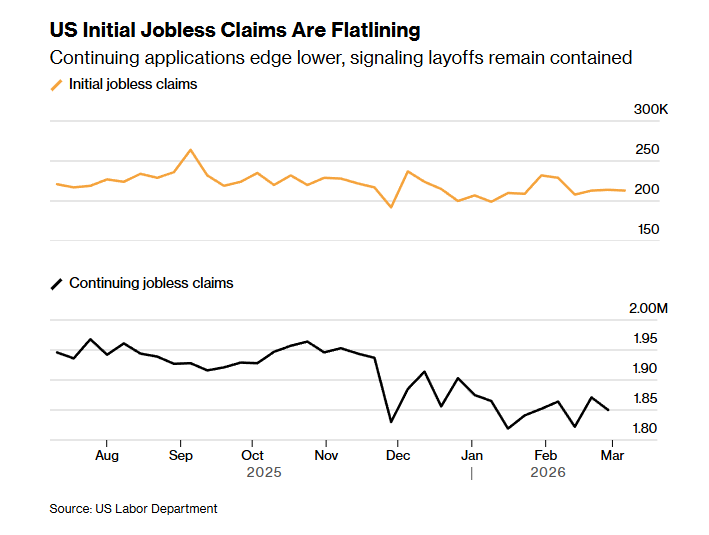
Initial applications for US unemployment benefits decreased by 1,000 to 213,000 in the week ended March 7, according to Labor Department data released Thursday. The figure came in slightly below the median forecast of 215,000, suggesting that layoffs across the broader economy remain contained. While high-profile firms such as Oracle Corp., Morgan Stanley, and Jack Dorsey’s Block Inc. have announced workforce reductions in recent weeks, the overall volume of new claims has remained subdued.
“The level of claims is just very low, plain and simple,” noted Carl Weinberg, chief economist at High Frequency Economics. He added that the latest figures show no signs of the labor market weakening typically seen in the early days of a recession. In addition, continuing claims—a proxy for the total number of people receiving benefits—fell to 1.85 million in the previous week.
Given this sustained strength in hiring and retention, Federal Reserve officials may continue to focus on inflation risks throughout 2026 rather than immediate concerns over a deteriorating job market.
Bloomberg – US Jobless Claims Ticked Down to 213,000 Last Week
______
5. Microsoft and Meta Each Commit $50 Billion to New Data Center Leases
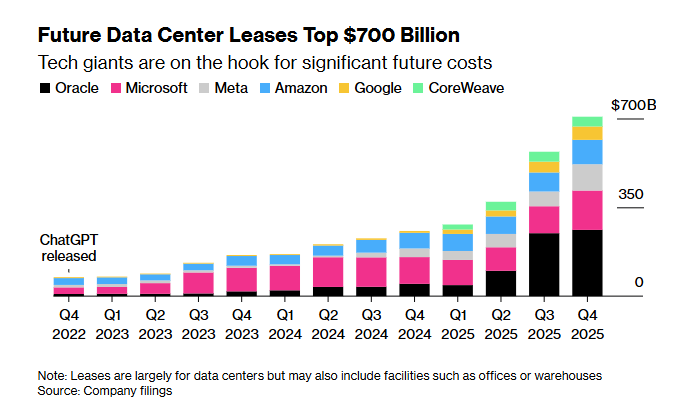
In their most recent quarterly filings, Microsoft Corp. and Meta Platforms Inc. each committed nearly $50 billion in additional data center leases, underscoring an escalating financial bet on artificial intelligence. According to a Bloomberg analysis, these new pledges have pushed the total future lease obligations among the world’s largest cloud computing firms—including Oracle and Amazon—beyond $700 billion. These commitments have climbed steadily over the past year as tech giants move to secure the specialized server farms necessary to host advanced AI models.
Microsoft now carries approximately $155 billion in future lease commitments, while Meta’s total stands at $104 billion. Since these future costs are typically categorized as off-balance-sheet obligations, they will not appear as active liabilities until payments begin upon facility occupancy. As the race for generative AI compute heats up, Microsoft added over one gigawatt of data center capacity in the quarter ending last December—roughly the power output of a nuclear reactor. While some contracts include escape clauses for certain conditions, the sheer scale of the spending demonstrates a long-term strategic commitment to AI infrastructure.
Currently, the majority of this capital is being funneled into high-density power grids and specialized hardware, positioning these firms to dominate the global AI landscape throughout 2026.
Bloomberg – Microsoft, Meta Add to $700 Billion Surge in Data Center Leases
______
6. US Officials Reveal 11.3 Billion Dollar Cost for First Six Days of Iran War
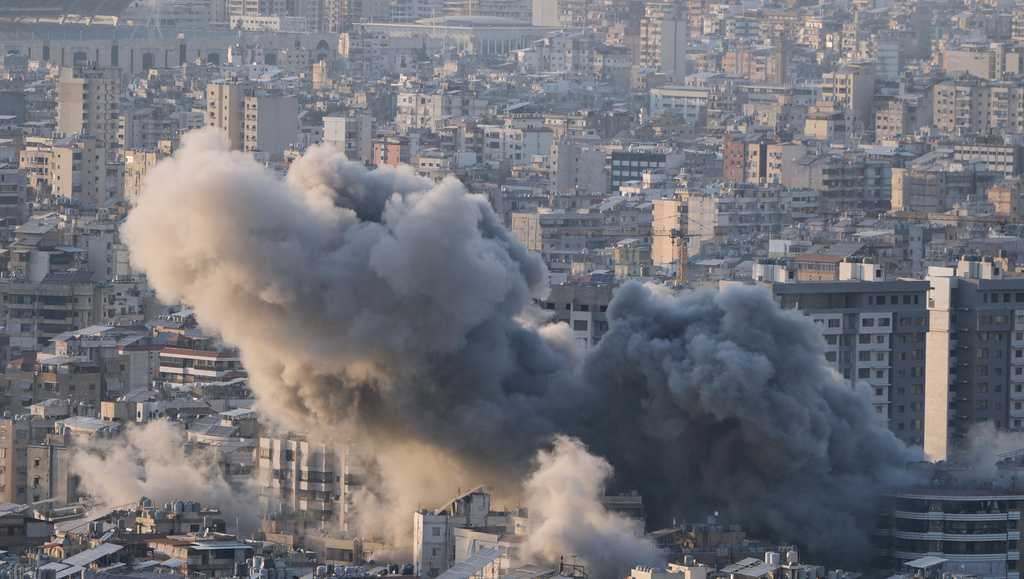
US officials informed lawmakers this week that the first six days of the conflict with Iran cost more than $11.3 billion, according to a person familiar with the matter. This figure provides the most detailed financial assessment yet of President Donald Trump’s military campaign in the Middle East. Pentagon officials delivered the estimate during a closed-door briefing with Senate appropriations staff. However, the true cost is expected to be significantly higher as the current tally excludes the substantial expenses of operating warships and maintaining personnel deployed across the region.
The daily burn rate of nearly $1.9 billion far exceeds unofficial estimates provided by external think tanks. The Center for Strategic and International Studies (CSIS) had previously released a paper estimating costs at roughly $890 million per day during the first four days of the operation, which commenced on February 28. Since the official figures suggest a spending rate more than double that projection, the fiscal impact of the 2026 conflict is becoming a focal point of debate in Washington.
While a Pentagon spokesperson declined to comment on the private deliberations and noted that total costs will only be known upon the mission’s completion, the $11.3 billion figure first reported by the New York Times has already sent ripples through financial markets concerned about rising federal deficits.
Bloomberg – US Spent $11.3 Billion in First Week of War With Iran
______
7. Iran’s New Supreme Leader Defies US and Israel
Ayatollah Mojtaba Khamenei, Iran’s new Supreme Leader, used his first public address since succeeding his assassinated father to signal a hardening of Tehran’s wartime stance. In a written statement read on state television, the 56-year-old hardline cleric declared that the closure of the Strait of Hormuz must continue as a primary strategic lever. He further warned that Iran is prepared to activate “new fronts” in regions where its enemies are “highly vulnerable” should the current conflict with the US and Israel persist.
The defiant rhetoric has sent fresh shockwaves through global energy markets, with Brent crude nearing $100 a barrel as of Thursday afternoon. Since the start of hostilities, Iranian drone and missile strikes have wreaked havoc on infrastructure across Israel, Saudi Arabia, and the UAE. While diplomatic efforts led by Saudi Arabia, Oman, and Turkey continue behind the scenes, back-channel talks are reportedly nowhere near a breakthrough. Additionally, Qatar has withdrawn from its mediation role following repeated Iranian attacks on its territory.
As March 2026 progresses, Khamenei’s commitment to military escalation underscores a grim outlook for regional stability and global shipping safety.

Bloomberg – Iran’s New Supreme Leader Khamenei Says Hormuz Strait Should Stay Closed
______