—— JPMorgan Restricts Private Credit Lending Amid Software Markdowns; US Core Inflation Eases to 0.2% in February; Jefferies Faces Legal Firestorm Amid Fraud Allegations; REI to Slash Starting Pay and Employee Benefits; IEA Launches Largest Strategic Oil Release in History; Porsche CEO Launches Radical Pivot; Middle East War Costs Tourism Industry 600 Million Dollars Daily.
1. JPMorgan Restricts Private Credit Lending Amid Software Markdowns
JPMorgan Chase & Co. has begun marking down the value of certain loans held by private credit funds and tightening its lending to the sector, according to people familiar with the matter. The markdowns specifically target loans made to software companies, which the bank views as highly vulnerable to disruption from rapid advances in generative artificial intelligence. JPMorgan CEO Jamie Dimon signaled this cautious stance during the bank’s leveraged finance conference last week, emphasizing a more prudent approach to software-linked assets. As a primary provider of leverage to the $1.8 trillion private credit industry, JPMorgan’s move effectively curtails the cash available to credit funds, piling pressure on a sector already grappling with mounting investor anxiety.
The private credit landscape is currently facing a liquidity test as a wave of redemption requests sweeps through flagship funds. Firms including Cliffwater, BlackRock, Blackstone, and Blue Owl have recently been forced to cap or restrict withdrawals after investor requests exceeded quarterly limits. This unease has been compounded by the February 25 collapse of UK-based lender Market Financial Solutions (MFS). The MFS administration, involving allegations of “double-pledging” assets and a potential 930 million pound collateral shortfall, has rattled major creditors like Barclays and Apollo’s Atlas SP Partners.
As 2026 unfolds, the combination of AI-related business model risks and the fallout from opaque asset-backed financing scandals suggests that the era of unfettered private credit growth is facing its most significant reckoning to date.
Bloomberg – JPMorgan Restricts Private Credit Lending After Loan Markdowns
______
2. US Core Inflation Eases to 0.2% in February
Underlying US inflation slowed in February, providing a brief window of relief before the economic fallout from the conflict with Iran took hold. According to Bureau of Labor Statistics data released Wednesday, the consumer price index (CPI) excluding food and energy rose 0.2% from the previous month. On a year-over-year basis, core inflation remained steady at 2.5%, marking its slowest pace in nearly five years. The report highlighted that price declines in used cars and motor vehicle insurance helped keep broader inflationary pressures in check, even as costs for gasoline and groceries like fresh vegetables climbed.
Despite the positive February reading, the outlook for 2026 remains clouded by the war in the Middle East, which has already spiked the costs of oil and fertilizer. These developments risk reigniting affordability concerns among American consumers ahead of this year’s midterm elections. While Federal Reserve officials are widely expected to hold interest rates steady at next week’s meeting, the energy shock has led many investors to push back expectations for a rate cut until the second half of 2026.
Sal Guatieri, senior economist at BMO Capital Markets, noted that while the impact of earlier tariffs appears to be fading, the central bank must now navigate the dual challenge of stabilizing energy-driven inflation and monitoring a fragile labor market.
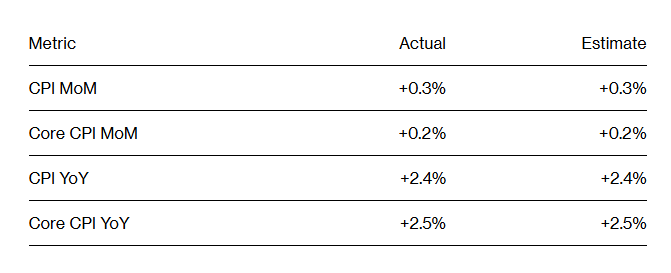
Bloomberg – US Core Inflation Slowed as Expected Before War With Iran
______
3. Jefferies Faces Legal Firestorm Amid Fraud Allegations
Jefferies Financial Group Inc. is under intense scrutiny as its aggressive dealmaking strategy unvravels into a series of lawsuits following the collapses of First Brands Group and Water Station amid fraud allegations. The most significant blow arrived last Friday when Western Alliance Bancorp filed a $126.4 million lawsuit in New York, alleging breach of contract and fraud related to a loan tied to First Brands. Western Alliance CEO Ken Vecchione described Jefferies’ decision to halt payments as “shocking” and “highly unusual,” forcing the regional lender to record a full charge-off. The lawsuit claims Jefferies failed to honor a forbearance agreement intended to recover funds from First Brands’ worthless receivables.
The legal pressure extends beyond Western Alliance, as a $55 billion Indiana pension fund has also sued the firm, alleging it was defrauded over separate First Brands-linked investments. Additionally, Jefferies’ involvement as a backer to failed UK mortgage lender Market Financial Solutions (MFS) has exposed it to a $135 million shortfall, with administrators warning of “double-pledged” collateral in the MFS estate. While Jefferies CEO Rich Handler has dismissed the claims as “meritless” and maintains the firm’s financial health remains robust, Jefferies shares plunged over 13% in early March 2026.
The recurring themes of phantom machines and faked invoices across its portfolio have raised serious questions about Jefferies’ internal oversight, potentially hindering its long-term ambitions in leveraged finance and alternative asset management.
Bloomberg – Jefferies’ Series of Bad Bets Has Firm Facing Lawsuits, Judgment Questions
______
4. REI to Slash Starting Pay and Employee Benefits
Struggling with persistent financial headwinds, outdoor retailer Recreational Equipment Inc. (REI) has announced plans to reduce salary ranges for new hires starting July 1, 2026. In a memo to staff, CEO Mary Beth Laughton detailed additional “focused changes” to current employee benefits, including slowing vacation accrual, shifting from guaranteed retirement contributions to a company-match model, and aligning sick leave policies with the bare legal minimum required by states. The moves follow a difficult fiscal 2024, where REI reported a net loss of $156 million and a 6.2% decline in revenue to $3.53 billion.
The planned cuts have become a new flashpoint in REI’s increasingly contentious relationship with organized labor. While the United Food & Commercial Workers (UFCW) has unionized 11 of REI’s roughly 200 stores, none have reached a collective bargaining agreement in the four years since the first store organized. Laughton stated that the benefit reductions would apply company-wide and are included in the final contract offers for unionized locations. The strategy risks undermining REI’s long-cultivated image as a mission-driven co-op, especially following recent NLRB allegations that management illegally discriminated against union members.
As 2026 progresses, REI maintains that these “significant steps” are necessary to reach a healthy financial position despite continued economic pressure.
Bloomberg – REI Plans to Cut Pay of New Hires and Reduce Employee Benefits
______
5. IEA Launches Largest Strategic Oil Release in History
The International Energy Agency (IEA) launched the largest release of strategic petroleum reserves in its history on Wednesday, aiming to stabilize energy markets unleashed by the ongoing Middle East war. The agency committed to releasing 400 million barrels, a move that dwarfs the 182 million barrels released in 2022 following the invasion of Ukraine. Fatih Birol, the IEA’s executive director, stated that the unprecedented scale of current market challenges required a collective emergency action of an equally historic magnitude from the agency’s 32 member countries.
The move underscores acute fears regarding the threat to the global economy as tankers largely avoid the Strait of Hormuz due to regional threats. This narrow waterway typically handles 20% of the world’s daily oil and natural gas flows. Since the start of hostilities involving the US, Israel, and Iran nearly two weeks ago, Brent crude has soared 26%, peaking at $119 a barrel on Monday before settling near $90.60 following the IEA announcement.
Capital Economics analyst Hamad Hussain warned that while this record-breaking release provides a necessary cushion against supply shocks, the relief may be fleeting if maritime transit remains blocked, leaving the global energy landscape in a fragile state throughout 2026.

Financial Times – IEA launches record release of oil reserves to counter energy shock
______
6. Porsche CEO Launches Radical Pivot
Porsche’s new Chief Executive Michael Leiters unveiled a major strategic shift on Wednesday, aiming to revive the luxury carmaker following a 92.7% plunge in operating profits to €400mn last year. Leiters, a former McLaren and Ferrari executive, vowed to “act even more decisively” to make the company “leaner” as investors brace for further restructuring. The company took a massive €3.9bn hit in 2025 from US tariff costs and one-off charges related to the unwinding of its electric vehicle strategy. Leiters stated that Porsche will abandon its focus on sales volume in favor of higher margins and an expanded product portfolio.
As part of the new strategy, Porsche teased a new flagship SUV positioned above the Cayenne and the silhouette of a potential future supercar. Leiters emphasized that the internal combustion engine market continues to offer significant potential, contrasting it with the battery electric vehicle market, which he described as plagued by intense price competition that Porsche will not follow. The firm plans to replicate Ferrari’s success by expanding its high-margin personalization services. Meanwhile, Porsche is negotiating with unions for a new cost-cutting program that aims to reduce headcount by 3,900 by the end of the decade.
CFO Jochen Breckner noted that further restructuring measures will incur an additional €800mn to €900mn in one-off charges throughout 2026.

Financial Times – Porsche explores new premium models to drive turnaround
______
7. Middle East War Costs Tourism Industry 600 Million Dollars Daily
The ongoing conflict in the Middle East is costing the regional tourism industry an estimated $600 million per day in lost visitor spending, according to the World Travel & Tourism Council (WTTC). Following Tehran’s strikes across the Gulf, a wave of flight cancellations, airspace closures, and mounting traveler anxiety are devastating the local tourism economy. In Dubai alone, more than 80,000 short-term rental bookings were scrapped in the week leading up to March 6. Prior to the hostilities, WTTC had projected international visitor spending in the region to reach $207 billion in 2026, a goal now severely compromised by the regional instability.
The violence has directly impacted some of the world’s most iconic luxury landmarks. Debris from intercepted missiles fell on Dubai’s Burj Al Arab, while the Fairmont The Palm on Palm Jumeirah suffered a direct hit. Aviation data from Cirium indicates that five days of widespread cancellations last week left approximately 4 million travelers stranded across major hubs like Abu Dhabi and Doha. While airports in Dubai and Qatar have resumed limited services to repatriate tens of thousands of visitors, repeated airspace closures continue to hamper a return to normalcy.
Although Middle Eastern destinations have historically shown resilience following outbreaks of conflict, the direct targeting of premier tourism hubs in 2026 presents an unprecedented challenge to the industry’s recovery.

Financial Times – Middle East war costs regional tourism industry $600mn a day
______