—— US Economy Enters “Jobless Boom”; S&P 500 Tests Critical 100-Day Support; US Industrial Production Posts Largest Gain in Nearly a Year; Google Unveils Pixel 10a: $499 Price and AI Features; US IPO Market Hits Five-Year High in Activity but Faces Mixed Results; Buffett’s Final Moves as CEO: Berkshire Slashes Amazon Stake by 75%; Nvidia Exits Arm Stake Entirely
1. US Economy Enters “Jobless Boom”
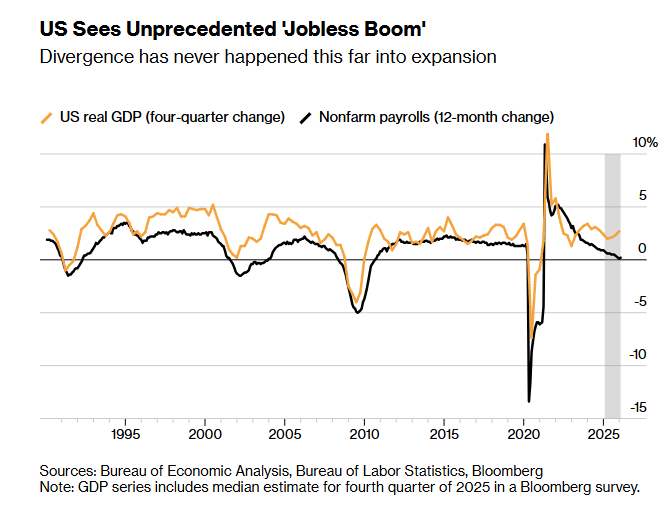
Forecasters expect Friday’s GDP report to show the US economy expanded by 2.7% in 2025, a solid pace for a developed nation. However, employment barely grew during the same period, drawing comparisons to the “jobless recovery” of the early 2000s. The current divergence is unprecedented because, unlike previous episodes that followed recessions, this “jobless boom” is occurring during a period of continuous expansion—a first in the postwar era. Diane Swonk, chief economist at KPMG, described the economy as sitting on a “one-legged stool,” highlighting the inherent instability of growth without labor market support.
While President Donald Trump is expected to tout robust GDP figures during his State of the Union address on Feb. 24, analysts at Oxford Economics warn that conditions such as post-pandemic overhiring, surging productivity, and AI advancements have made the labor market vulnerable. Unlike the manufacturing-led job losses of the early 2000s, college-educated Americans are bearing the brunt of the current slowdown. Trump and his allies are urging the Federal Reserve to cut interest rates, pointing to Alan Greenspan’s 1990s playbook where rising productivity allowed for faster growth without fueling inflation.
However, current parallels more closely resemble the 2003 era described by Ben Bernanke, where technological shifts led to massive sheds in office and administrative support roles.
Bloomberg – Unprecedented ‘Jobless Boom’ Tests Limits of US Economic Expansion
______
2. S&P 500 Tests Critical 100-Day Support
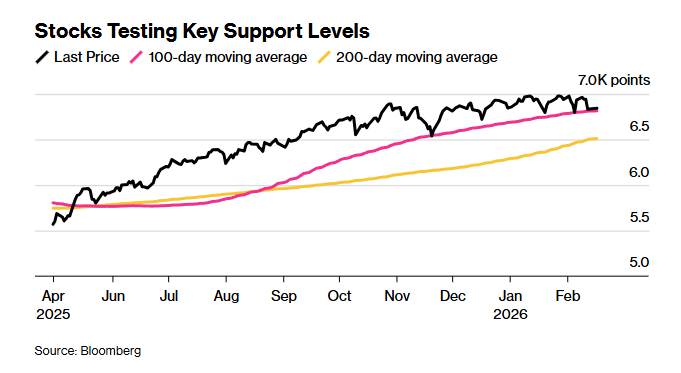
Wall Street strategists are grappling with the depth of a potential market slide as the S&P 500 once again tests a pivotal support level following its sharpest weekly drop since November. For the third time this month, the benchmark gauge traded below its 100-day moving average—a key line of defense that has held firm since May—reflecting a broader rotation from expensive tech stocks into defensive sectors. While the index managed to close up 0.1% at 6,843.22 on Tuesday, an intraday dip to 6,775.50 signaled mounting pressure. Colin Cieszynski, chief market strategist at SIA Wealth Management, warned that a sustained failure to hold this line would indicate a bearish shift in overall sentiment.
The index is currently navigating a volatile range between 6,800 and just under 7,000, while active money managers have slashed their equity exposure to the lowest levels since July. Technicians are particularly concerned because the 100-day average served as a launchpad for the rally to January’s record highs; a breach now would disrupt that upward trajectory. If the current support fails, analysts see a crucial “cluster” of support between 6,500 and 6,550 points, where the 200-day moving average and previous November lows converge.
Investors remain on high alert as the benchmark hovers near these technical trigger points, which could dictate the market’s direction for the remainder of the quarter.
Bloomberg – Wall Street Hunts for Bottom as S&P Retests ‘Rock Solid’ Support
______
3. US Industrial Production Posts Largest Gain in Nearly a Year
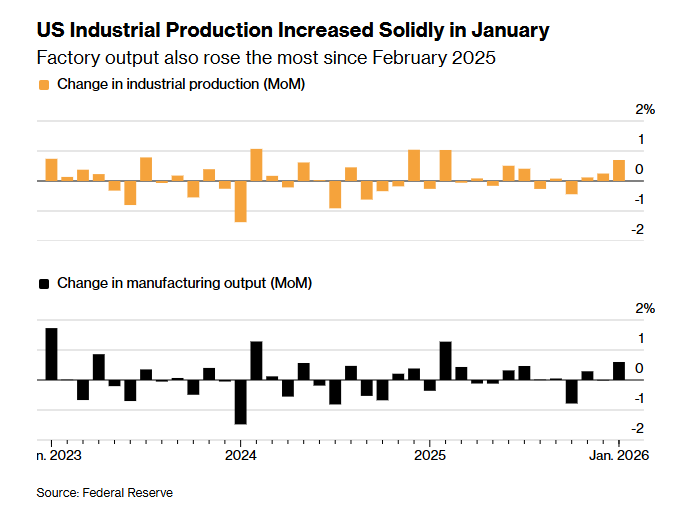
US industrial production rose 0.7% in January, the largest monthly increase in nearly a year, driven by a broad recovery in manufacturing and steady gains in utility output. According to Federal Reserve data released Wednesday, the advance followed a downwardly revised 0.2% gain in December 2025. Manufacturing output, which constitutes about three-quarters of total industrial production, climbed 0.6% in January—its strongest performance since February 2025—adding to evidence of a nascent recovery in the factory sector.
The gain was widespread across industries, with production of computers, electronic products, machinery, and motor vehicles all trending higher as firms move forward with capital spending amid lifting trade policy uncertainty. Production of nondurable goods also saw an uptick. Complementing the official data, the ISM Manufacturing Index rose to 52.6 in January, marking its first move into expansion territory above the 50-point threshold in almost a year.
Analysts noted that while tariffs continue to exert upward pressure on input costs, favorable tax provisions and AI-driven demand for business equipment are fueling the turnaround, with overall capacity utilization edging up to 76.8% at the start of 2026.
Bloomberg – US Industrial Production Increases by Most in Nearly a Year
______
4. Google Unveils Pixel 10a: $499 Price and AI Features
Google introduced its latest entry-level smartphone, the Pixel 10a, on Wednesday, betting that new AI-driven software and minor hardware refinements can carry an otherwise incremental update. Maintaining a steady $499 starting price, the device is available for preorder now with shipments set to begin on March 5. Like its predecessors, the Pixel 10a comes with a commitment to seven years of software and security updates and is offered in four distinct colors: Fog, Obsidian, Berry, and Lavender. Complementary versions of the $129 Pixel Buds 2a in matching green and red shades were also released.
The new handset features a redesigned, flatter back panel with a nearly flush camera bar and is powered by the Tensor G4 chipset. While major hardware upgrades are limited, the Pixel 10a boasts a brighter Actua display (peaking at 3,000 nits) and a bump in wireless charging speed to 10W. Google is positioning the device as a high-value alternative to Apple’s upcoming iPhone 17e, which is expected to debut soon at $599.
By offering a $100 price advantage alongside exclusive AI tools such as Satellite SOS, Auto Best Take, and the Gemini-powered Camera Coach, Google hopes to persuade budget-conscious shoppers that its latest hardware offers more functional intelligence for less money.

Bloomberg – Google Debuts $499 Pixel 10a Just Ahead of the iPhone 17e Reveal
______
5. US IPO Market Hits Five-Year High in Activity but Faces Mixed Results
The highly-anticipated IPO boom is showing signs of stalling as the market enters a seasonal quiet period characterized by growing investor caution. Following postponed listings from broker Clear Street Group and Blackstone-backed Liftoff Mobile, the window for new issuances closed last week with a wave of volatility. US first-time share sales raised approximately $7.2 billion through Feb. 17, the most for this period since the 2021 mania, with 16 deals exceeding $100 million. However, data compiled by Bloomberg shows that roughly half of these significant deals are currently trading below their offering price. This shaky performance coincides with a 1.2% decline in the S&P 500 and a 3.1% drop in the Nasdaq 100 this month, driven by uncertainty over AI’s long-term impact.
While the weighted-average return for US IPOs this year stands at 17%, outperforming headline benchmarks, individual stocks tell a story of extreme volatility. Insurtech firm Ethos Technologies has crashed 45% in just three weeks, while Bitgo Holdings is down 41% in less than a month. In contrast, sectors insulated from AI disruption—such as industrials and consumer goods—have proven far more resilient. Mark Schwartz, who leads IPO advisory at EY, noted that while activity levels remain healthy, outcomes for investors have been inconsistent.
Analysts from Houlihan Lokey suggest that the market is missing the “fear of missing out” (FOMO) that defined the pandemic era, with most recent listings struggle to price above their initial ranges despite the high volume of deals.

Bloomberg – IPO Market Limps Into Seasonal Lull After $7.2 Billion Burst
______
6. Buffett’s Final Moves as CEO: Berkshire Slashes Amazon Stake by 75%
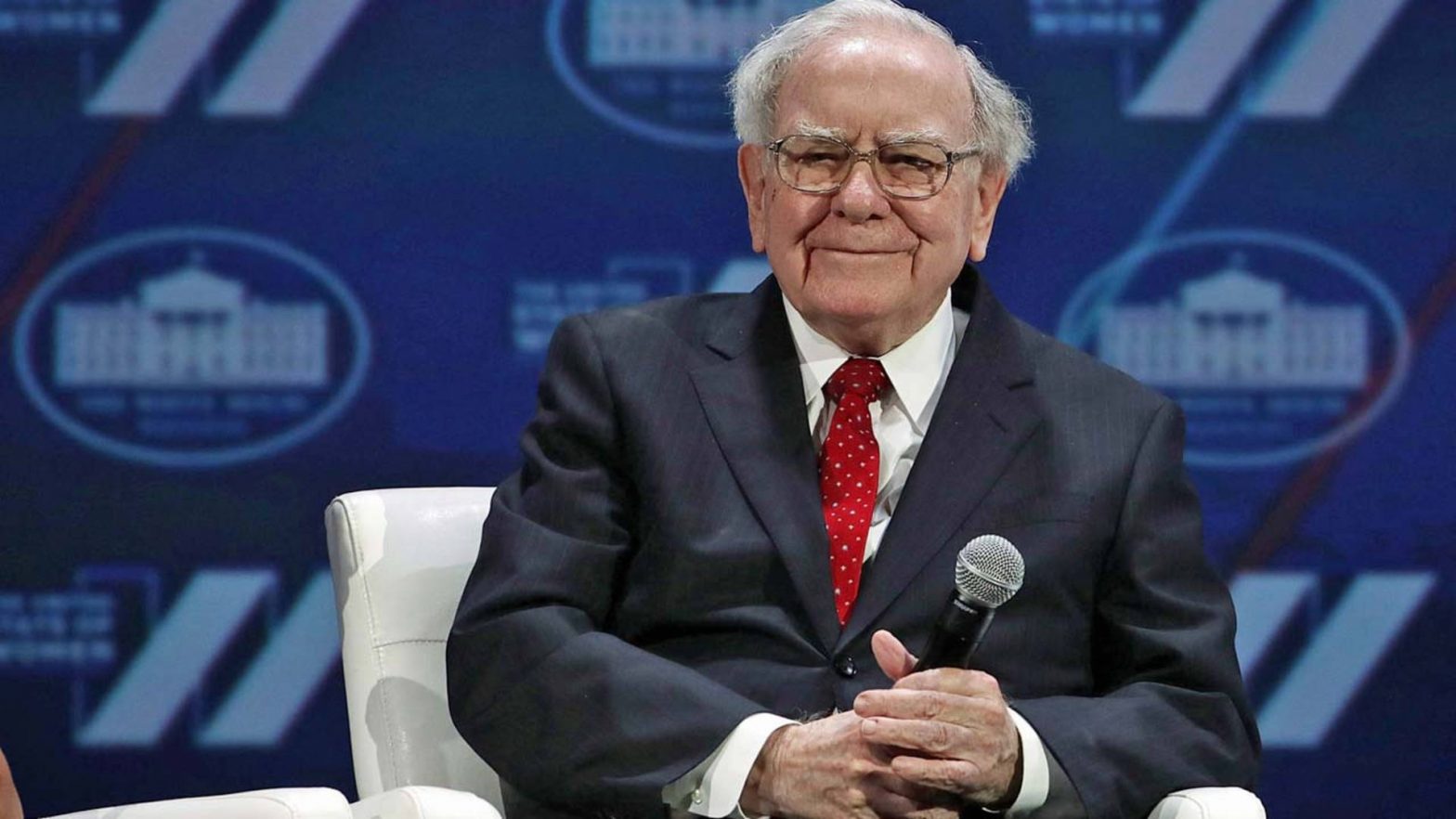
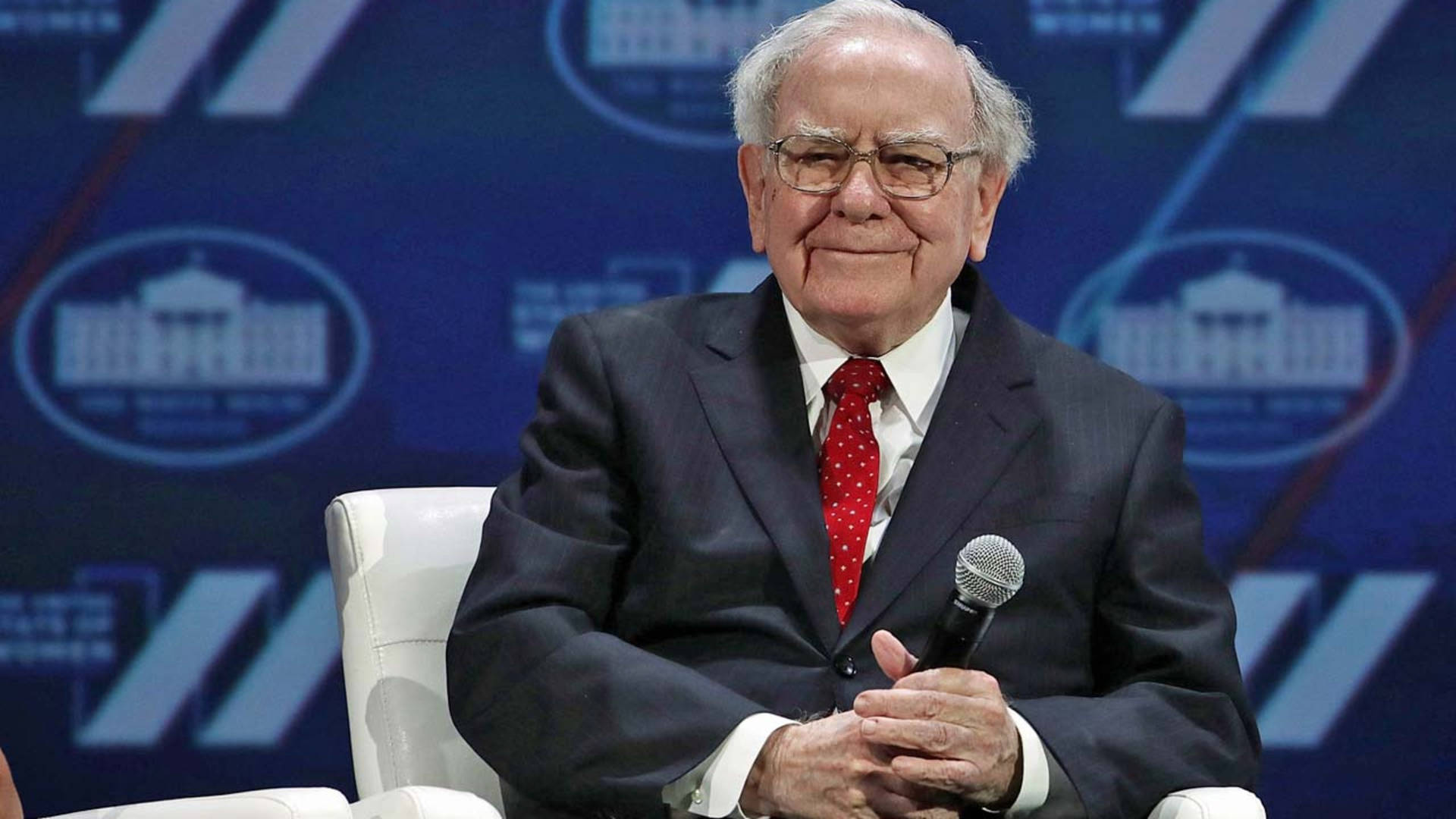
Berkshire Hathaway Inc. slashed its holding in Amazon.com Inc. by more than 75% in the fourth quarter of 2025 while building a new stake in the New York Times Co.—marking the final investment bet by Warren Buffett before stepping down as chief executive officer. According to a regulatory filing released Tuesday, the conglomerate acquired 5.1 million shares of the media publisher, a stake valued at $351.7 million at year-end. Buffett, 95, officially handed the CEO reigns to Greg Abel on January 1, 2026, though he remains with the company as its chairman.
During the fourth quarter, Berkshire continued trimming its positions in Bank of America Corp. and Apple Inc., bringing those stakes down to 7.1% and 1.5%, respectively. Despite the reduction, Apple remains Berkshire’s largest equity holding by market value. Conversely, the firm increased its exposure to energy and insurance, boosting its stakes in Chevron Corp. to 6.5% and Chubb Ltd. to 8.7%. Shares of the New York Times rose 1.8% in early Wednesday trading following the disclosure, while Amazon gained 1.3%.
The filing caps a transformative period for Berkshire, which also saw the departure of veteran investment manager Todd Combs to JPMorgan in January and the completion of a $9.7 billion acquisition of Occidental Petroleum’s petrochemical unit as the firm transitions to a post-Buffett leadership era.
Bloomberg – Berkshire Cuts Amazon Stake, Makes Bet on New York Times
______
7. Nvidia Exits Arm Stake Entirely
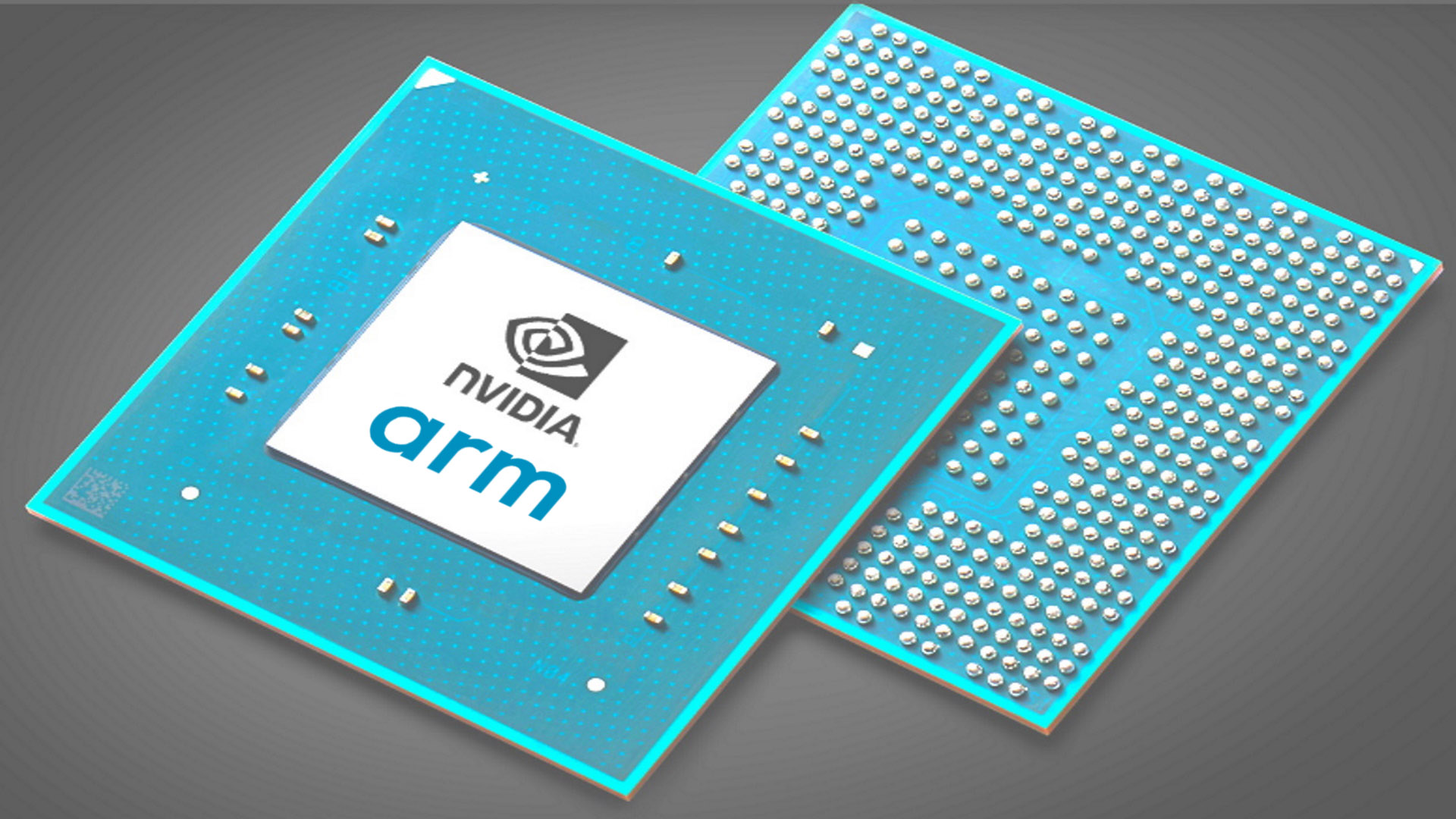
Nvidia Corp. has sold off the last of its stake in chip technology firm Arm Holdings Plc, completing a divestment of 1.1 million shares during the fourth quarter of 2025. Based on Arm’s recent closing price, the sale was valued at approximately $140 million and brings Nvidia’s ownership to zero. The move officially closes the book on a tumultuous relationship that began in 2020 with Nvidia’s failed $40 billion takeover attempt. While the equity position is closed, CEO Jensen Huang emphasized that Nvidia remains a long-term partner and “proud licensee” of Arm’s foundational architecture.+1
Nvidia’s latest regulatory filings reveal a calculated pivot in its investment strategy, shifting away from chip architecture ownership toward securing its AI infrastructure supply chain. The firm’s U.S. stock portfolio reached $13.15 billion at year-end, characterized by high concentration in just five key holdings. Most notably, Nvidia established a massive $7.9 billion position in Intel Corp., accounting for over 60% of its portfolio—a move seen as a strategic backing of Intel’s foundry business to ensure future GPU manufacturing capacity. Additionally, Nvidia increased its stakes in EDA leader Synopsys and networking giant Nokia, while pumping an extra $2 billion into AI cloud provider CoreWeave in January 2026.
These shifts indicate that Nvidia is prioritizing partnerships with infrastructure and design-tool providers over financial stakes in rival chip designers.
Bloomberg – Nvidia Sells Off Stake in Arm, a Company It Once Tried to Buy
______