—— Alphabet Issues Rare 100-Year Century Bond; Relentless Memory Chip Surge Creates Market Divide; California “Billionaire Tax” Sparks Migration; Ares Provides $2.4 Billion Financing to Vantage; US Commerce Secretary Howard Lutnick Faces Resignation Calls; US Retail Sales Unexpectedly Stall in December; State Street Predicts 10% Dollar Slump in 2026
1. Alphabet Issues Rare 100-Year Century Bond
Following a blockbuster $20 billion debt sale in the U.S. on Monday, Google parent Alphabet continued its global borrowing spree on Tuesday (Feb 10, 2026) by targeting at least $9.4 billion in sterling and Swiss franc-denominated bonds. The centerpiece of the offering is an ultra-rare 100-year “century bond,” marking the first time a major technology firm has issued debt with a 100-year maturity since Motorola in 1997. The sterling portion alone drew a record £24 billion in orders, underscoring strong institutional appetite for high-grade tech debt.+1
The capital raise aims to fund Alphabet’s massive expansion of AI infrastructure. According to the company’s latest guidance, capital expenditures for 2026 are expected to surge to between $175 billion and $185 billion—roughly double the $91.4 billion spent in 2025—primarily to build data centers supporting its Gemini models. S&P Global assigned an “AA+” rating to the new notes.
While some investors remain cautious about the long-term ROI of AI spending, the massive oversubscription seen this week from Alphabet and Oracle suggests that pension funds and insurers are eager to lock in yields from the sector’s dominant “hyperscalers.”
Bloomberg – Alphabet Seeks $9.4 Billion From Pound, Swiss Franc Bond Sales
______
2. Relentless Memory Chip Surge Creates Market Divide
A relentless surge in memory chip prices over the past few months has driven a stark divide between winners and losers in the global stock market, with investors predicting the squeeze will persist throughout 2026. While memory producers like Samsung Electronics, SK Hynix, and Micron Technology have soared to unprecedented heights, shares of consumer electronics giants—including Nintendo, Apple suppliers, and major PC brands—have slumped on profitability concerns. The crisis is driven by a structural shift in manufacturing capacity: to meet the insatiable demand for High Bandwidth Memory (HBM) for AI infrastructure, chipmakers have reallocated resources away from conventional DRAM and NAND, leading to a global shortage for consumer devices.
PC and smartphone makers are among the hardest hit, with IDC warning that the PC market could shrink by up to 9% in 2026 as manufacturers pass on 15%–20% cost increases to consumers. Nintendo recently saw $14 billion wiped from its market value following reports that rising memory costs for the Switch 2 are squeezing margins. The impact has even reached the automotive sector, with Honda Motor Co. noting on Tuesday that supply risks for memory components are beginning to emerge.
While some PC majors like HP are reportedly considering Chinese-made memory chips to diversify supply, analysts suggest that as long as the AI build-out continues, the memory crunch is likely to remain an industry-wide headwind well into 2027.
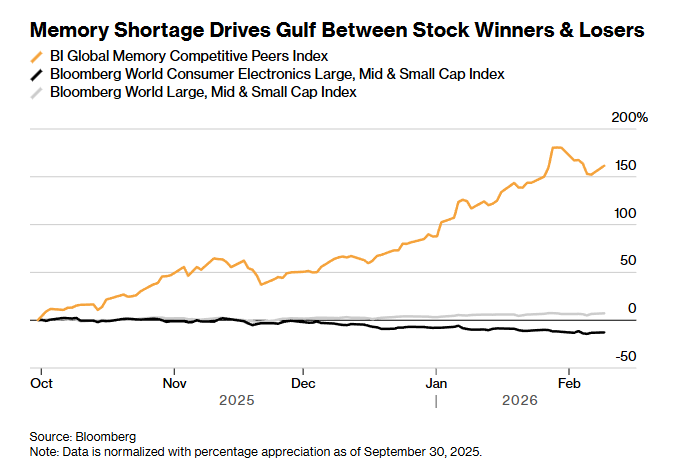
Bloomberg – Memory Chip Squeeze Widens Gap Between Market Winners and Losers
______
3. California “Billionaire Tax” Sparks Migration
Miami real estate brokers, once anticipating a “Mamdani effect” from New York’s progressive political shift, are instead witnessing a massive influx of ultra-wealthy Californians. The proposed “2026 Billionaire Tax Act” in California, which aims to levy a one-time 5% wealth tax on individuals worth over $1 billion, has rattled Silicon Valley’s elite. Because the proposal features a retroactive residency cutoff of January 1, 2026, many billionaires rushed to establish Florida residency—a state with no income or wealth tax—before the deadline by purchasing trophy properties in South Florida.
Google co-founder Larry Page has spent $188 million on a three-property compound in Coconut Grove, while Sergey Brin acquired a $50 million waterfront estate in Miami Beach. Most recently, Meta CEO Mark Zuckerberg reportedly purchased a massive estate on the ultra-exclusive Indian Creek Island—known as the “Billionaire Bunker”—from the founder of Jersey Mike’s for an estimated $150 million to $200 million. The island features its own 13-person police force and restricted access, housing other high-profile residents like Jeff Bezos.
While Governor Gavin Newsom opposes the wealth tax and the initiative has yet to officially qualify for the November ballot, tech moguls view these nine-figure real estate investments as cheap insurance against potential tax liabilities that could exceed $50 billion for the world’s richest individuals.

Bloomberg – Billionaires Fleeing California Wealth Tax Snap Up Miami Mansions
______
4. Ares Provides $2.4 Billion Financing to Vantage
Ares Management Corp. has agreed to provide $2.4 billion in debt financing to Vantage Data Centers, with a portion of the funds earmarked for infrastructure supporting the partnership between Oracle Corp. and OpenAI. The alternative asset manager has committed $1.6 billion to the project and already funded approximately $330 million. The capital will support the development, construction, and operation of data centers across Vantage’s North American portfolio, which includes 17 campuses currently leased under long-term agreements to major hyperscale cloud providers.
The financing comes as Ares targets raising over $8 billion in equity to expand its digital infrastructure footprint across London, Japan, and Brazil. Notably, Vantage’s primary backer, DigitalBridge Group Inc., agreed in late 2025 to be acquired by Masayoshi Son’s SoftBank Group Corp. in a $4 billion all-cash deal. The acquisition aligns with SoftBank’s mission to realize “Artificial Super Intelligence (ASI)” and strengthens its role in financing the foundational infrastructure for the next generation of AI services.
Through its control of Vantage and other DigitalBridge assets, SoftBank is positioning itself as a central player in large-scale compute initiatives, including the $500 billion “Stargate” project led by OpenAI and Microsoft.

Bloomberg – Ares Lands $2.4 Billion Loan Deal for Vantage Data Centers
______
5. US Commerce Secretary Howard Lutnick Faces Resignation Calls
A growing number of US lawmakers are calling on Commerce Secretary Howard Lutnick to resign following new revelations regarding his ties to the deceased sex offender Jeffrey Epstein. On Monday, Democratic Senator Adam Schiff of California accused Lutnick of lying to the American people about the extent of his relationship with Epstein. Schiff asserted that newly released Department of Justice files contradict Lutnick’s previous claims of cutting ties more than two decades ago, raising serious concerns about his judgment and ethical standing to lead the Commerce Department.
Lutnick, the former longtime CEO of Cantor Fitzgerald, joined the Trump cabinet last year after serving as a major donor and co-chair of the presidential transition team. While he and the president have a decades-long social connection, the mounting political pressure is beginning to overshadow key departmental priorities such as tariff implementation and technology export controls.
While the calls for resignation have primarily come from Democrats, some Republicans have expressed concern that the controversy could become a significant distraction for the administration. The White House has yet to issue a formal response to the latest allegations or the demands for Lutnick’s departure.
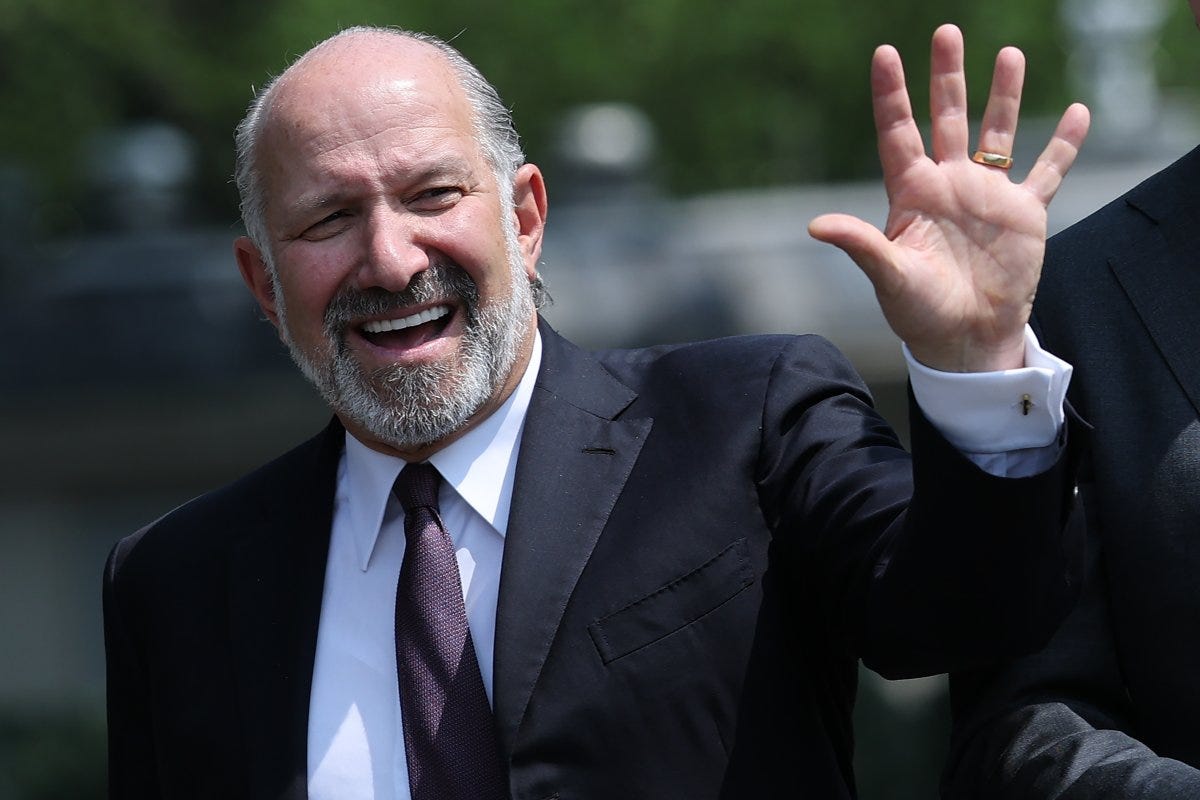
Financial Times – US lawmakers call on Howard Lutnick to step down over ties to Epstein
______
6. US Retail Sales Unexpectedly Stall in December
US retail sales were unchanged in December, according to Commerce Department data released on Tuesday (Feb 10, 2026), missing economist expectations of a 0.4% increase. The report, delayed by more than a month due to a 43-day partial government shutdown, suggests that consumer momentum cooled significantly as the 2025 holiday season drew to a close. The flat reading follows a revised 0.6% gain in November, with 8 out of 13 categories posting declines. Notable weakness was seen in furniture stores (-0.9%), clothing retailers (-0.7%), and electronics outlets (-0.4%), while building materials and sporting goods offered a rare bright spot.
The lackluster results underscore growing caution among American households facing a persistent high cost of living and uncertainty surrounding a slowing job market. While wealthier consumers buoyed by stock market gains continue to spend, discretionary outlays among lower-income groups remain fragile. Furthermore, the shadow of potential tariffs and the impact of a second brief government shutdown in early 2026 have weighed on consumer sentiment.
This retail snapshot sets a somber tone for a crowded week of economic data, including Wednesday’s January payrolls and Friday’s CPI report, which will be critical for the Federal Reserve’s upcoming interest rate decisions.
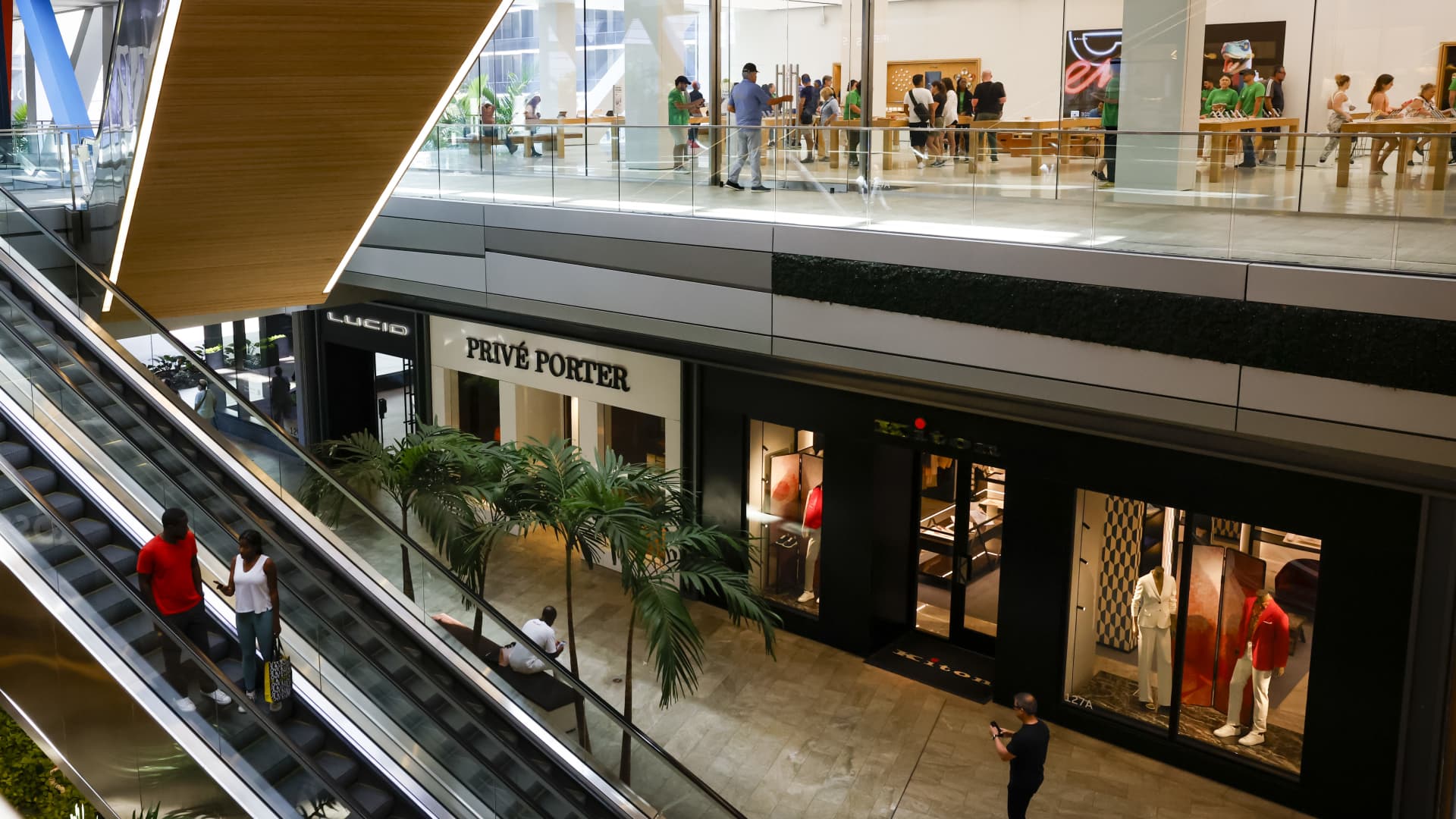
Bloomberg – US Retail Sales Unexpectedly Stalled to Close Holiday Season
______
7. State Street Predicts 10% Dollar Slump in 2026
The U.S. dollar could plunge as much as 10% this year as the Federal Reserve potentially delivers deeper interest rate cuts than markets currently anticipate, according to State Street strategist Lee Ferridge. Speaking on the sidelines of the TradeTech FX conference in Miami on Tuesday (Feb 10, 2026), Ferridge noted that while traders currently expect two quarter-point reductions starting in June, there is significant scope for a third cut. This view is driven by the looming leadership transition at the central bank, with Chair Jerome Powell’s term expiring in May. Ferridge suggests that Powell’s successor may face intensified pressure from President Donald Trump to lower borrowing costs more aggressively to support economic growth.
A deeper easing cycle would make it less expensive for foreign investors to hedge the currency risk on their U.S. holdings, a dynamic that typically weighs on the greenback as hedging activity increases. Ferridge emphasized that while two cuts remain a reasonable base case, the market must prepare for a more unpredictable era of monetary policy where political influence could accelerate the transition to a more accommodative stance, further eroding the dollar’s yield advantage.
The Bloomberg Dollar Spot Index, which suffered its worst annual performance since 2017 last year with an 8% decline, is already down 1.7% year-to-date in 2026.
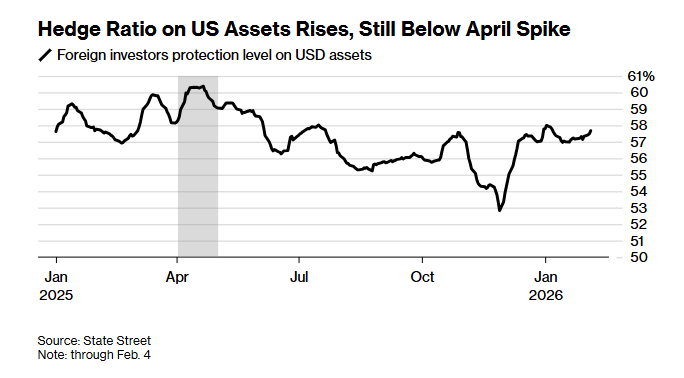
Bloomberg – State Street’s Ferridge Sees 10% Dollar Drop on Three Fed Cuts
______