—— Japan’s 40-Year Bond Yield Surpasses 4%; China Widens Probe into PDD Holdings Following Clashes with Regulators; Donald Trump and Davos 2026: The Greenland Standoff; US Supreme Court Delays Ruling on Trump Tariffs; Microsoft CEO Satya Nadella Warns of AI Bubble Risk Without Global Adoption; Palantir CEO Alex Karp: AI Will Eliminate Need for Mass Immigration
1. Japan’s 40-Year Bond Yield Surpasses 4%
Microsoft CEO Satya Nadella warned on Tuesday that artificial intelligence risks becoming a speculative bubble unless its benefits spread beyond big tech and wealthy economies.
Nadella emphasized that AI’s long-term success depends on its application across a broad range of industries and its uptake outside the developed world. He noted that if only tech groups benefit, it would be a “tell-tale sign” of a bubble. Despite these risks, Nadella remains confident that AI will prove transformative, particularly in sectors like drug development, and will eventually bend the productivity curve globally. Current data reveals a significant divide in AI adoption, with benefits concentrated in richer nations.
Nadella also reiterated that the future of AI will not rely on a single dominant provider, justifying Microsoft’s partnerships with multiple groups including OpenAI, Anthropic, and xAI.

Financial Times – Japan’s 40-year bonds surpass 4% for first time
______
2. China Widens Probe into PDD Holdings Following Clashes with Regulators
China has expanded its investigation into PDD Holdings Inc. after its employees engaged in physical altercations with market regulators last month. According to sources familiar with the matter, more than 100 investigators from various agencies, including the State Administration for Market Regulation (SAMR) and the State Taxation Administration (STA), have been dispatched to the company’s Shanghai headquarters in recent weeks for extensive on-site checks.+1
The intensified probe was partially triggered by fistfights on December 3, 2025, between PDD staff and SAMR inspectors who were investigating reports of “fraudulent deliveries.” The altercation led to police intervention and multiple arrests, including some company executives. The current investigation now covers a broad range of alleged misconduct, including deceptive shipping practices and taxation issues. The regulatory pressure has already led to a slowdown in PDD’s marketing activities ahead of the Lunar New Year and the suspension of several ongoing projects.+3
PDD shares dropped approximately 4% in pre-market trading in New York on Tuesday, extending a six-day losing streak that has seen the stock slide more than 12% since January 8. Citigroup analysts noted that while the recent weakness partially reflects investor anxiety over the clash, any formal announcement regarding the probe could trigger a further sell-off.
The move underscores Beijing’s renewed commitment to tightening oversight on the platform economy and ensuring compliant operations among e-commerce giants.

Bloomberg – China Deepens PDD Probe After Fistfights With Regulators
______
3. Donald Trump and Davos 2026: The Greenland Standoff
The dollar fell sharply and Wall Street stocks were set for heavy losses on Tuesday as President Donald Trump prepared for high-stakes meetings in Davos over the Greenland crisis. The US currency dropped 0.7% against the euro, while S&P 500 futures fell 1.5% amid rising fears of a full-scale trade war. European markets mirrored this decline, with the Stoxx Europe 600 down 1.3% as transatlantic tensions reached a fever pitch.
Trump announced on Truth Social that he would meet with “various interested parties” in Davos on Wednesday following a “very good” call with NATO Secretary-General Mark Rutte. However, the President doubled down on his annexation goals, posting an AI-generated image of himself on the island with a sign reading “US Territory EST 2026.” He argued that acquiring Greenland is a national security imperative, citing the UK’s recent deal to hand over the Chagos Islands as evidence of why the US must secure strategic Arctic territory.
The EU responded with a unified front. Commission President Ursula von der Leyen stated in Davos that Brussels would respond in an “unflinching and proportional” way to US economic coercion, suggesting that last year’s hard-won trade deal is now in jeopardy. Denmark has already reinforced its military presence in Nuuk and Kangerlussuaq, sending its army chief and additional troops to signal that Greenland is not for sale.
Meanwhile, US Treasury Secretary Scott Bessent urged allies to “take a deep breath,” asserting that Greenland is vital for American hemispheric security and warning that retaliation against the US would be “very unwise.”

Financial Times – Dollar falls sharply and Wall Street stocks set for heavy losses over Greenland crisis
______
4. US Supreme Court Delays Ruling on Trump Tariffs
The US Supreme Court did not rule on President Donald Trump’s tariffs Tuesday, likely pushing a resolution on his signature economic policy back by at least another month. As the court prepares for a four-week recess, the next potential window for a decision is February 20, according to standard procedures for releasing opinions.
During arguments on November 5, a majority of justices appeared skeptical of Trump’s authority to impose broad levies under the 1977 International Emergency Economic Powers Act. The case challenges the “Liberation Day” tariffs enacted on April 2, 2025, which placed duties of 10% to 50% on most imports, alongside specific levies against Canada, Mexico, and China linked to fentanyl trafficking. A ruling against the administration would mark Trump’s most significant legal defeat since his return to office, potentially triggering over $130 billion in refunds and undermining his current tariff threats against European nations over the Greenland dispute.
While the court will hear arguments Wednesday regarding the removal of Fed Governor Lisa Cook, no opinions are scheduled for release until the justices return on February 20.

Bloomberg – Supreme Court Doesn’t Rule on Tariffs, With Next Potential Decision in February
______
5. Microsoft CEO Satya Nadella Warns of AI Bubble Risk Without Global Adoption
The historic rally in precious metals is facing its first significant challenge of 2026 as a wave of index fund rebalancing triggers more than $11 billion in potential selling. According to JPMorgan calculations, commodity index trackers are expected to offload approximately $6.1 billion in silver and $5.6 billion in gold during the annual rebalancing window running from January 8 to 15.
This institutional selling is a mechanistic response to the “stratospheric” gains seen in 2025, where gold climbed over 60% and silver surged more than 160%. To maintain target allocations, benchmark indices like the Bloomberg Commodity Index must trim these overweighted positions. Analysts at MKS Pamp note that while this provides a “big test” for the market’s high base, it may also create a “buy the dip” opportunity similar to early 2025, when massive buying appetite eventually overwhelmed the forced selling.
Silver is expected to endure the heaviest pressure, with projected sales equivalent to roughly 10% of the total open interest on the Comex derivatives exchange.

Financial Times – Microsoft chief Satya Nadella warns AI boom could falter without wider adoption
______
6. Palantir CEO Alex Karp: AI Will Eliminate Need for Mass Immigration
Palantir Technologies Inc. CEO Alex Karp stated at a World Economic Forum panel in Davos on Tuesday that artificial intelligence will displace so many jobs that the need for large-scale immigration will be eliminated. Karp argued that there will be more than enough jobs for a nation’s own citizens, particularly those with vocational training. He suggested that unless an individual possesses highly specialized skills, it is becoming difficult to justify the need for mass immigration in an AI-driven economy.
Karp, who holds a PhD in philosophy, cited himself as the type of “elite” white-collar worker most at risk of disruption, while asserting that vocational workers will become more valuable, “if not irreplaceable.” Although he describes himself as a “card-carrying progressive,” his views align with President Donald Trump’s agenda. Palantir maintains close ties with the US Defense Department and Immigration and Customs Enforcement (ICE), providing data services used to track individuals.
The company’s market value has soared to approximately $400 billion following a 130% share price increase over the past year.
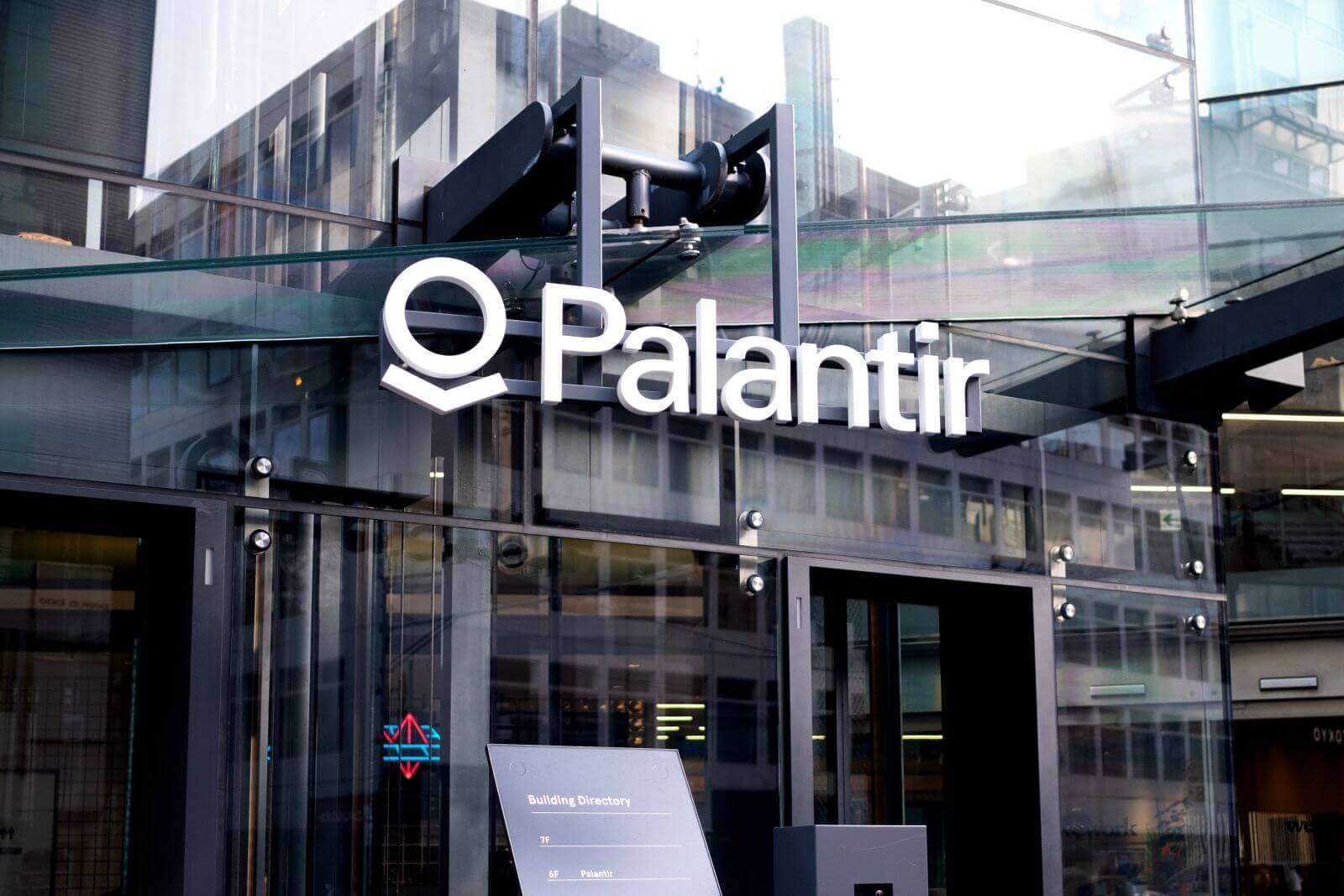
Bloomberg – Palantir CEO Says AI to Make Large-Scale Immigration Obsolete
______
7. US Job Growth Slows to 50,000 in December; Unemployment Unexpectedly Dips to 4.4%
The U.S. economy added a modest 50,000 jobs in December, falling short of the 70,000 forecasted by economists, according to the Bureau of Labor Statistics. Despite the weak hiring figure, the unemployment rate unexpectedly dropped to 4.4% from November’s 4.6%. This latest report provides a much-needed clear view of the labor market following months of data distortion caused by the 43-day federal government shutdown last fall.
[Image showing US Treasury yield movements and Fed rate cut probability after December 2025 jobs report]
The December results capped off a “grim” 2025 for American workers, with average monthly job gains plummeting to 49,000 from 168,000 in the previous year. Following the release, short-term Treasury yields edged higher as the drop in the jobless rate dampened hopes for a January rate cut. Federal Reserve Chair Jerome Powell had previously expressed skepticism about BLS accuracy, suggesting actual job growth might be 60,000 lower per month than reported.
While hiring in the private sector remains in a “pause” as firms assess the impact of AI and trade policies, the surprise fall in unemployment has led major analysts, including those at Goldman Sachs, to predict that the Fed will hold rates steady at its upcoming meeting.

Financial Times – Russia knocks out Kyiv’s power, heating and water
______