
—— Meta Acquires AI Agent Startup Manus in $2 Billion-Plus Deal’; Walmart Online Services Hit by Outages, Linked to Microsoft Azure Issues; Tesla Breaks Protocol to Publish Sales Estimates; Fed Minutes Reveal Deep Divide as Officials Waver on 2026 Rate Path; US Dollar Set for Steepest Annual Drop Since 2017 as Fed Cuts Persist; Private Equity Firms Sell to Themselves at Record Rate; Warner Bros. Set to Reject Paramount Bid Again, Sticking with Netflix Deal
1. Meta Acquires AI Agent Startup Manus in $2 Billion-Plus Deal
Meta Platforms Inc. has agreed to acquire Manus, a popular Singapore-based AI agent with Chinese roots, as Mark Zuckerberg seeks to monetize his company’s massive artificial intelligence investments.
The deal values Manus at over $2 billion, according to people familiar with the matter, marking a rare high-profile acquisition of an Asian tech firm by a US giant. The agreement was reportedly reached in just 10 days. Meta stated it intends to maintain Manus as a standalone service while integrating its technology into Meta’s existing product suite. Manus, developed by Butterfly Effect Pte, previously drew backing from prominent Chinese investors including Tencent, ZhenFund, and HSG. As part of the takeover, Meta has bought out all existing shareholders.
To navigate geopolitical sensitivities, a Meta spokesperson confirmed that there will be no continuing Chinese ownership and that Manus will discontinue all operations in China. Known for its ability to handle general tasks like resume screening and stock analysis, Manus reached an annual revenue run rate of $125 million earlier this year.
This acquisition provides Meta with a proven revenue-generating AI tool to complement its long-term research and infrastructure spending.

Bloomberg – Meta to Buy Manus, an AI Startup With Chinese Roots
______
2. Walmart Online Services Hit by Outages, Linked to Microsoft Azure Issues
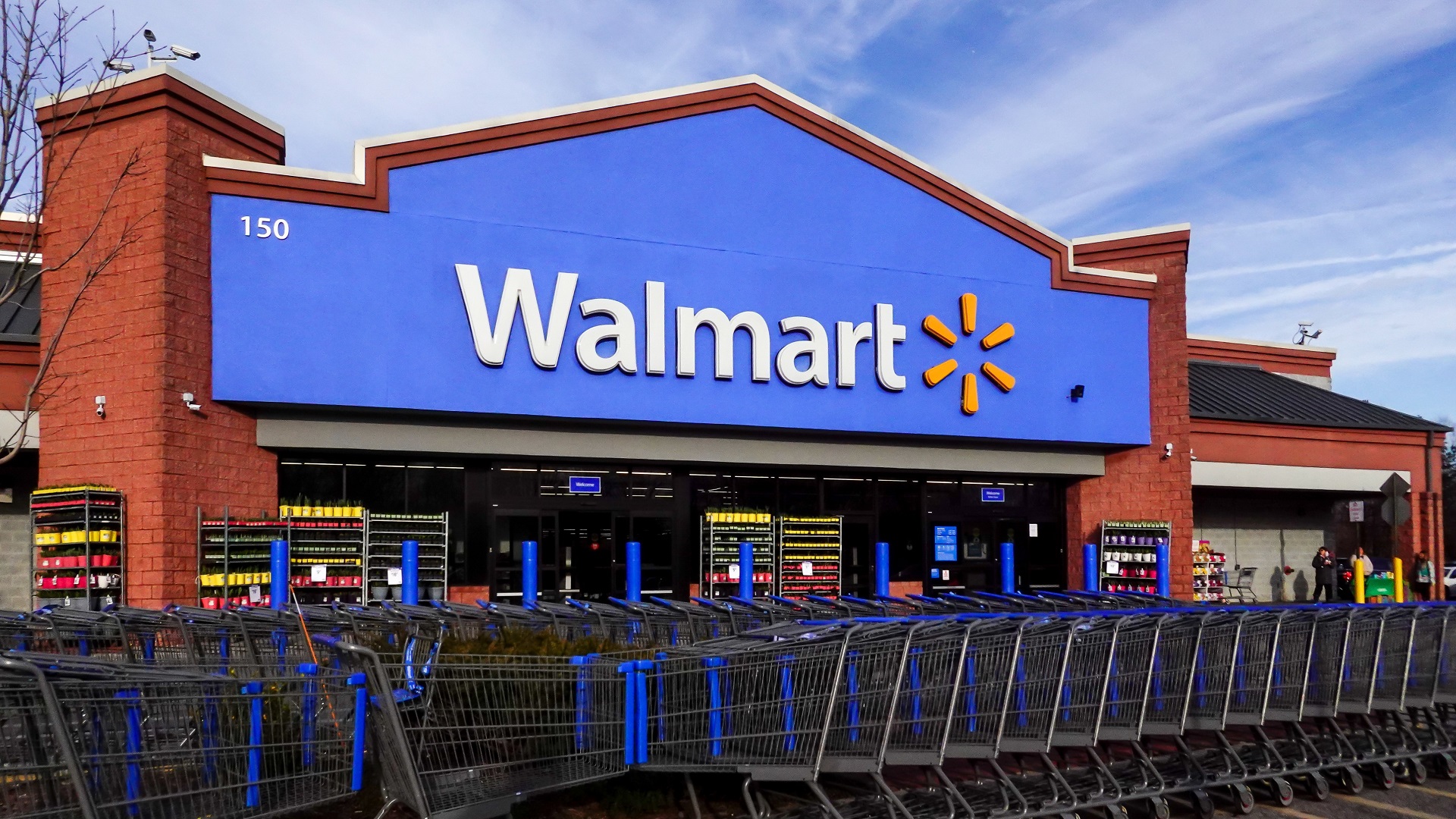
Walmart Inc. customers experienced a temporary disruption to online services early Tuesday, leaving many unable to access the retailer’s mobile ordering and website tools.
According to Downdetector, reports of service issues peaked around 7 a.m. in New York, with over 6,000 users flagging problems. Approximately 70% of the reports were tied to the mobile app, while a quarter focused on the website. Users took to X (formerly Twitter) to report their inability to finalize orders. The volume of complaints dropped significantly about an hour later, suggesting a swift resolution.
The outage coincided with reported disruptions at Microsoft Corp.’s Azure, the cloud computing platform used by Walmart. Both companies did not immediately respond to requests for comment.
The technical hiccup comes as Walmart continues to aggressively expand its e-commerce footprint to rival Amazon. In the most recent quarter, Walmart’s US digital sales surged 28%, with e-commerce now accounting for 22% of total company revenue.
This incident follows a similar service disruption experienced by competitor Target Corp. earlier this month.
Bloomberg – Walmart Customers Report Outage for Mobile and Web Services
______
3. Tesla Breaks Protocol to Publish Sales Estimates
Tesla Inc. took the highly unusual step on Tuesday of publishing its internal compilation of analyst sales estimates, indicating that upcoming vehicle delivery figures may fall short of broader market expectations.
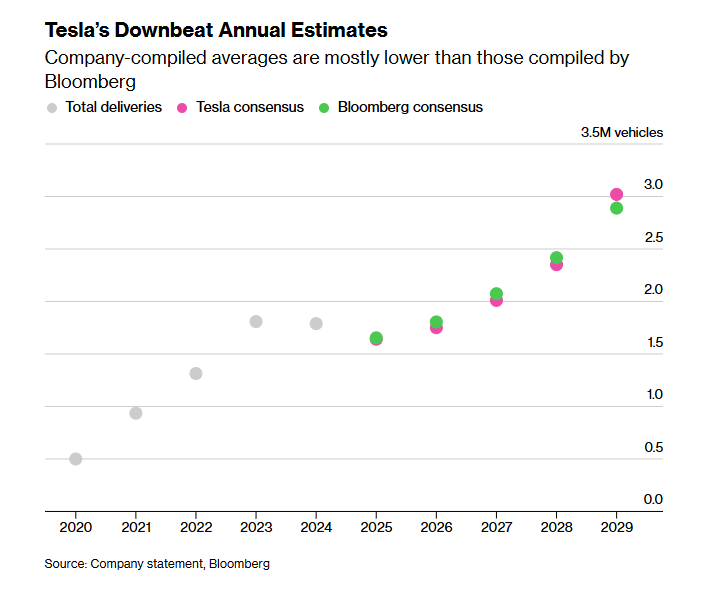
Data posted to Tesla’s website shows an analyst consensus of 422,850 vehicles for the fourth quarter, representing a 15% year-over-year decline. This figure is notably lower than the average of 440,907 vehicles (an 11% drop) previously compiled by Bloomberg.
While Tesla’s investor relations team has long collected and shared consensus data privately with select analysts, the company has never before made these figures public. “This is highly unusual,” wrote Gary Black, co-founder of Future Fund Advisors, on X. He suggested that Tesla likely wanted to manage expectations downward, speculating that actual deliveries could land around the 420,000 mark.
The published estimates also project full-year sales of 1.6 million vehicles, an 8% decrease from the previous year, setting Tesla on track for its second consecutive annual sales decline.
Furthermore, the company’s internal consensus for the next three years sits below Bloomberg’s independent averages. Tesla shares dipped as much as 1.3% on Tuesday following the news before paring losses.
Bloomberg – Tesla Broadcasts Downbeat Sales Estimates in Unusual Move
______
4. Fed Minutes Reveal Deep Divide as Officials Waver on 2026 Rate Path
Minutes from the Federal Reserve’s December meeting released Tuesday show that while most officials see further interest rate cuts as appropriate if inflation continues to decline, a significant rift has emerged over the future pace of easing. Some officials explicitly stated that rates should remain on hold “for some time” following the December gathering.
At the Dec. 9-10 meeting, the FOMC voted 9-3 to lower the benchmark rate by a quarter percentage point to a range of 3.5% to 3.75%—the third consecutive reduction. However, the minutes highlighted that the decision was “finely balanced” for several members who supported the move, with some noting they could have justified keeping the target range unchanged.
The internal split was underscored by the dissenting votes: Governor Stephen Miran favored a larger half-point cut, while Chicago Fed President Austan Goolsbee and Kansas City’s Jeff Schmid pushed to hold rates steady. Among the broader group of 19 policymakers, six signaled their opposition to the December cut through their rate projections.
The median forecast now points to just one rate cut in 2026, with a wide range of individual estimates. Currently, investors see less than a 20% probability of another cut at the Fed’s next meeting.
Bloomberg – Fed Minutes Show Most Officials Expect Additional Rate Cuts
______
5. US Dollar Set for Steepest Annual Drop Since 2017 as Fed Cuts Persist
The US dollar is on track for its sharpest annual decline in nearly a decade. Wall Street banks anticipate continued weakness through 2026 as the Federal Reserve maintains its course on interest rate reductions.
The greenback has slumped approximately 9.5% to 9.6% against a basket of major currencies this year. The decline was initially triggered by tariff-related trade tensions in April and exacerbated by the Fed’s resumption of rate cuts in September. The euro has emerged as the strongest performer among major peers, surging nearly 14% to trade above $1.17, a level not seen since 2021.
George Saravelos, Global Head of FX Research at Deutsche Bank, characterized 2025 as one of the worst years for the dollar in the history of free-floating exchange rates. Market analysts expect the Fed to deliver an additional two to three quarter-point cuts by the end of 2026.
In contrast, the European Central Bank has held rates steady while raising growth forecasts, creating a policy divergence that continues to weigh on the dollar’s appeal.
Bloomberg – Every Wall Street Analyst Now Predicts a Stock Rally in 2026
______
6. Private Equity Firms Sell to Themselves at Record Rate
Private equity firms sold companies to their own newly raised funds at a record pace in 2025, utilizing controversial “continuation vehicles” to hold onto prized assets as traditional exits like IPOs and external sales remain difficult.
According to data from Raymond James, roughly 20% of all PE sales this year involved these internal transfers, up from 12-13% in 2024. The total value of such transactions is projected to hit $107 billion by the end of the year, a significant jump from last year’s $70 billion.
The strategy has boomed as buyout firms struggle to secure desired valuations from the public markets or trade buyers. Notable deals this year include PAI Partners, which moved its stake in ice cream giant Froneri (owner of Häagen-Dazs US) into a continuation vehicle for the second time in a deal valuing the firm at €15 billion. Vista Equity Partners and New Mountain Capital also utilized the structure for multibillion-dollar liquidity solutions.
While the tactic generates new management fees and provides liquidity to aging funds, it continues to prompt concerns regarding potential conflicts of interest in asset valuation.

Financial Times – Private equity firms sell assets to themselves at a record rate
______
7. Warner Bros. Set to Reject Paramount Bid Again, Sticking with Netflix Deal
Sony Group is taking a majority stake in the brand behind Snoopy and Charlie Brown, acquiring an additional 41% of Peanuts Holding from Canada’s WildBrain for C$630 million (US$460 million). The deal increases Sony’s total ownership to 80%, turning the beloved American cartoon franchise into a Sony subsidiary.
The Schulz family, descendants of creator Charles Schulz, will retain the remaining 20% stake. Sony first began investing in the Peanuts brand in 2018, and this latest move aligns with the group’s broader strategy to prioritize entertainment and original content creation. Shunsuke Muramatsu, CEO of Sony Music Entertainment, stated that the group aims to elevate the brand’s value by leveraging Sony’s vast global network.
The acquisition is part of Sony’s effort to bridge its gaming, anime, film, and music divisions to build powerful global franchises. The company has seen recent success with adaptations like the TV series “The Last of Us” and the animated blockbuster “Demon Slayer.”
Snoopy has a deep historical connection with Japan and was notably one of the inspirations for Sanrio’s Hello Kitty. By taking full control of Peanuts, Sony looks to further monetize the iconic comic strip—which debuted in 1950—across various platforms including toys, films, and theme park attractions.
Bloomberg – Warner Bros. Plans to Reject Paramount Offer Next Week
______