—— US GDP Grows at 4.3% in Third Quarter, Fastest Pace in Two Years; Citadel to Return $5 Billion in Profits as AUM Settles at $67 Billion; Trump Administration to Begin Wage Garnishment for Student Debt Defaults; Private Credit Firms Snapped Up $136 Billion in Consumer Debt; Saks Global Weighs Bankruptcy Ahead of $100 Million Debt Deadline; Influx of Luxury Apartments Drives Down Rents in Major US Cities
1. US GDP Grows at 4.3% in Third Quarter, Fastest Pace in Two Years
The US economy expanded at its quickest pace in two years during the third quarter, fueled by resilient consumer and business spending alongside more stable trade policies.
Inflation-adjusted gross domestic product (GDP) grew at a 4.3% annualized rate, according to a Bureau of Economic Analysis (BEA) report released Tuesday. This figure exceeded nearly all forecasts in a Bloomberg survey and follows a 3.8% expansion in the previous period.
The BEA was originally scheduled to release the advance GDP estimate on Oct.30, but the report was delayed due to the government shutdown. While the agency typically issues three estimates per quarter, it will only release two for this period following the longest shutdown on record. The delayed data indicates that the economy maintained significant momentum through mid-year as consumers remained active and some of President Donald Trump’s most punitive tariffs were rolled back.
While the shutdown is expected to dampen fourth-quarter growth, economists anticipate a modest rebound in 2026. This recovery is expected to be supported by tax refunds and an anticipated Supreme Court ruling that could potentially strike down Trump’s sweeping global tariffs.
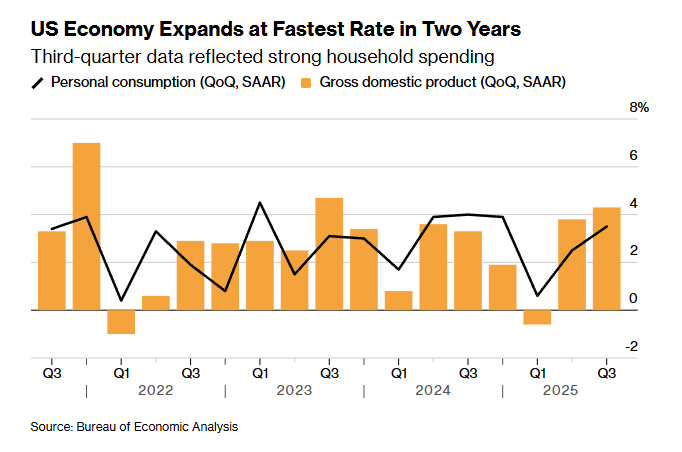
Bloomberg – US Economy Grows at Fastest Pace in Years With 4.3% GDP Gain
______
2. Citadel to Return $5 Billion in Profits as AUM Settles at $67 Billion
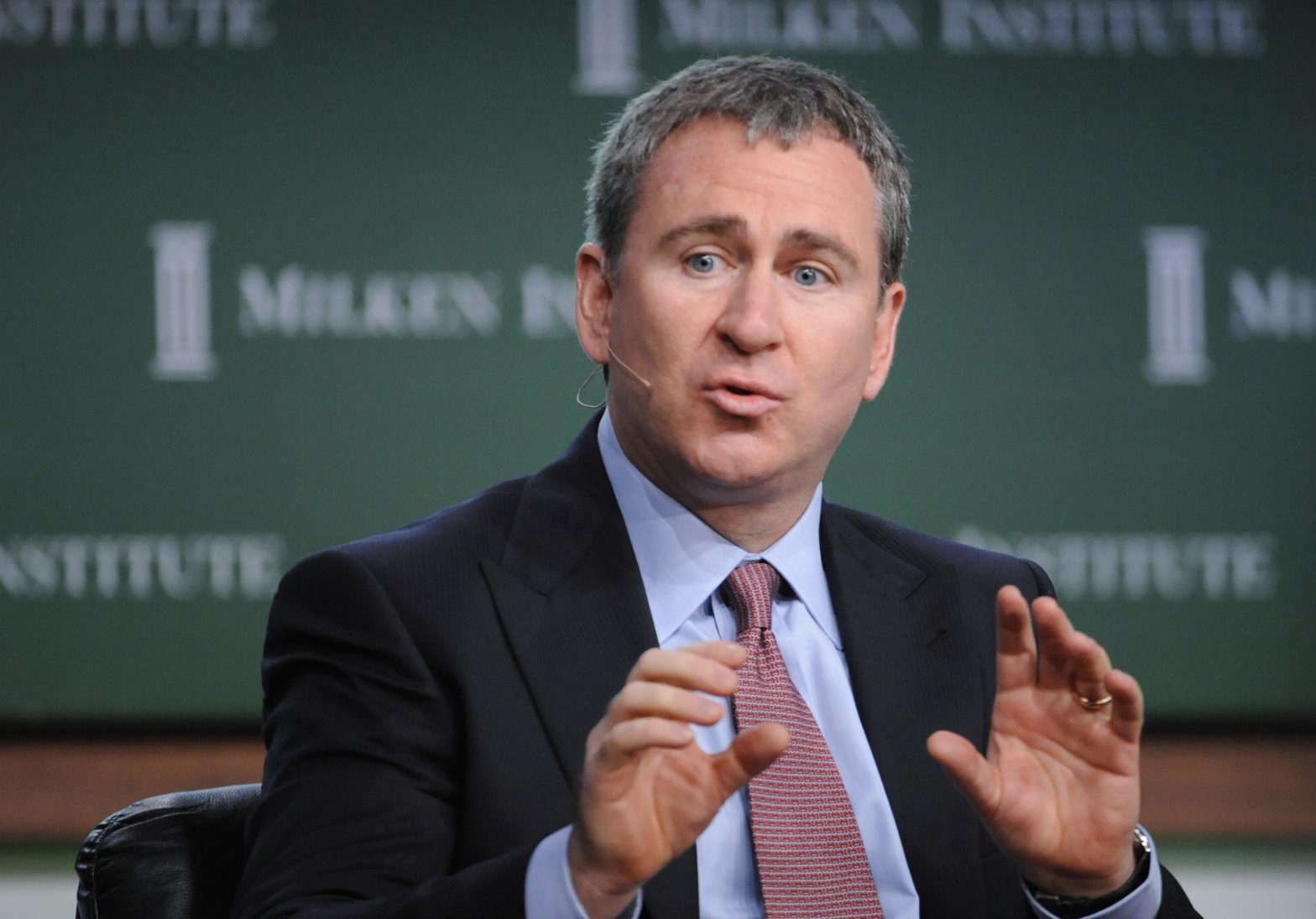
Ken Griffin’s Citadel is set to return approximately $5 billion of this year’s profits to investors, bringing its assets under management (AUM) to $67 billion, according to people familiar with the matter.
The $5 billion payout represents only a portion of Citadel’s total earnings for the year. Despite the multibillion-dollar figure, Griffin’s firm is on track for its weakest annual performance since 2018. The flagship Wellington fund gained 9.3% through Dec.18, hampered by bets on natural gas that failed to replicate previous years’ massive gains.
In a shift from historical mandates that required investors to take back profits, Citadel invited clients to voluntarily cash out last year following a 15% gain, though most chose to stay invested. The current decision to return capital stems from a perceived lack of attractive investment opportunities heading into 2026.
Including the anticipated 2025 distribution, Citadel will have returned approximately $32 billion in profits to its investors since 2017.
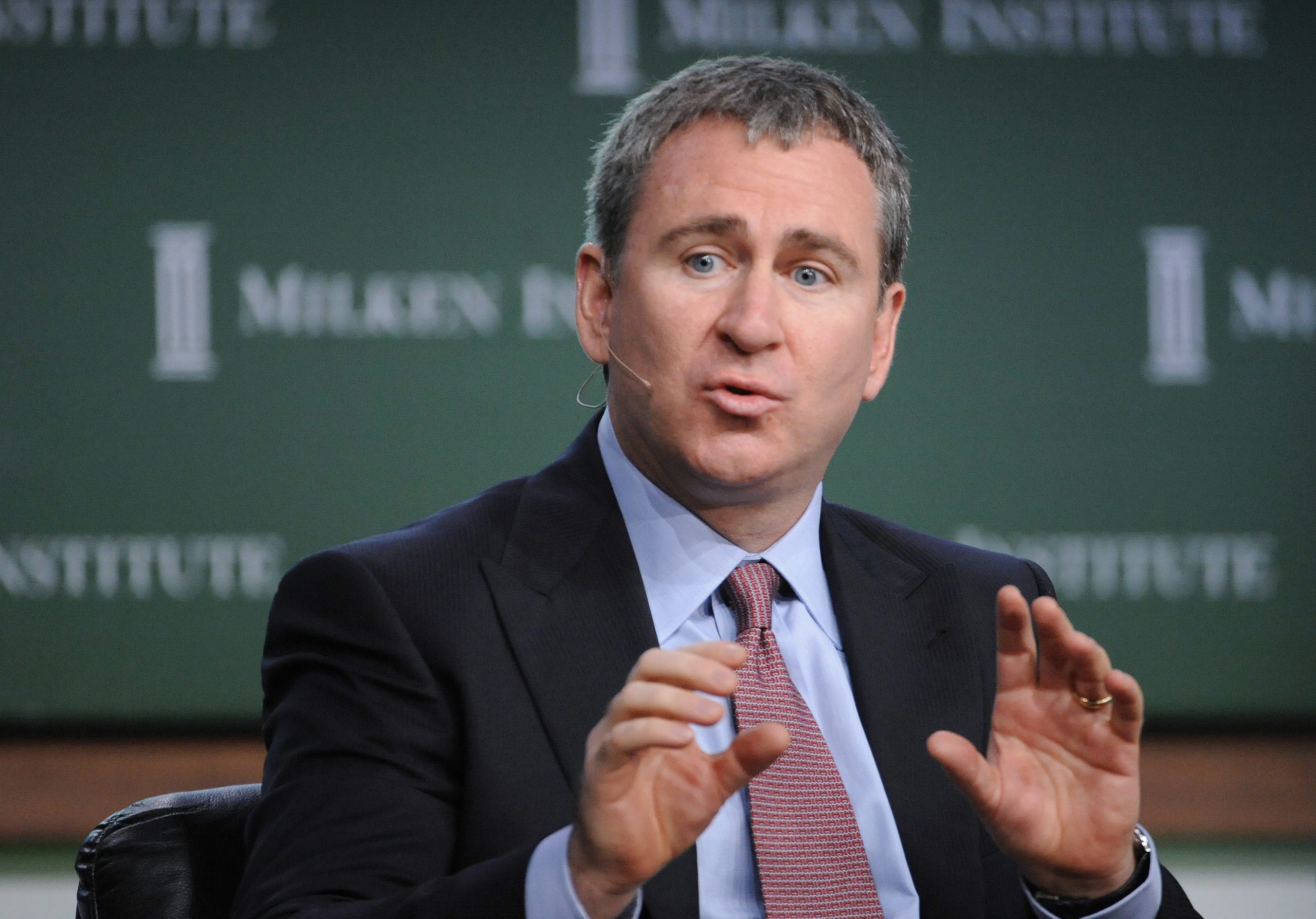
Bloomberg – Citadel to Return $5 Billion of Hedge Fund’s Profits to Clients
______
3. Trump Administration to Begin Wage Garnishment for Student Debt Defaults
Rents in several major US cities became more affordable this past year as a wave of new luxury apartment buildings lured tenants away from older properties.
According to research firm CoStar, the average US rental rate fell 0.18% in November, marking the largest monthly decline in over 15 years. This drop was primarily driven by falling rents in cities like Austin, Denver, and Phoenix, alongside vacation spots such as Naples and Myrtle Beach. As wealthy renters “trade up” to new developments, landlords of older buildings are being forced to slash prices to remain competitive.
Rents for some older units have plummeted by as much as 11%, with rates occasionally falling to levels typically seen in “affordable housing” units. This shift challenges the notion that luxury developments do not benefit the broader housing ecosystem. The trend stems from the pandemic-era construction boom, fueled by low interest rates and the rise of remote work.
New apartment openings reached a peak in 2024. In Austin, more than 10,000 new units opened in the three months ending last September. Phoenix saw nearly 8,000 new completions by year-end, while Denver’s peak occurred in early 2024 with over 5,000 units.
Developers warn that these bargains will likely be short-lived as demand remains high.

Bloomberg – US to Begin Garnishing Wages for Student Debt Collection in 2026
______
4. Private Credit Firms Snapped Up $136 Billion in Consumer Debt
Private credit firms acquired nearly 14 times more consumer debt this year than in 2024, piling into riskier assets such as credit cards and buy now, pay later (BNPL) debt.
In 2025, private credit groups including KKR, Blue Owl, and Sixth Street either purchased or committed to buy $136bn of consumer loans via forward flow agreements, according to KBW analysts. This marks a staggering jump from just $10bn in the previous year.
The rush of deals—such as KKR’s multibillion-dollar credit card portfolio purchase from Europe-based New Day—raises concerns regarding underwriting standards and risk management as Wall Street firms rapidly expand.
KBW analysts noted that private capital is fueling growth in unsecured consumer lending while regulated incumbents remain cautious. Consumer debt is typically unsecured, and the resilience of newer products like BNPL has yet to be fully tested in an economic downturn.

Financial Times – Private credit firms pile into consumer debt as risk-taking mounts
______
5. Saks Global Weighs Bankruptcy Ahead of $100 Million Debt Deadline
Saks Global Enterprises is considering Chapter 11 bankruptcy as a last resort as it faces a critical debt payment of more than $100 million due at the end of December.
With limited financing options, the luxury retail giant is also exploring emergency funding or asset sales to boost liquidity. Sources indicate that some lenders have recently held confidential talks regarding a potential debtor-in-possession (DIP) loan to sustain operations during a court-supervised restructuring. Saks raised billions last year to finance its acquisition of Neiman Marcus, betting that increased scale would revive the business. Instead, the deal ballooned the company’s debt and exacerbated disputes with vendors, many of whom have halted shipments over unpaid bills.
Despite a June debt restructuring that reshuffled payment priorities, investor confidence has evaporated. Prices for some of Saks’ second-out notes have plunged from 36 cents to approximately 6 cents on the dollar in just two weeks.
A company representative stated that Saks is currently exploring all potential paths with stakeholders to secure a stable future for the luxury group.

Bloomberg – Saks Mulls Bankruptcy After Raising Billions for Turnaround
______
6. Influx of Luxury Apartments Drives Down Rents in Major US Cities
The Trump administration is offering undocumented migrants $3,000 and paid travel if they agree to leave the US voluntarily before the end of the year, its latest effort to escalate mass deportations and slash enforcement costs.
According to the Department of Homeland Security (DHS), undocumented migrants who self-deport using the “CBP Home” app will have their travel arranged and paid for by the government. They will also qualify for the forgiveness of civil fines or penalties related to failing to depart earlier. The $3,000 stipend is triple the $1,000 payout the department unveiled in May. The policy is part of a holiday-season campaign aimed at speeding up removals.
“Illegal aliens should take advantage of this gift and self-deport because if they don’t, we will find them, we will arrest them, and they will never return,” Homeland Security Secretary Kristi Noem said in a statement.
Noem claimed that since January 2025, 1.9 million undocumented migrants have voluntarily self-deported, with tens of thousands utilizing the CBP Home program. The app, originally created by the Biden administration to schedule asylum interviews, was rebranded and repurposed by President Trump’s team. Officials have promoted the program as a more efficient alternative to costly arrests and removals, given that the average cost to arrest, detain, and remove a migrant is estimated at roughly $17,000 per person.
However, immigration lawyers and activists expressed skepticism regarding claims that those who leave voluntarily may be able to return legally. Reports suggest that individuals who have lived in the US without legal status often face automatic multi-year bans, for which waivers are rarely granted.

Bloomberg – Luxury Apartments Are Bringing Rent Down in Some Big Cities
______
7. Gold and Silver Hit Record Highs Amid Surging Geopolitical Risks
Sony Group is taking a majority stake in the brand behind Snoopy and Charlie Brown, acquiring an additional 41% of Peanuts Holding from Canada’s WildBrain for C$630 million (US$460 million). The deal increases Sony’s total ownership to 80%, turning the beloved American cartoon franchise into a Sony subsidiary.
The Schulz family, descendants of creator Charles Schulz, will retain the remaining 20% stake. Sony first began investing in the Peanuts brand in 2018, and this latest move aligns with the group’s broader strategy to prioritize entertainment and original content creation. Shunsuke Muramatsu, CEO of Sony Music Entertainment, stated that the group aims to elevate the brand’s value by leveraging Sony’s vast global network.
The acquisition is part of Sony’s effort to bridge its gaming, anime, film, and music divisions to build powerful global franchises. The company has seen recent success with adaptations like the TV series “The Last of Us” and the animated blockbuster “Demon Slayer.”
Snoopy has a deep historical connection with Japan and was notably one of the inspirations for Sanrio’s Hello Kitty. By taking full control of Peanuts, Sony looks to further monetize the iconic comic strip—which debuted in 1950—across various platforms including toys, films, and theme park attractions.
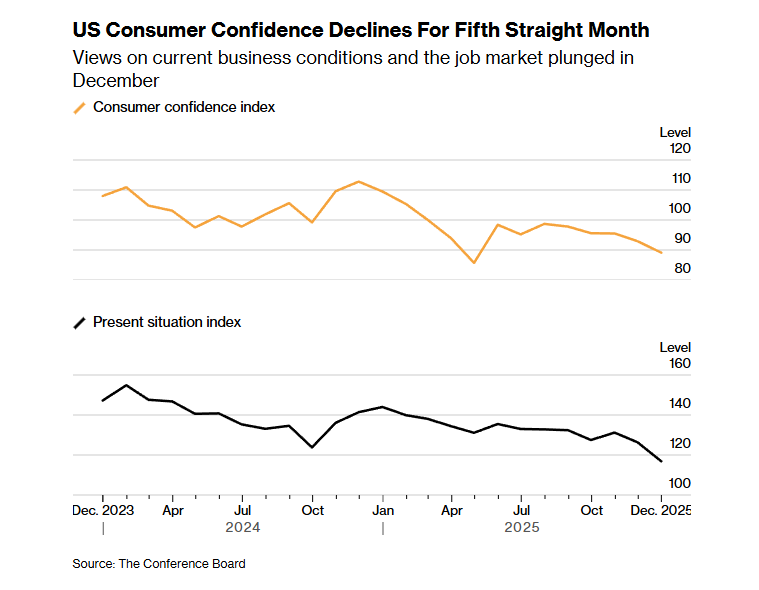
Bloomberg – US Consumer Confidence Drops for Fifth Straight Month
______